

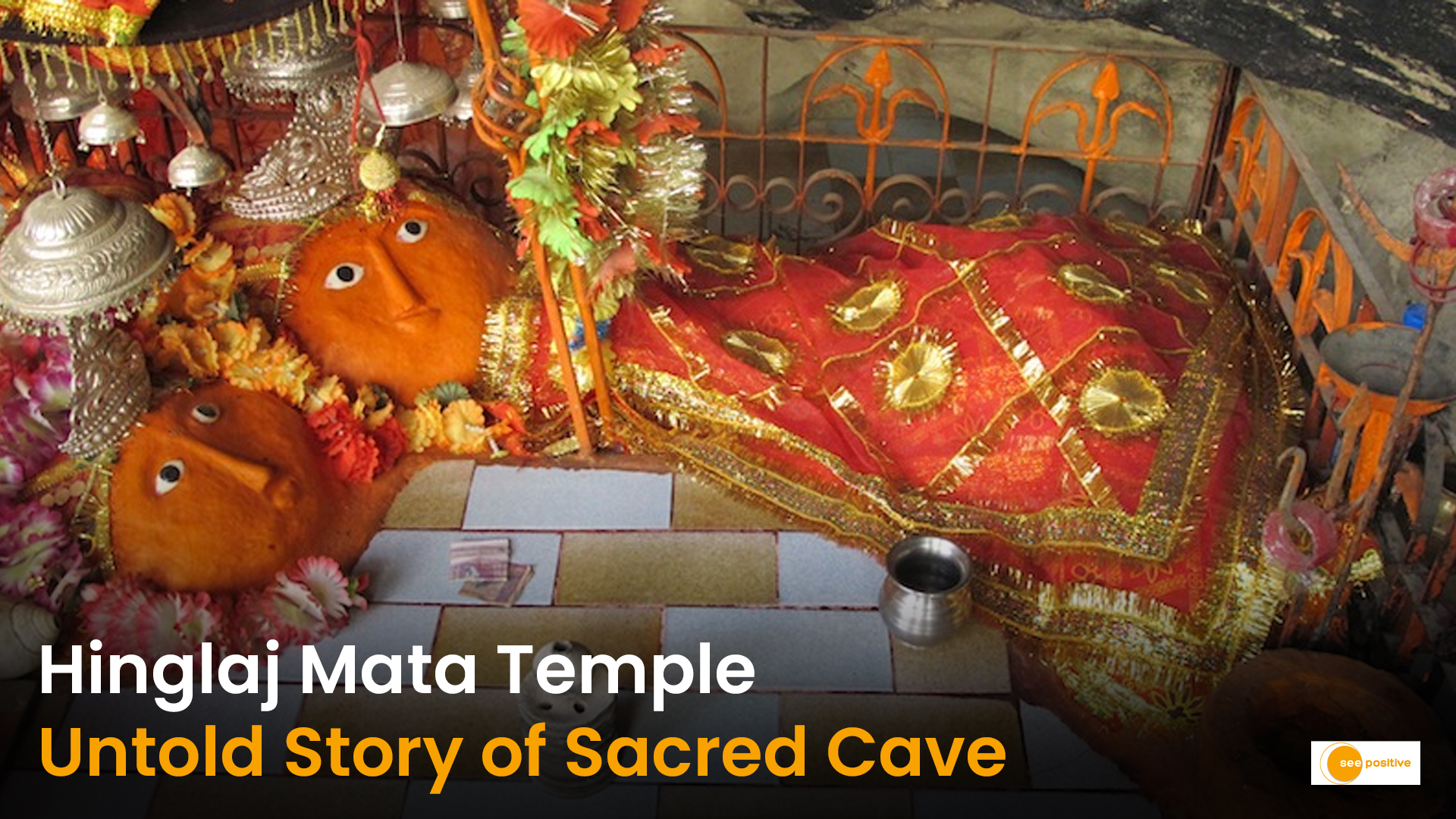
Hinglaj Mata Temple is one of the most revered Hindu pilgrimage sites dedicated to Goddess Shakti. Located in the rugged landscape of Hingol National Park in Balochistan, Pakistan, the temple holds immense religious and cultural significance for devotees of Goddess Durga and Adi Shakti. Also known as Hingula Devi Mandir and Nani Mandir, this ancient cave shrine is traditionally recognised as one of the important Shakti Peethas in Hindu mythology.
The unique location, sacred legends, natural cave formation and annual Hinglaj Mata Yatra make this temple a fascinating destination for religious, historical and cultural exploration. Despite being situated outside India, Hinglaj Mata Temple remains deeply connected to Hindu traditions and attracts pilgrims from different regions.
Where Is Hinglaj Mata Temple Located?
Hinglaj Mata Temple is located in Hingol National Park in Balochistan, Pakistan, near the Hingol River and the Makran region. Surrounded by rocky mountains, desert terrain and natural geological formations, the temple stands in a distinctive landscape far removed from the architecture of conventional Hindu temples.
The shrine is situated approximately 190–250 kilometres from Karachi, depending on the route and starting point. Its remote location has historically made the pilgrimage a significant journey for devotees.
The temple is also associated with the wider Hingol Cultural Landscape, which includes natural features and sacred locations connected with local pilgrimage traditions.
History of Hinglaj Mata Temple
The history of Hinglaj Mata Temple is closely connected with the development of Shakti worship in the Indian subcontinent. The shrine has been revered for generations, although its exact founding date has not been conclusively established through historical or archaeological evidence.
The temple is traditionally associated with the worship of the Divine Mother, particularly in Shakta traditions that regard Goddess Shakti as the supreme cosmic power. Its cave setting and long-standing pilgrimage practices distinguish it from many other Hindu shrines.
Historical and heritage descriptions also connect the temple with the Charan tradition of Goddess worship. Over time, Hinglaj Mata became an important spiritual centre for Hindu communities, including devotees travelling from different parts of the subcontinent.
Today, the shrine remains an important symbol of religious continuity, cultural heritage and devotion.
Hinglaj Mata Temple and the Legend of Goddess Sati
One of the most significant aspects of Hinglaj Mata Temple is its association with the legend of Goddess Sati.
According to Hindu mythology, Goddess Sati was the daughter of King Daksha and the wife of Lord Shiva. When Daksha organised a grand yajna without inviting Shiva and insulted him during the ceremony, Sati was deeply distressed. In many versions of the story, she sacrificed her life in protest.
Overwhelmed by grief, Lord Shiva carried Sati’s body and wandered across the universe. To restore cosmic balance, Lord Vishnu used his Sudarshan Chakra to divide her body into several parts. According to the tradition, the places where these parts fell became sacred Shakti Peethas.
Hinglaj is traditionally identified as one of these sacred sites. Certain textual traditions associate the location with the crown or upper part of Sati’s head, although descriptions vary between different religious sources.
For devotees, this association makes Hinglaj Mata Temple a powerful centre of Shakti worship and a place of deep spiritual importance.
Why Is Hinglaj Mata Temple Considered a Shakti Peetha?
Shakti Peethas are sacred Hindu pilgrimage sites associated with Goddess Sati and the divine power of Goddess Shakti. They are worshipped as places where the Goddess’s presence is believed to be especially powerful.
Hinglaj Mata is recognised as a Shakti Peetha in important Hindu traditions. In the Pithanirnaya tradition, the Goddess is identified as Kottari and the associated Bhairava as Bhimalochana.
Different religious texts and regional traditions provide varying lists of Shakti Peethas, including differences in their number, names and the body parts associated with individual locations.
For devotees, the spiritual significance of Hinglaj Mata Temple lies in its association with the Divine Mother, the blessings of Shakti and the continuation of ancient pilgrimage traditions.
Unique Features of Hinglaj Mata Temple
1. A Natural Cave Shrine
Unlike temples built with elaborate towers, courtyards and monumental gateways, the principal Hinglaj Mata shrine is located inside a natural cave. The sacred space is relatively simple, and the natural surroundings form an essential part of the pilgrimage experience.
2. Sacred Stone Worship
The principal object of worship is traditionally described as a sacred stone placed on a low mud altar inside the cave. This distinctive form of worship reflects the importance of the sacred presence rather than elaborate architectural ornamentation.
3. The Hingol River and Rocky Landscape
The temple lies within the broader landscape of Hingol National Park, an area known for its rocky hills, river valleys, desert scenery and geological formations. The surrounding terrain contributes to the distinctive atmosphere of the pilgrimage.
4. Association with Chandragup Mud Volcano
Chandragup is a prominent mud volcano associated with the Hinglaj Mata pilgrimage. Devotees traditionally visit this geological formation as part of the wider religious journey.
The combination of a sacred cave, mud volcanoes and rugged natural terrain makes Hinglaj Mata Temple distinctive among major Hindu pilgrimage destinations.
Interesting Facts About Hinglaj Mata Temple
1. It is located in present-day Pakistan. The principal Hinglaj Mata shrine is situated in Balochistan, Pakistan, rather than India.
2. It is also called Nani Mandir. The shrine is widely known by this local name, reflecting its broader regional cultural significance.
3. The main shrine is inside a natural cave. Its sacred space differs from conventional Hindu temples constructed as large freestanding buildings.
4. It is associated with the Shakti Peetha tradition. Devotees revere Hinglaj as one of the sacred sites connected with Goddess Sati.
5. The annual pilgrimage generally takes place in spring. The Hinglaj Mata Yatra is commonly held around April, although exact dates vary from year to year.
6. Chandragup mud volcano is part of the pilgrimage tradition. The geological site is associated with rituals performed by pilgrims travelling to Hinglaj.
7. It is part of a remarkable natural landscape. Hingol National Park covers approximately 6,190 square kilometres, according to Pakistan’s heritage documentation.
8. The site has cultural significance beyond Hindu communities. Local Muslim communities also respect the shrine, which is commonly known as Nani Mandir.
9. Its founding date remains uncertain. Although the shrine has an ancient religious tradition, a precise historical date for its establishment has not been conclusively verified.
10. It has appeared on UNESCO’s Tentative List. The Hingol Cultural Landscape was submitted to UNESCO’s Tentative List in 2016. Tentative-list status is not the same as inscription on the World Heritage List.
Hinglaj Mata Yatra: Importance and Traditions
The Hinglaj Mata Yatra is the annual pilgrimage dedicated to the Goddess. It brings together devotees who travel to the shrine to offer prayers, participate in traditional ceremonies and seek the blessings of Hinglaj Mata.
The pilgrimage commonly involves visiting sacred locations in the surrounding landscape, including Chandragup mud volcano. Depending on the group and the year, pilgrims may participate in rituals connected with purification, prayer and offerings before reaching the principal shrine.
For many devotees, the journey represents faith, perseverance and devotion to the Divine Mother. It also provides an opportunity for Hindu communities to preserve shared customs and maintain connections with an important sacred site.
The pilgrimage is significant not only because of its religious destination but also because of the traditions and experiences associated with the journey itself.
Religious and Cultural Significance of Hinglaj Mata
Hinglaj Mata Temple occupies an important place in the religious imagination of devotees of Goddess Shakti. Its association with Sati connects it with a wider network of sacred sites across South Asia.
The temple also illustrates how religious traditions can remain deeply rooted in landscapes that cross modern national boundaries. For Hindu devotees, Hinglaj Mata represents divine protection, feminine power and the enduring presence of the Goddess.
The shrine’s recognition as Nani Mandir among local communities highlights its distinctive position within the region’s cultural history. Its religious importance, natural setting and continuing pilgrimage traditions make it a valuable subject for the study of Hindu sacred geography.
Is Hinglaj Mata Temple a UNESCO World Heritage Site?
The Hingol Cultural Landscape, which includes the broader region associated with the shrine, was added to Pakistan’s UNESCO World Heritage Tentative List in 2016.
However, inclusion on the Tentative List does not mean that a place has received full World Heritage Site status. As of October 2026, the Hingol Cultural Landscape should not be described as an inscribed UNESCO World Heritage Site.
This distinction is important for accurate historical and travel-related content.
Most Fascinating Sacred Site
Hinglaj Mata Temple is one of the most fascinating sacred sites associated with Goddess Shakti. Its location inside a natural cave, connection with the legend of Goddess Sati, association with Chandragup mud volcano and annual pilgrimage traditions give it exceptional religious and cultural significance.
Situated in Balochistan, Pakistan, the shrine demonstrates the enduring influence of Hindu sacred geography across South Asia. Its history also highlights the relationship between faith, natural landscapes and the cultural traditions of local communities.
Whether explored through mythology, history or religious studies, Hinglaj Mata Temple remains a remarkable symbol of devotion to the Divine Mother and an important part of the region’s living cultural heritage.

