

A Detailed Guide to the Engineering, Technology, Capacity, Route and Environmental Features of NTPC’s Pakri-Barwadih Coal Conveyor Project
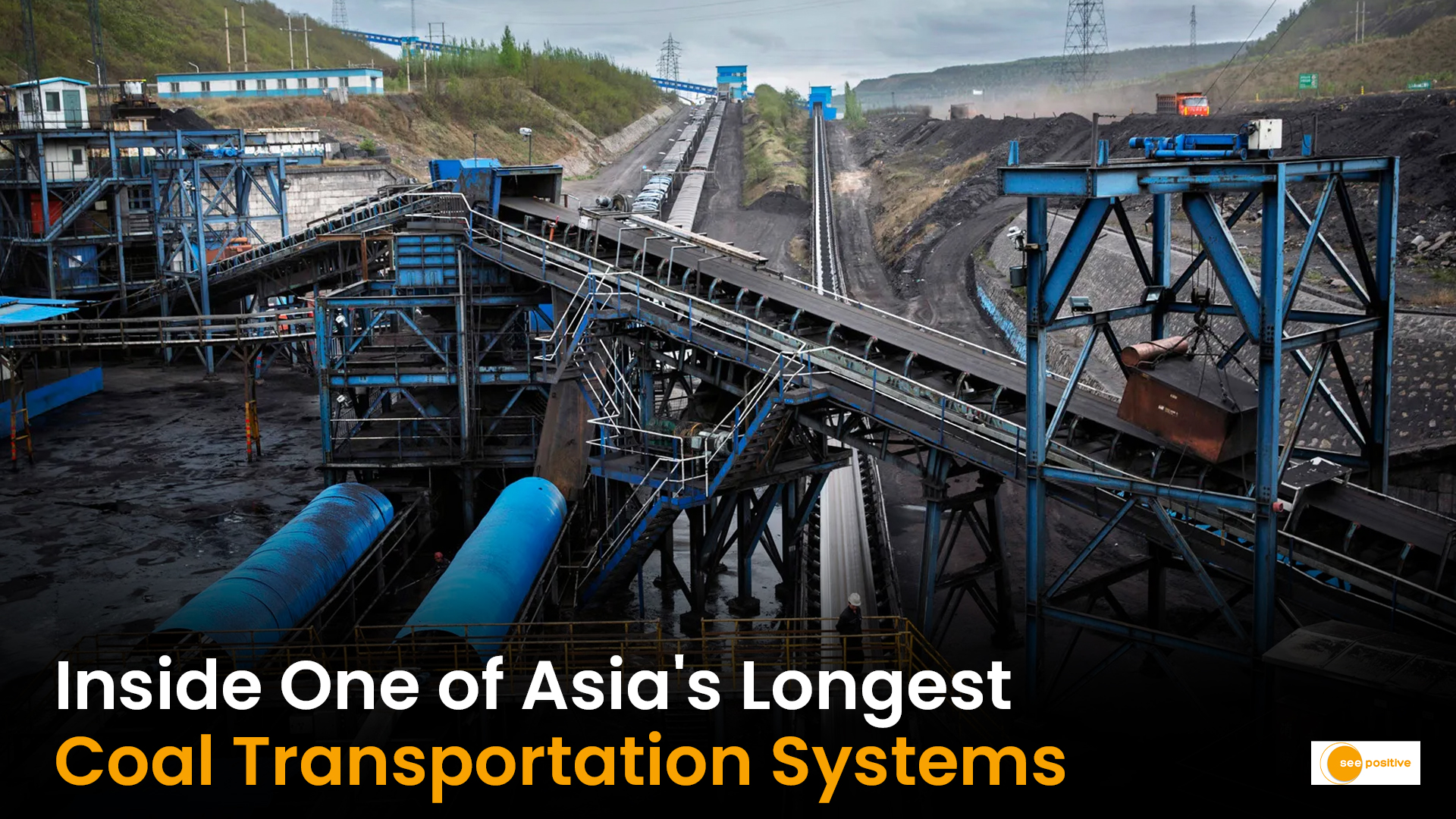
A coal conveyor belt stretching approximately 21 kilometres through the landscape of Jharkhand is one of India’s notable examples of large-scale industrial engineering.
Developed for NTPC’s Pakri-Barwadih Coal Mining Project in Hazaribagh district, the conveyor system connects the coal mine’s handling facilities with the Banadag Railway Siding. It is designed to transport large quantities of coal through a mechanised system rather than relying entirely on conventional road transportation.
The project is particularly interesting because of its scale, high-capacity steel cord conveyor technology, integrated coal handling infrastructure and provisions for wildlife movement in forest areas.
NTPC has described this infrastructure as one of Asia’s longest coal conveyor systems. The company also highlighted its environmental design in an official video published in November 2022. The system was subsequently commissioned along with its Rapid Loading System on 15 December 2024, according to government environmental appraisal records.
But how does a 21-kilometre conveyor system work? What is its actual carrying capacity? How does coal travel from the mine to railway wagons? And what makes its engineering different from conventional conveyor installations?
Let’s explore the project in detail.
Where Is NTPC’s 21 KM Coal Conveyor Belt Located?
NTPC’s 21 KM coal conveyor system is part of the Pakri-Barwadih Coal Mining Project, located in the Barkagaon area of Hazaribagh district, Jharkhand.
The project is operated by NTPC Mining Limited and forms an important part of NTPC’s captive coal supply infrastructure.
Its primary purpose is to connect coal handling facilities at the mining complex with the Banadag Railway Siding, where coal can be loaded into railway wagons for transportation to NTPC power stations.
The Ministry of Coal has also identified Pakri-Barwadih as an operational NTPC coal block, with Banadag serving as its important railway connectivity point.
Understanding the 21 KM Conveyor Route
One important technical detail is that the 21-kilometre system is not simply one uninterrupted conveyor belt.
It consists of multiple conveyor sections, transfer arrangements and coal handling facilities that work together as an integrated transportation network.
According to the Ministry of Environment’s September 2025 EAC meeting records, the main conveyor route is divided into two sections:
| Conveyor section | Length |
|---|---|
| Mine pit-head crusher to Stacker/Reclaimer area | 8 km |
| Stacker/Reclaimer area to Banadag Railway Siding | 13.2 km |
| Total | 21.2 km |
This is why the project is commonly referred to as NTPC’s 21 KM coal conveyor system.
Environment Clearance
How Does the Transportation Process Work?
The overall transportation process can be understood through the following stages:
- Coal extraction: Coal is extracted from the Pakri-Barwadih open-cast mine.
- Primary transportation: Mine trucks and the In-Pit Crushing and Conveying (IPCC) arrangement move coal towards the mine’s pit-head handling facilities.
- Crushing: Coal is processed through crushers to achieve the required material size.
- Conveyor transportation: Coal moves through the approximately 8 km conveyor section towards the Stacker/Reclaimer area.
- Intermediate handling: Stacking and reclaiming facilities manage coal storage and retrieval.
- Long-distance conveying: A further 13.2 km closed conveyor section connects the handling area with Banadag Railway Siding.
- Railway loading: Coal is transferred into railway wagons through the Rapid Loading System.
This integrated arrangement connects mining, crushing, material handling, storage and railway dispatch.
What Does 4,000 TPH Actually Mean?
TPH stands for Tonnes Per Hour.
A conveyor section rated at 4,000 TPH is designed to handle up to 4,000 tonnes of material per hour under its specified operating conditions.
To understand the scale:
- 1 hour at 4,000 TPH = 4,000 tonnes.
- 10 hours at 4,000 TPH = 40,000 tonnes.
- 24 hours at 4,000 TPH = 96,000 tonnes.
These are theoretical capacity calculations, not actual daily production figures. Real output depends on operating hours, coal availability, equipment performance, maintenance and downstream handling capacity.
The 10,000-Tonne Intermediate Bunker: An Important Part of the System
Another major component of the project is its 10,000-tonne-capacity RCC (Reinforced Cement Concrete) bunker.
The bunker is designed to provide intermediate coal storage between conveyor transportation and railway loading operations.
Why is this important?
In large industrial material handling systems, the coal supply from a mine and the loading requirements of railway wagons may not always remain perfectly synchronised.
An intermediate storage facility helps manage this difference.
NTPC’s tender specifications mention the following equipment:
- 10,000-tonne-capacity RCC semi-above-ground bunker.
- Plough feeders for reclaiming coal from the bunker.
- Mechanical coal transportation arrangements.
- Electrical and control systems.
- Dust suppression infrastructure.
- Fire detection and firefighting systems.
- Ventilation and supporting utility arrangements.
These facilities help maintain a coordinated coal handling and dispatch process.
Banadag Railway Siding: The Rapid Loading System
The conveyor system does not end with simply delivering coal to the railway siding.
An equally important part of the project is the Rapid Loading System (RLS) installed at Banadag Railway Siding.
This facility is designed to transfer coal from the handling infrastructure into railway wagons in a controlled and efficient manner.
According to NTPC’s tender documents, the project includes two Rapid Loading Systems, each having a rated capacity of 4,000 tonnes per hour.
The systems form part of an integrated mechanical, electrical and control arrangement.
59 Railway Wagons in Approximately 60 Minutes
One of the most interesting figures associated with the project comes from an April 2025 Times of India report.
It reported that the Rapid Loading System at Banadag is designed to load 59 railway wagons in approximately 60 minutes.
This is significant because railway loading time directly influences the efficiency of the overall coal logistics chain.
Faster loading can help improve wagon turnaround and reduce delays in coal dispatch, subject to railway operations and other logistical requirements.
Wildlife Protection: Why Is the Conveyor System Elevated?
One of the most distinctive features of NTPC’s Pakri-Barwadih conveyor project is its consideration of wildlife movement.
The conveyor route passes through forest landscapes where wildlife movement is an important environmental consideration.
NTPC highlighted this feature in its official video published on 14 November 2022.
According to the company, the conveyor infrastructure has been designed with elevated pathways in forest areas to reduce interference with the movement of wildlife.
The objective is to allow animals to continue using ground-level movement corridors while the coal transportation infrastructure operates above them.
Major Environmental Advantages
1. Reduced dependence on road transportation
A conveyor-based transportation system can reduce the requirement for large numbers of coal trucks on long-distance routes.
2. Better dust management
Closed conveyor arrangements help limit coal dust dispersion and material spillage compared with exposed transportation methods.
3. Reduced road traffic
Lower truck movement can help reduce road congestion, vehicle-related emissions and transportation disturbances.
4. Consideration of wildlife corridors
Elevated conveyor structures are intended to reduce ground-level interference in sensitive forest areas.
5. More efficient material transportation
Continuous mechanical transportation can improve the movement of bulk materials between different industrial facilities.
However, these benefits should not be interpreted as eliminating all environmental impacts associated with coal mining. Mining, land use, dust generation, water management and wildlife protection still require continuous monitoring.
Why Is This Project Important for India’s Coal Logistics Infrastructure?
Coal remains an important fuel for India’s thermal power generation sector.
For power utilities, reliable coal availability is essential for maintaining electricity generation and managing fuel supply requirements.
However, transporting coal from mines to power plants involves several stages, including extraction, crushing, storage, transportation, railway loading and final delivery.
NTPC’s Pakri-Barwadih conveyor system integrates several of these stages into a mechanised logistics arrangement.
Its importance can be understood through five major factors.
A. Mechanised First-Mile Connectivity
The conveyor connects the mine’s coal handling facilities with railway infrastructure, reducing dependence on long-distance road transportation for the relevant coal flow.
B. Higher Material Handling Capacity
Conveyor packages rated at up to 4,000 TPH provide substantial bulk material handling capability.
C. Faster Railway Loading
The Rapid Loading System is designed to improve the speed and efficiency of loading coal into railway wagons.
D. Better Integration of Industrial Infrastructure
The mine, crushers, conveyors, intermediate bunker and railway siding function as interconnected parts of a larger logistics system.
E. Environmental Considerations
The closed conveyor design, dust suppression arrangements and elevated structures in forest areas demonstrate an effort to integrate environmental considerations into large-scale industrial infrastructure.
Ultimately, the project represents an important example of how mining operations and transportation networks can be connected through large-scale engineering.
Key Facts About NTPC’s 21 KM Coal Conveyor Belt
Here is a quick summary of the most important project details:
| Feature | Project details |
|---|---|
| Company | NTPC Mining Limited |
| Coal mine | Pakri-Barwadih |
| Location | Hazaribagh, Jharkhand |
| Conveyor route | Approximately 21.2 km |
| First conveyor section | 8 km |
| Second conveyor section | 13.2 km |
| Belt technology | Steel cord |
| Reported belt width | 1,800–2,200 mm |
| Conveyor package ratings | 2,500 and 4,000 TPH |
| Intermediate bunker | 10,000 tonnes |
| Railway destination | Banadag Railway Siding |
| Rapid Loading Systems | 2 |
| RLS rated capacity | 4,000 TPH each |
| Commissioning date | 15 December 2024 |
| Mine capacity | 18 MTPA as per March 2024 EC; subsequently updated in NTPC’s mine listing |
A Major Engineering Achievement in India’s Coal Transportation Sector
NTPC’s approximately 21-kilometre Pakri-Barwadih coal conveyor system is an important example of large-scale industrial engineering in India.
From high-strength steel cord conveyor belts and high-capacity material handling equipment to a 10,000-tonne intermediate bunker and automated railway loading infrastructure, the project brings together multiple engineering systems under one integrated coal transportation network.
Its environmental design, particularly the consideration of wildlife movement through elevated conveyor structures, adds another important dimension to the project.
More importantly, it demonstrates how mechanised transportation can transform the way coal moves from a mining complex to the railway network.
A 21-kilometre journey, conveyor sections rated up to 4,000 tonnes per hour and an integrated railway loading system make this one of NTPC’s noteworthy coal logistics infrastructure projects.

