

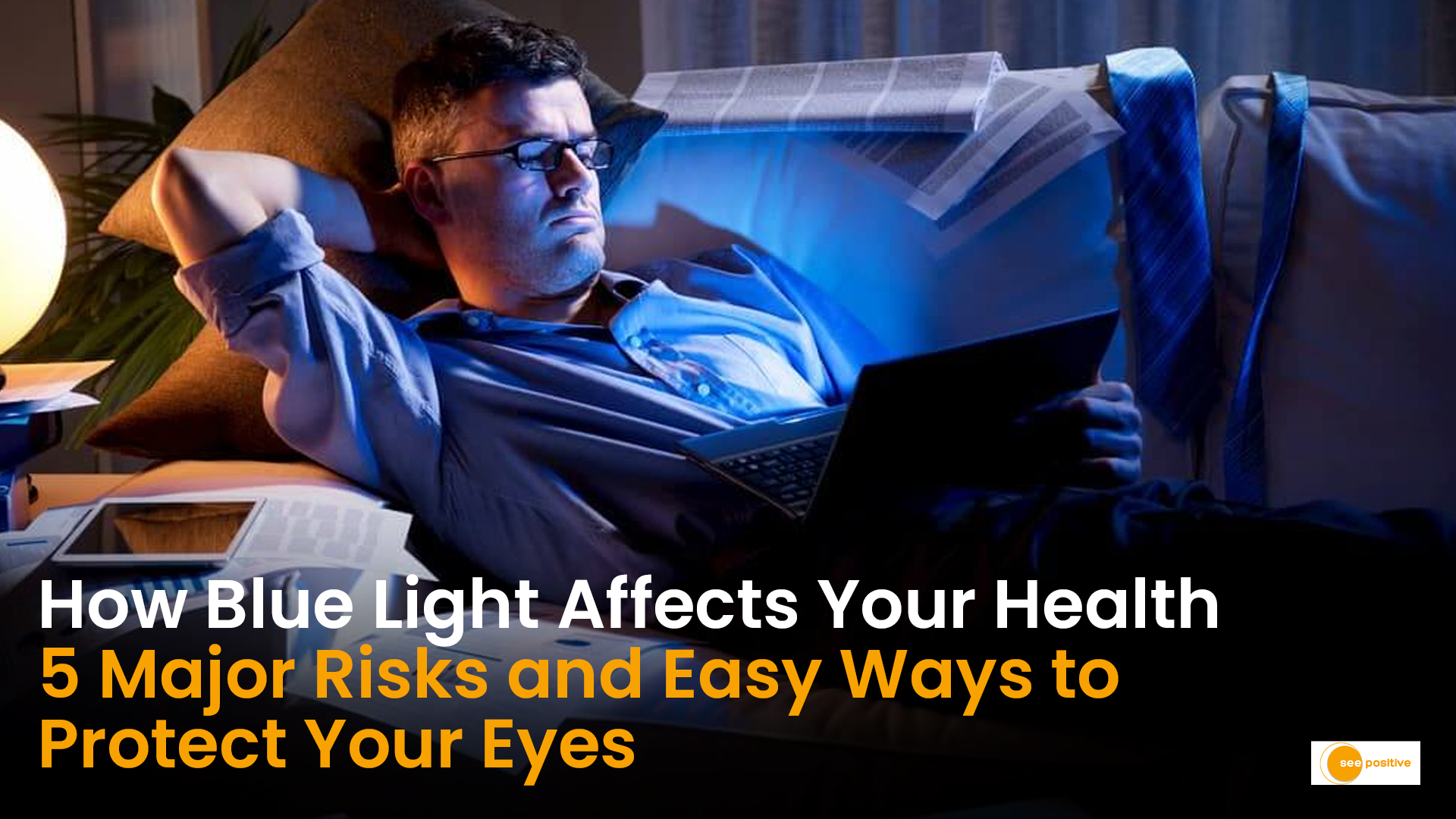
In today’s hyper-connected world, most of our waking hours are spent staring at digital screens—smartphones, laptops, tablets, and televisions. Even after finishing work, late-night scrolling through social media or binge-watching shows has become a default routine for millions. However, constant exposure to the blue light emitted by these electronic devices carries significant hidden health risks.
Excessive blue light exposure does not just cause temporary eye fatigue; it also disrupts your body’s internal biological clock, leading to long-term sleep deprivation and physical health complications.
What Exactly Is Blue Light?
Blue light is a short-wavelength, high-energy light that is naturally present in sunlight. During daylight hours, natural blue light plays a beneficial role: it boosts alertness, improves reaction times, elevates mood, and keeps our internal biological clock synchronized.
The primary issue arises after sunset, when we expose our eyes to artificial blue light from digital displays and modern LED lighting. Nighttime exposure tricks the human brain into believing it is still daytime, suppressing the natural signals that prepare the body for rest.
5 Major Ways Blue Light Impacts Your Health
1. Severe Sleep Disruption and Insomnia
Nighttime exposure to blue light suppresses the secretion of melatonin, the essential hormone responsible for regulating sleep cycles. When melatonin levels drop, falling asleep becomes difficult, reducing the duration of deep, restorative sleep cycles.
2. Digital Eye Strain and Dry Eye Syndrome
Staring continuously at digital screens significantly reduces human blink rates. Consequently, the protective tear film on the eyes evaporates quickly, leading to dry eyes, redness, irritation, and temporary blurred vision—a condition commonly categorized as Computer Vision Syndrome.
3. Tension Headaches and Mental Fatigue
Because blue light scatters easily due to its high-energy wavelengths, the eye struggles to focus on digital text. This continuous straining forces eye muscles to overwork, causing chronic tension headaches, migraines, and cognitive fatigue by the end of the day.
4. Premature Skin Aging
Recent dermatological research indicates that high-energy visible (HEV) blue light penetrates deeper into skin layers than UV rays. Prolonged exposure breaks down collagen, accelerating premature skin aging, fine lines, and hyperpigmentation.
5. Increased Risk of Weight Gain and Metabolic Issues
Chronic sleep deprivation caused by late-night screen exposure alters hunger-regulating hormones—specifically ghrelin and leptin. This hormonal imbalance triggers late-night cravings for high-calorie foods, raising the long-term risk of obesity and metabolic conditions.
5 Practical Steps to Reduce Blue Light Damage
- Follow the 20-20-20 Rule: Every 20 minutes of screen work, look away at an object 20 feet away for at least 20 seconds to relax your eye muscles.
- Enable Night Mode Filters: Activate the built-in ‘Night Light’ or ‘Eye Comfort Shield’ settings on all smartphones and laptops to shift display color temperatures to warmer tones.
- Implement a Digital Cut-Off Hour: Stop using smartphones, tablets, and computers at least 60 minutes before going to bed.
- Wear Blue Light Blocking Glasses: If your job requires prolonged computer usage, invest in high-quality anti-glare, blue-light-filtering eyewear.
- Maintain Proper Ambient Lighting: Avoid using smartphones in completely dark rooms. Ensure adequate ambient room lighting to minimize glare and contrast strain.
Final Thoughts
While digital screens are an indispensable part of modern work and communication, adopting smart screen habits can shield your body from unnecessary strain. By limiting late-night exposure and prioritizing eye rest, you can protect both your vision and overall metabolic health.

