

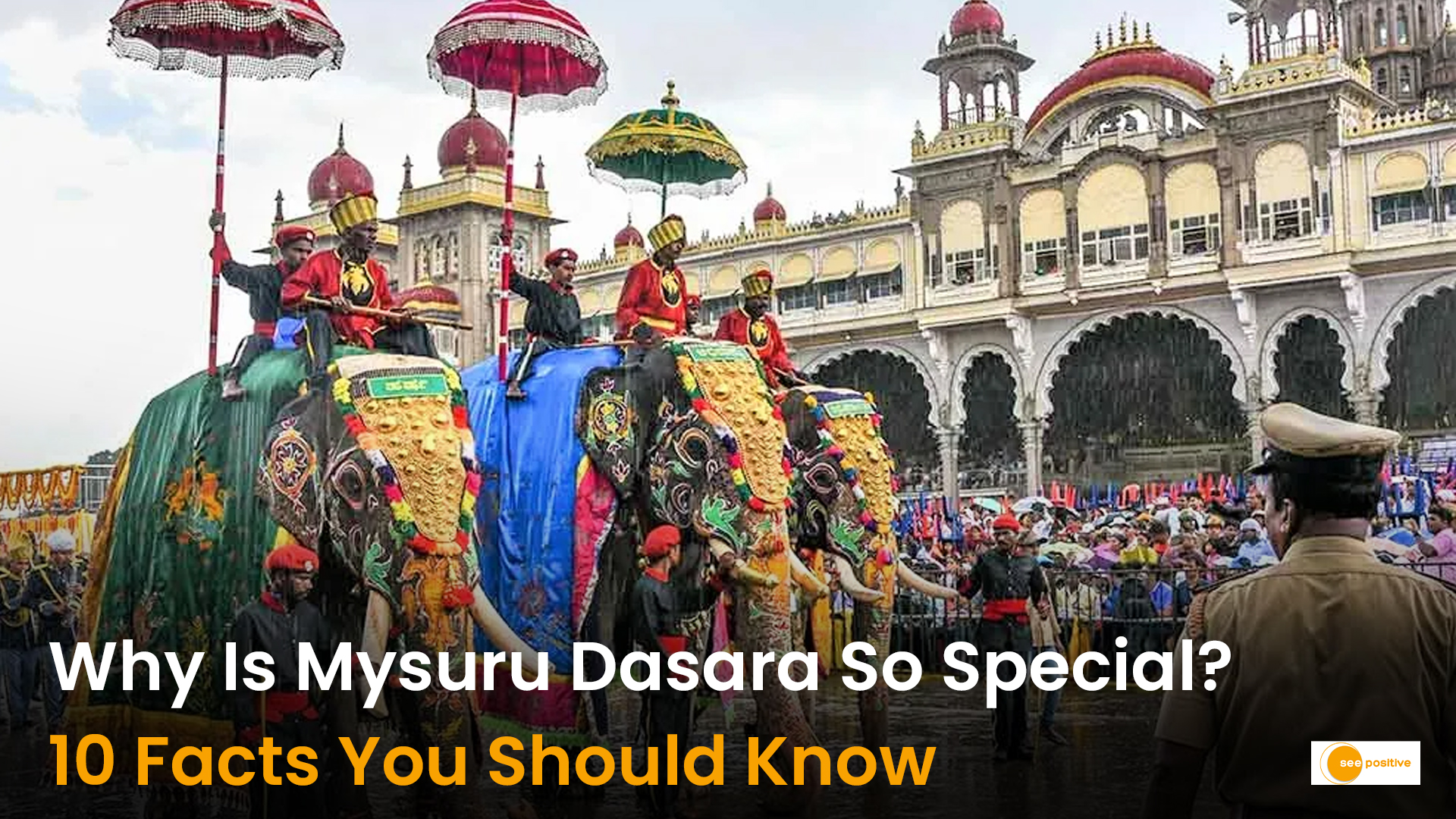
Mysuru Dasara is much more than a festival of lights, elephants and royal processions. It is a celebration of Karnataka’s history, spirituality and cultural identity, with traditions that stretch back centuries. Every year, the historic city of Mysuru comes alive with the glow of Mysuru Palace, devotional ceremonies, cultural performances and the spectacular Jamboo Savari procession.
But how did Mysuru Dasara begin? Why is the city associated with the demon king Mahishasura? And what makes the golden howdah and royal Durbar so special?
From its ancient mythological roots to its royal legacy, here are the fascinating stories and lesser-known facts that make Mysuru Dasara one of India’s most distinctive cultural celebrations.
The History of Mysuru Dasara: Where Did It Begin?
The history of Mysuru Dasara is closely connected to the Vijayanagara Empire and the Wadiyar dynasty of Mysuru.
The festival draws inspiration from the Mahanavami celebrations of the Vijayanagara rulers, who observed elaborate ceremonies involving royal rituals, military displays, elephants and cultural festivities.
According to the official Mysuru Dasara history, Raja Wadiyar I celebrated Dasara at Srirangapatna in 1610, an event regarded as the beginning of the Mysuru royal tradition of Dasara.
Over time, the Wadiyar rulers developed the celebrations into an important royal occasion. The festival became associated with the grandeur of the Mysuru kingdom, including the royal Durbar, ceremonial processions and religious observances.
During the reign of Krishnaraja Wadiyar III, the royal Durbar became an important feature of the celebration. Later, Krishnaraja Wadiyar IV helped expand the festivities into a broader public celebration, incorporating exhibitions, sporting events and cultural activities.
Today, Mysuru Dasara is celebrated as Karnataka’s Nada Habba, meaning the festival of the state. Its traditions combine religious devotion, royal heritage and the participation of people from different communities.
The Legend of Goddess Chamundeshwari and Mahishasura
One of the most fascinating aspects of Mysuru Dasara is its connection to the legend of Goddess Chamundeshwari and the demon king Mahishasura.
According to Hindu mythology, Mahishasura was a powerful demon who troubled the gods and challenged their authority. To end his tyranny, the divine forces gave rise to Goddess Durga, who fought a fierce battle against him.
After nine nights of battle, the goddess defeated Mahishasura on the tenth day. This victory is commemorated as Vijayadashami, symbolising the triumph of good over evil.
In Mysuru, the goddess is worshipped as Chamundeshwari, the presiding deity associated with Chamundi Hill.
The district administration’s official history also connects the name Mysuru to Mahishasura or Mahishur, referring to the legendary demon king’s city.
The hilltop Chamundeshwari Temple remains an important place of worship, especially during Dasara, when devotees gather to offer prayers and seek the goddess’s blessings.
This mythology gives Mysuru Dasara its spiritual significance and explains why worship of Chamundeshwari remains at the heart of the festival.
Why Is Mysuru Dasara Called Karnataka’s Nada Habba?
Mysuru Dasara is widely known as Karnataka’s Nada Habba, or state festival.
Unlike celebrations limited to a single temple or community, Mysuru Dasara brings together religious ceremonies, classical music, folk performances, art, food, heritage and public festivities.
The festival has evolved over centuries, from a royal observance into a large public celebration organised by the state government and district administration.
The Wadiyar family continues to preserve private royal Durbar traditions during Navaratri, while the wider city hosts public events for residents and visitors.
This combination of royal heritage and public participation makes Mysuru Dasara a distinctive part of Karnataka’s cultural identity.
Jamboo Savari: The Grand Finale of Mysuru Dasara
The Jamboo Savari, also known as the grand Dasara procession, is one of the festival’s most recognisable attractions.
Held on Vijayadashami, the procession features the ceremonial idol of Goddess Chamundeshwari carried in a golden howdah on a decorated lead elephant. The procession travels from the Mysuru Palace area towards Bannimantap, accompanied by traditional music, cultural groups and other ceremonial participants.
The procession reflects the festival’s royal past while keeping its religious significance alive.
Historically, the royal procession was closely associated with the Mysuru Maharaja. In the modern celebration, the goddess’s idol occupies the central position in the golden howdah.
For many visitors, watching the decorated elephants, traditional performances and procession moving through the historic city is the defining experience of Mysuru Dasara.
10 Fascinating Facts About Mysuru Dasara
1. Mysuru Dasara has more than 400 years of royal history
The Mysuru Dasara tradition dates back to 1610, when Raja Wadiyar I celebrated the festival at Srirangapatna. The celebration has since evolved through royal and public forms.
2. The festival has roots in the Vijayanagara Empire
The Mahanavami celebrations of Vijayanagara are an important historical influence on Mysuru Dasara. Royal ceremonies, elephants and public displays were central features of these earlier celebrations.
3. Mysuru’s name is linked to a mythological demon king
Local tradition associates the name Mysuru with Mahishasura, the demon defeated by Goddess Chamundeshwari. This story also explains the religious importance of Chamundi Hill.
4. Chamundeshwari is central to the festival
The festival celebrates the goddess’s victory over Mahishasura. Her ceremonial idol is carried in the golden howdah during the Jamboo Savari procession.
5. The golden howdah is one of the festival’s most recognisable symbols
The golden howdah, also called the ambari, is a prominent part of the Jamboo Savari. It carries the ceremonial idol of Goddess Chamundeshwari atop the lead elephant.
6. The Wadiyar royal Durbar remains part of the tradition
The Wadiyar family continues to observe private Durbar ceremonies during Navaratri, preserving a link with Mysuru’s royal history.
7. Mysuru Palace becomes a spectacular visual attraction
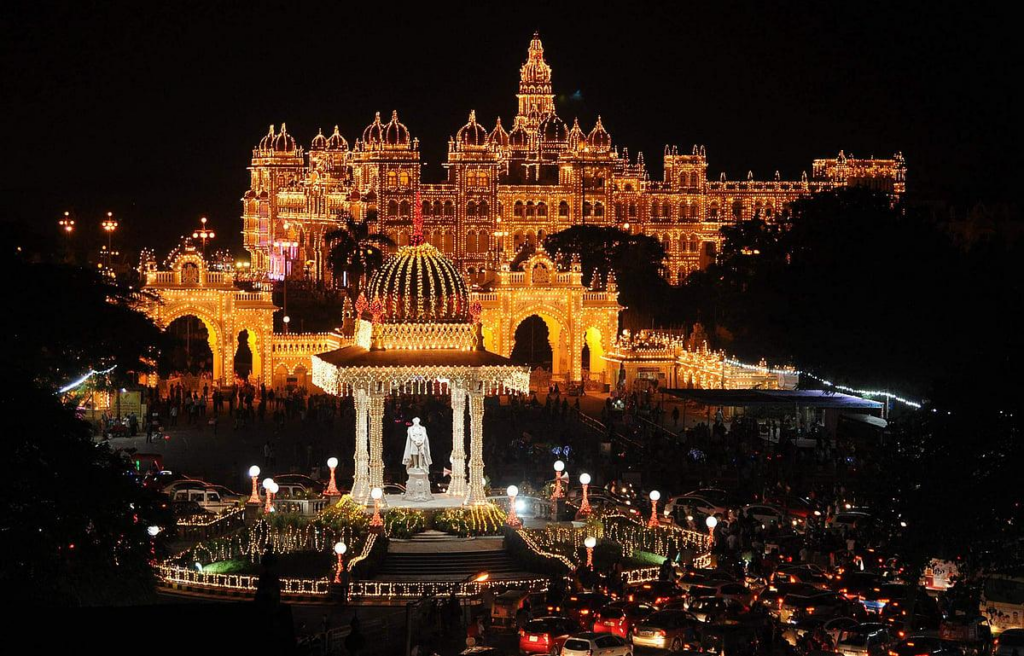
Palace illumination is one of the festival’s signature experiences. The illuminated architectural details draw visitors, photographers and heritage enthusiasts to the historic city.
8. Dasara is a celebration of culture as well as religion
The festival includes music, dance, folk arts, exhibitions, sporting events and food fairs. These programmes showcase Karnataka’s cultural diversity beyond the main religious ceremonies.
9. The festival is celebrated over ten days
Dasara includes nine nights of Navaratri, followed by Vijayadashami on the tenth day. The final day is associated with the grand procession and the celebration of good overcoming evil.
10. Mysuru Dasara has grown into a major public festival
What began as a royal celebration has developed into a major cultural event involving public programmes, heritage activities and visitors from across India and beyond.
The Royal Connection: How the Wadiyars Shaped Mysuru Dasara
The Wadiyar dynasty played a crucial role in shaping the festival’s identity.
Their patronage helped establish Dasara as a major royal occasion, linking religious observances with court ceremonies, public spectacles and cultural traditions.
The royal Durbar symbolised the ruler’s authority and the importance of tradition in the Mysuru kingdom. Ceremonial arrangements, royal attire and the use of the palace as a centre of celebration reinforced this connection.
Although the festival is now organised as a state celebration, the continued royal observances preserve an important link to its past.
The relationship between the palace, the goddess and the public procession is one reason Mysuru Dasara remains distinct from many other Navaratri celebrations in India.
Mysuru Palace Illumination: A Festival Highlight
Mysuru Palace is one of the most recognisable landmarks associated with Dasara. During the festival, its illuminated façade creates a striking spectacle against the evening sky.
The palace’s architecture, decorative details and royal history provide a memorable setting for the celebrations.
For photographers and travellers, the illumination is an opportunity to experience Mysuru’s architectural heritage in a different light. For residents, it is also a familiar symbol of the city’s identity and its annual festival.
Visitors planning a trip should check the official Dasara programme for confirmed illumination timings, viewing arrangements and any special restrictions.
How Mysuru Dasara Has Evolved Over Time
Mysuru Dasara has changed considerably since its early royal celebrations.
In the past, the festival was closely associated with the ruler, the royal court and ceremonies that reinforced the kingdom’s traditions. As public participation grew, exhibitions, cultural programmes and sporting events became increasingly important.
Since the 1970s, the Karnataka government has organised Dasara as a state festival, with the district administration coordinating major events.
Today, celebrations may include cultural performances, food fairs, flower shows, heritage activities, exhibitions and the grand Jamboo Savari.
Despite these changes, the central themes remain familiar: devotion to Chamundeshwari, the victory of good over evil, and the preservation of Mysuru’s cultural heritage.
Mysuru Dasara 2026: Dates and Celebrations
Mysuru Dasara 2026 is scheduled from 11 October to 21 October 2026, with the Jamboo Savari planned for Vijayadashami on 21 October.
The official programme includes cultural events, food fairs, a flower show and other public attractions across the city. Visitors should consult the official Mysuru Dasara website for updated schedules, event venues, procession information and ticket announcements.
Conclusion: A Living Celebration of Karnataka’s Heritage
Mysuru Dasara is a remarkable meeting point of mythology, royal history and public celebration. Its origins in the Vijayanagara tradition, its association with the Wadiyar dynasty and its devotion to Goddess Chamundeshwari have shaped a festival that remains deeply connected to Karnataka’s identity.
From the grandeur of Mysuru Palace to the pageantry of the Jamboo Savari, every part of the celebration tells a story about the city’s past and its continuing cultural traditions.
For visitors, Mysuru Dasara offers more than a spectacular procession. It provides an opportunity to discover the legends, people and historical traditions that have made Mysuru one of India’s most celebrated heritage destinations.

