

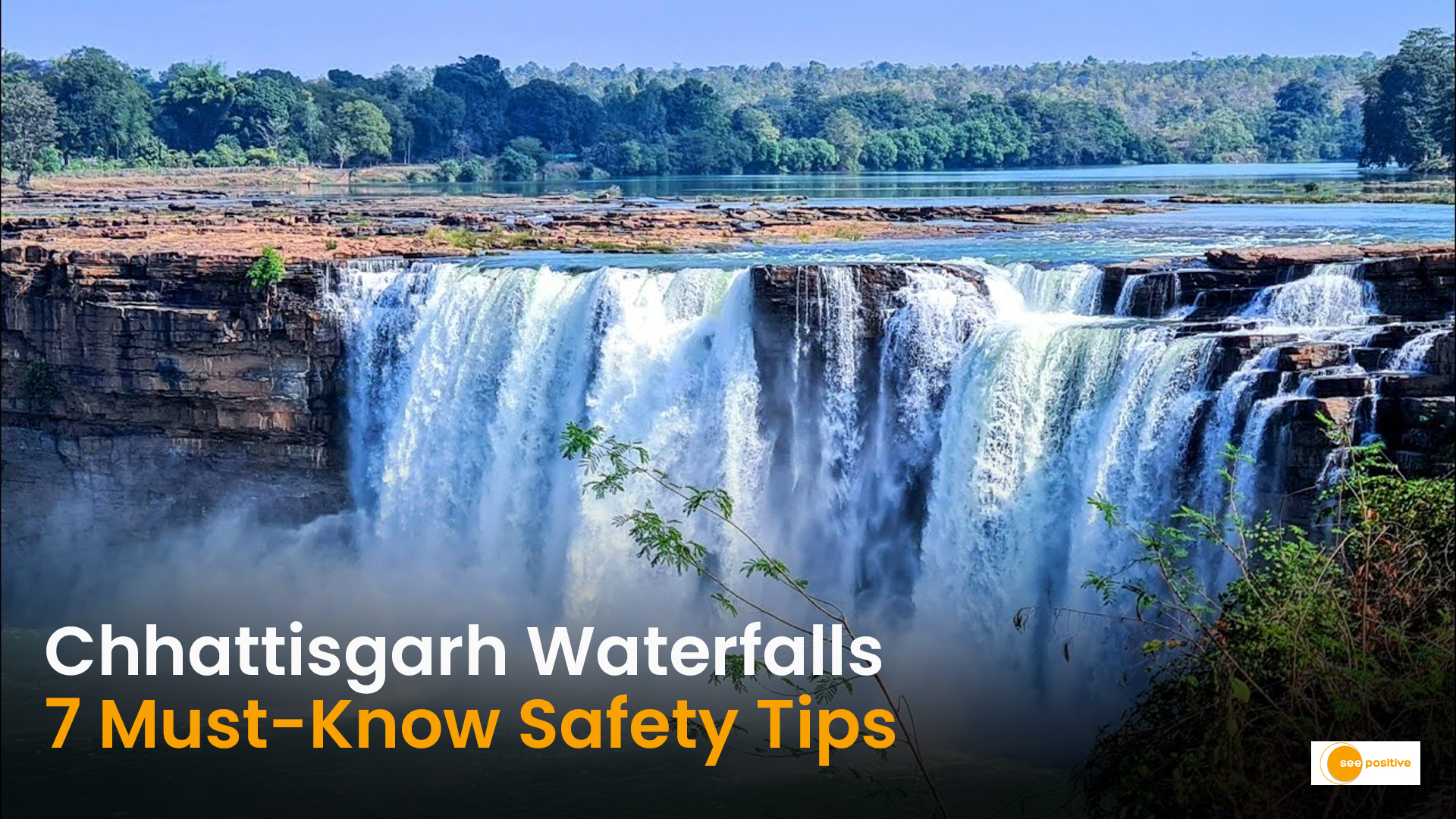
When the monsoon clouds gather, Chhattisgarh transforms into an enchanting eco- tourism paradise. Famous for its sprawling forests, rolling hills, and roaring waterfalls, the state offers some of the most spectacular natural sights in Central India. Called the “Niagra of India,” the garnad Chitrakote Waterfall in the Bastar region expands to a breathtaking width during the rainy season.
Other popular spots like Tirathgarh, Tamra Ghoomari, Kendai, Chitradhara, and Amrit Dhara draw thousands of nature lovers, photographers, and road-trippers eager to witness water plunging down rocky cliffs surrounded by dense greenery.
However, while monsoon waterfalls present an unforgettable visual experience, they also bring hidden hazards. Heavy rains, sudden water surges, slippery terrain, and dense jungle environments mean that a simple trip can quickly become dangerous if you are unprepared.
To help you enjoy a memorable journey while staying completely safe, here is an in-depth guide to 7 crucial safety measures you must follow when visiting Chhattisgarh’s waterfalls during the monsoon.
1. Track Local Weather Forecasts and River Surge Warnings
Weather in forest regions can change rapidly during peak monsoon months. Rainfall far upstream can cause a calm waterfall to turn into a raging torrent in a matter of minutes, a phenomenon known as a flash flood.
- Always check the daily weather updates for the specific district you are visiting, such as Jagdalpur, Korba, Bastar, or Surguja.
- Pay attention to notices issued by the local administration or the India Meteorological Department (IMD).
- If heavy downpour alerts or red warnings are issued for catchment areas, postpone your trip to riverbeds and low-lying waterfall basins until conditions stabilize.
2. Respect Safety Barricades and Avoid Slippery Edges
Local authorities and the Chhattisgarh Tourism Board install protective railings and warning markers at high-risk vantage points. Unfortunately, wet rocks quickly accumulate slick layers of algae, moss, and wet mud during the rainy season.
- Never climb over fencing or jump protective boundary walls just to take pictures, videos, or selfies
- Keep a generous distance from the edge of cliffs and slippery boulders, as a single loss of traction can lead to a tragic fall.
- Remind fellow travelers and children in your group to stay strictly on paved viewing platforms
3. Avoid Swimming or Wading into Natural Water Pools
The roaring sound of cascading water can mask dangerous undercurrents lurking just beneath the surface. Deep natural sinkholes, sharp submerged rocks, and swirling whirlpools exist near the plunge pools of high waterfalls.
- Avoid swimming in pools below massive falls like Chitrakote, Kendai, or Amrit Dhara during peak monsoon months.
- Even if the water near the shore looks shallow and calm, strong currents can easily pull a person under.
- Stick to admiring the waterfalls from safe, designated viewing areas built for tourists.
4. Hire Registered Local Guides in Forest Belts
Many scenic waterfalls in Chhattisgarh—such as Tirathgarh inside Kanger Valley National Park or Tamra Ghoomari—are situated within deep forest corridors. Taking a local guide along enhances both your safety and overall travel experience.
- Local guides know the terrain intimately and can spot subtle signs of rising water levels early.
- They ensure you stay on marked, safe trekking routes rather than venturing into dangerous, uncharted jungle patches.
- They can bridge communication gaps and assist if you encounter unexpected wildlife or vehicle breakdowns.
5. Dress Smart: Wear Traction Shoes and Hands-Free Rain Gear
Navigating wet forest trails and rocky pathways requires proper gear to prevent slips and protect your belongings.
- Footwear: Ditch flip-flops, smooth-soled sneakers, and high heels. Wear sturdy, waterproof trekking shoes or trail sandals with deep rubber treads that grip wet rock faces well.
- Rain Protection: Choose a durable raincoat or waterproof poncho over a standard umbrella. Raincoats keep your hands free, allowing you to hold onto safety railings or balance yourself while trekking.
- Gear Protection: Use waterproof dry bags or ziplock pouches for your smartphones, cameras, power banks, and personal identification documents.
6. Keep Offline Maps and Emergency Contact Numbers Ready
Cellular network signals are notoriously unreliable deep within forest belts and rural valleys across Bastar and Surguja.
- Download offline maps (such as Google Maps or Maps.me) for your entire driving route and destination before leaving your hotel.
- Keep a physical paper map of Chhattisgarh’s highway networks in your vehicle.
- Save important contact numbers on your phone and write them on paper, including local police stations, tourist helplines, medical facilities, and your hotel desk.
7. Wrap Up Your Visit Well Before Sunset
Daylight fades rapidly under thick monsoon cloud cover, especially in heavy forest regions. Driving along winding rural roads or forest highways in the dark during a rainstorm presents severe safety challenges.
- Plan your itinerary to leave the waterfall site by 4:30 PM or 5:00 PM at the latest.
- Wild animals often cross forest roads near natural water sources as dusk approaches.
- Leaving early ensures safe driving vision and protects you from getting stranded in remote areas during night rains.
Quick Safety Checklist for Chhattisgarh Waterfall Trips
| Category | Recommended Gear / Action | Purpose |
| Footwear | Rubber-soled, high-traction trekking shoes | Prevents slipping on mossy, wet rocks |
| Navigation | Offline maps downloaded to your phone | Ensures reliable navigation without cell service |
| First Aid | Bandages, antiseptic wipes, insect repellent | Quickly treats minor scrapes, insect bites, or leeches |
| Safety Rule | Stay behind official barricades at all times | Protects against sudden flash floods and falls |
Exploring Chhattisgarh’s roaring waterfalls during the monsoon offers an incredible date with untouched nature. By respecting local guidelines, keeping safety ahead of risky photos, and coming properly prepared for weather changes, you can experience the best of Chhattisgarh’s natural wonders with total peace of mind.
Have you ever witnessed Chitrakote or Tirathgarh during the rainy season? Share your favorite monsoon travel memories and safety tips in the comments below!

