

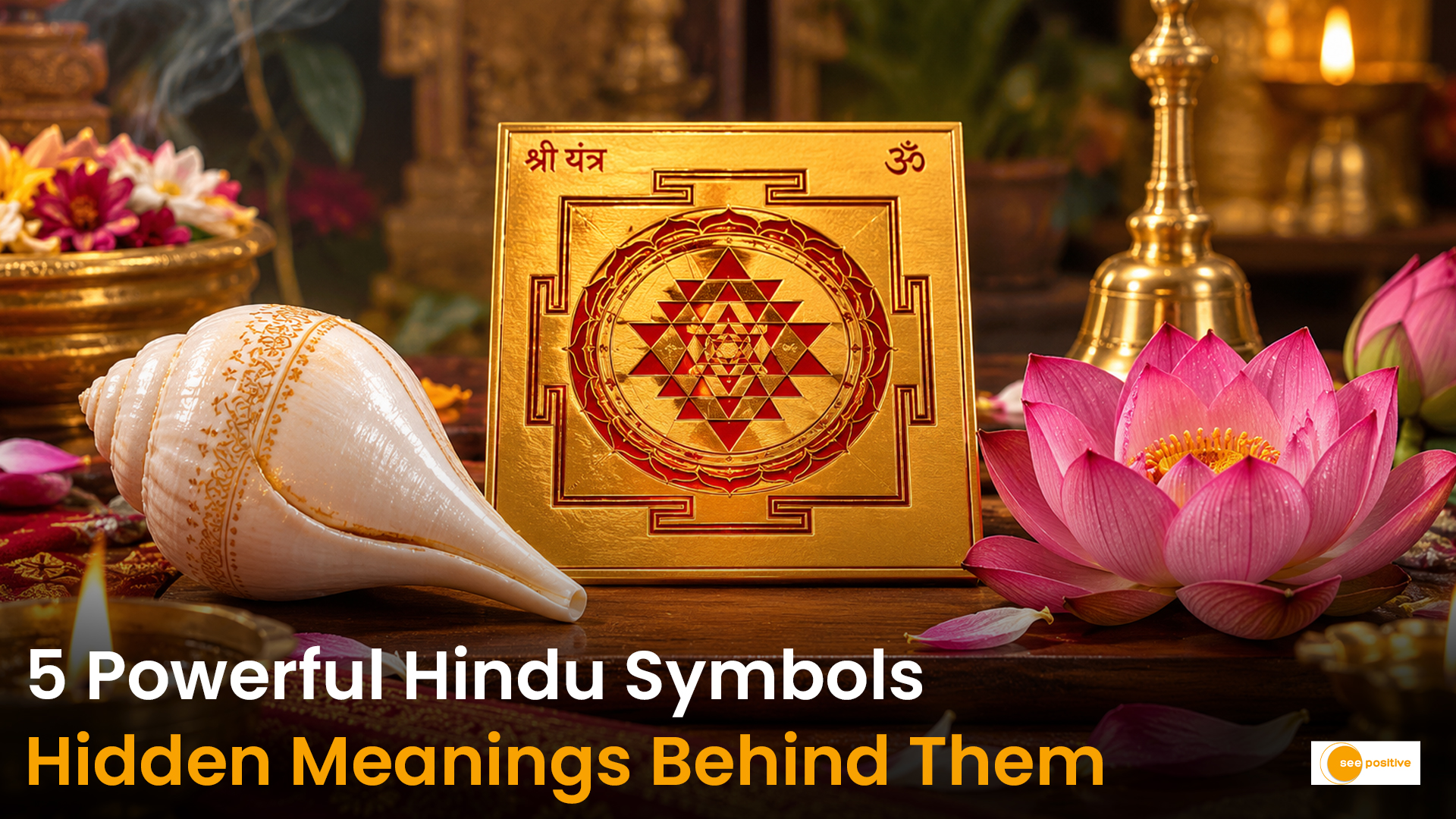
Hinduism is a spiritual tradition filled with sacred symbols that represent divine blessings, inner peace, prosperity, and the triumph of good over evil. These symbols are more than religious designs; they carry centuries of cultural history, philosophical teachings, and spiritual meaning.
From the sacred sound of Om to the intricate geometry of the Shri Yantra, many Hindu symbols are traditionally associated with positivity, protection, and spiritual growth. They are commonly found in homes, temples, places of worship, and meditation spaces.
Let us explore five powerful symbols in Hinduism and discover what they represent.
1. Om (ॐ): The Sacred Sound of the Universe
Om, also written as Aum, is one of the most important sacred symbols in Hinduism. It represents the ultimate reality, known as Brahman, and is associated with the origin and unity of existence.
The sound of Om is frequently chanted during prayers, yoga, and meditation. Its repetition can help practitioners focus their attention, cultivate mindfulness, and develop a sense of inner calm.
In Hindu philosophy, Om is also associated with different states of consciousness, including waking, dreaming, and deep sleep.
Spiritual significance: Om represents universal consciousness, spiritual awareness, peace, and the connection between the individual and the divine.
Many people place the Om symbol in their prayer rooms or use it during meditation as a reminder to remain calm, focused, and spiritually connected.
2. Swastika (स्वस्तिक): An Ancient Symbol of Auspiciousness
The Swastika is an ancient sacred symbol widely used in Hindu religious and cultural traditions. In this context, it is associated with good fortune, prosperity, well-being, and auspicious beginnings.
The symbol is commonly drawn during festivals, weddings, housewarming ceremonies, and other important religious occasions. It may appear on entrances, prayer spaces, ritual objects, and traditional decorations.
In Hindu traditions, the Swastika is also associated with the sun, harmony, and the cyclical nature of existence.
Spiritual significance: The Swastika represents auspiciousness, prosperity, balance, and the hope for a positive future.
It is important to distinguish this ancient Indian religious symbol from the Nazi emblem, which appropriated a visually related symbol and gave it a hateful political meaning.
For many Hindu families, the Swastika remains a meaningful expression of faith and a traditional symbol of blessings for new beginnings.
3. Lotus (कमल): A Symbol of Purity and Spiritual Growth
The lotus flower occupies a special place in Hindu art, mythology, and religious worship. It is associated with several deities, including Goddess Lakshmi and Lord Brahma.
One of the lotus’s most significant qualities is its ability to bloom above muddy water while retaining its beauty. This natural characteristic has made it a powerful metaphor for purity, resilience, and spiritual development.
The lotus teaches the idea that a person can rise above difficulties and remain committed to truth, compassion, and inner goodness.
Spiritual significance: The lotus symbolizes purity, wisdom, divine beauty, detachment, and spiritual awakening.
Images of lotus flowers are often used in homes, temples, paintings, and meditation spaces. For devotees, the flower serves as a reminder to grow through life’s challenges without losing one’s values.
4. Shankha (शंख): The Sacred Conch of Divine Protection
The Shankha, or conch shell, is an important ritual object in Hinduism and is particularly associated with Lord Vishnu.
The conch is traditionally blown during religious ceremonies, temple worship, and auspicious occasions. Its resonant sound marks the beginning of worship and helps create a devotional atmosphere.
In Hindu religious traditions, the sound of the Shankha is associated with purity, divine presence, and the victory of righteousness. It is also an important attribute of Lord Vishnu in religious imagery.
Spiritual significance: The Shankha represents auspiciousness, purity, courage, protection, and the proclamation of dharma, or righteousness.
Many Hindu households keep a conch in their prayer rooms as a sacred object. Its use in rituals reflects the importance of sound, devotion, and disciplined spiritual practice.
5. Shri Yantra (श्री यंत्र): A Sacred Geometry of Prosperity and Harmony
The Shri Yantra, also known as Sri Chakra, is a sacred geometric diagram used in particular Hindu spiritual and devotional traditions.
It consists of nine interlocking triangles arranged around a central point called the bindu. The diagram represents the relationship and unity of cosmic principles, including the divine masculine and feminine in traditions that worship the union of Shiva and Shakti.
The Shri Yantra is also closely associated with Goddess Tripura Sundari and, in many popular devotional practices, with prosperity and abundance.
Spiritual significance: The Shri Yantra represents spiritual harmony, the union of cosmic energies, concentration, and the pursuit of prosperity.
Some practitioners use the Shri Yantra during meditation, worship, or contemplation. Its intricate geometry encourages focused attention and serves as a visual representation of complex spiritual ideas.
Although it is traditionally believed to invite auspiciousness, there is no scientific guarantee that keeping a particular symbol will automatically produce wealth or change external circumstances.
How Can These Sacred Symbols Be Incorporated into Daily Life?
People incorporate Hindu symbols into their daily routines in different ways, depending on their family traditions and personal beliefs.
- Meditation: Chanting Om can be used as a mindfulness practice to encourage concentration and calm.
- Prayer and rituals: The Swastika, Shankha, and other sacred objects may be used during traditional worship.
- Home decoration: Lotus artwork and sacred symbols can serve as reminders of spiritual values and cultural heritage.
- Contemplation: The Shri Yantra can be used as a focus for meditation within traditions that prescribe its use.
- Positive habits: Reflecting on the meanings of these symbols can encourage qualities such as patience, gratitude, compassion, and self-discipline.
Their deeper value lies not only in their physical presence but also in the ideas and values they represent to practitioners.
Symbols reflect universal consciousness
The five sacred symbols of Hinduism—Om, Swastika, Lotus, Shankha, and Shri Yantra—carry rich spiritual meanings and remain an important part of India’s religious and cultural heritage.
Each represents a different aspect of spiritual life: Om reflects universal consciousness, the Swastika symbolizes auspiciousness, the Lotus represents purity, the Shankha signifies divine protection and righteousness, and the Shri Yantra expresses sacred harmony.
For millions of devotees, these symbols provide a meaningful connection with their faith and traditions. When approached with understanding and respect, they can also inspire reflection, mindfulness, gratitude, and a more positive outlook on everyday life.

