

Every day, billions of people use the internet for video calls, streaming, online shopping, gaming, and social media. But have you ever wondered how data travels across countries and continents in just a few seconds?
Many people think the internet works mainly through satellites. However, the reality is surprising — more than 95% of international internet traffic travels through underwater fiber optic cables placed deep beneath the oceans.
These hidden cables are the real backbone of the modern digital world.
What Are Undersea Internet Cables?
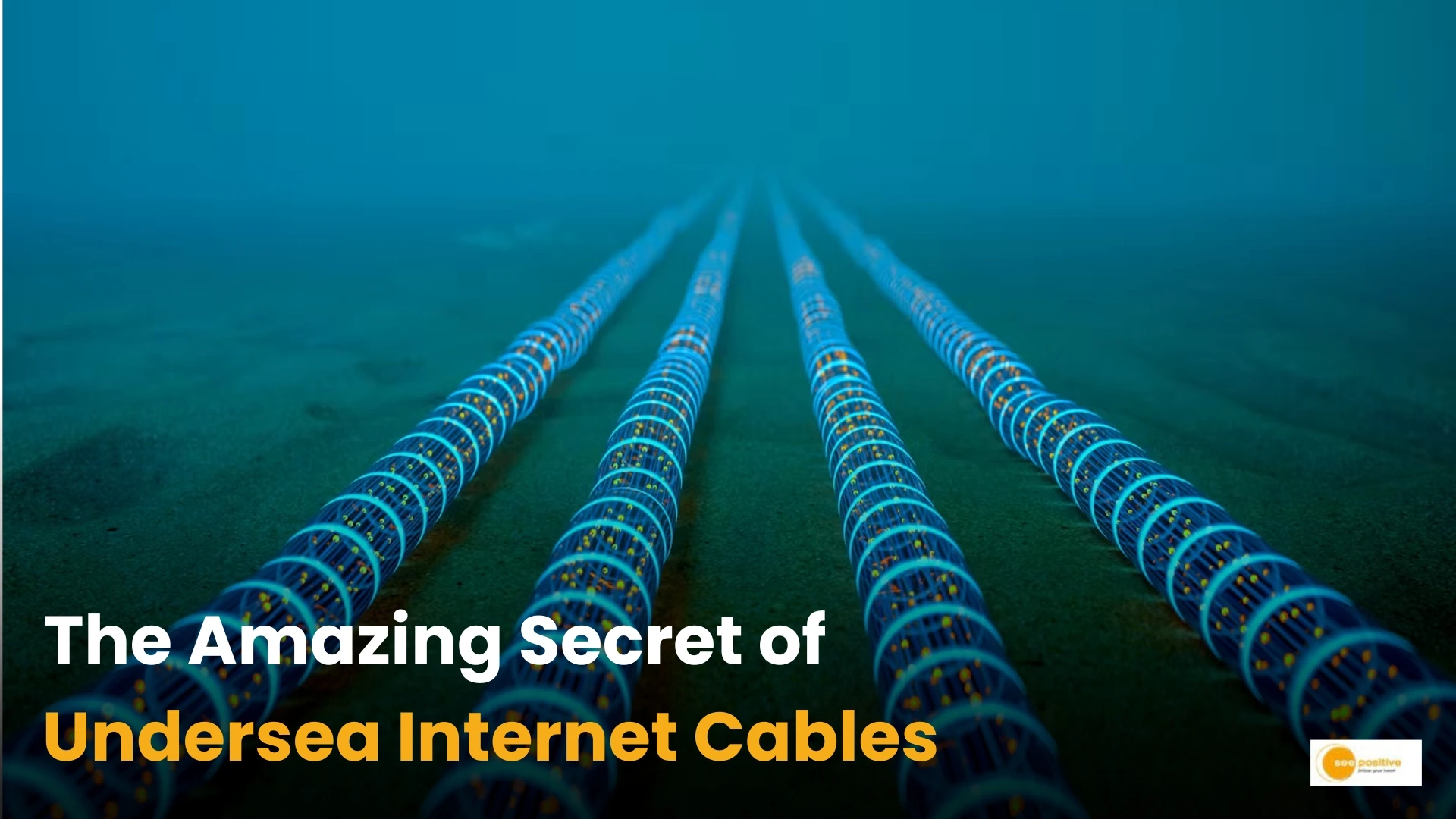
Undersea cables, also known as submarine cables, are special fiber optic cables installed on the ocean floor to connect different countries and continents.
These cables carry massive amounts of digital information, allowing people across the world to communicate instantly.
Today, hundreds of active submarine cable systems connect the global internet network, stretching across millions of kilometers under the sea.
How Do Undersea Cables Carry Internet Data?
Whenever you open a website, watch a video, or send a message internationally, your data travels through a complex network of servers and reaches these underwater cables.
Inside the cable, data moves in the form of light pulses through tiny glass fibers.
Because light travels extremely fast, information can cross thousands of kilometers in milliseconds.
This is how a video call between two different countries can happen almost instantly.
Why Are Fiber Optic Cables So Fast?
Unlike traditional cables, fiber optic cables use light instead of electrical signals.
They provide:
- Extremely high-speed data transfer
- Low signal loss
- Huge data carrying capacity
- Reliable international connectivity
A single undersea cable can carry enormous amounts of internet traffic at the same time.
Why Don’t We Use Only Satellites for the Internet?
Satellites are useful, especially in remote areas, but they cannot replace underwater cables completely.
Undersea cables are preferred because:
Lower Latency
Data travels a shorter route, making activities like video calls and online gaming smoother.
Higher Capacity
Cables can handle much larger amounts of data compared to most satellite connections.
Better Efficiency
For global internet traffic, submarine cables are faster and more cost-effective.
How Are These Cables Installed Under the Ocean?
Special ships called cable-laying vessels are used to place these cables on the seabed.
The process involves:
- Mapping the safest ocean routes
- Laying cables carefully along the seabed
- Protecting cables near coastal areas
Engineers design routes that avoid underwater hazards as much as possible.
What Happens If an Undersea Cable Breaks?
Although these cables are protected, they can sometimes get damaged.
Common causes include:
- Ship anchors
- Fishing equipment
- Earthquakes
- Underwater landslides
- Natural disasters
If one cable breaks, internet traffic is usually redirected through other available routes. However, some regions may experience slower speeds.
Do Sharks Really Damage Internet Cables?
The idea that sharks regularly attack internet cables is popular online, but it is highly exaggerated.
While rare incidents have happened, modern cables are built with strong protective layers to withstand harsh underwater conditions.
Human activities and natural events are much bigger risks than marine animals.
How Is India Connected to the Global Internet?
India is connected to several international submarine cable networks that link it with regions such as:
- Asia
- Europe
- Middle East
- North America
These connections support:
- High-speed internet
- Online banking
- Cloud services
- Video streaming
- Digital payments
- Global businesses
Why Are Undersea Cables Important?
These hidden internet highways power the modern digital economy.
They help enable:
- Social media platforms
- Online education
- Remote work
- International communication
- Artificial intelligence services
- Cloud computing
Without these cables, global internet connectivity would be extremely limited.
Will Satellite Internet Replace Undersea Cables?
Experts believe satellites and submarine cables will continue to work together.
Satellite internet is valuable for remote locations, but underwater fiber networks remain the most powerful solution for handling the massive amount of global data traffic.
The future internet will likely depend on both technologies working together.

