

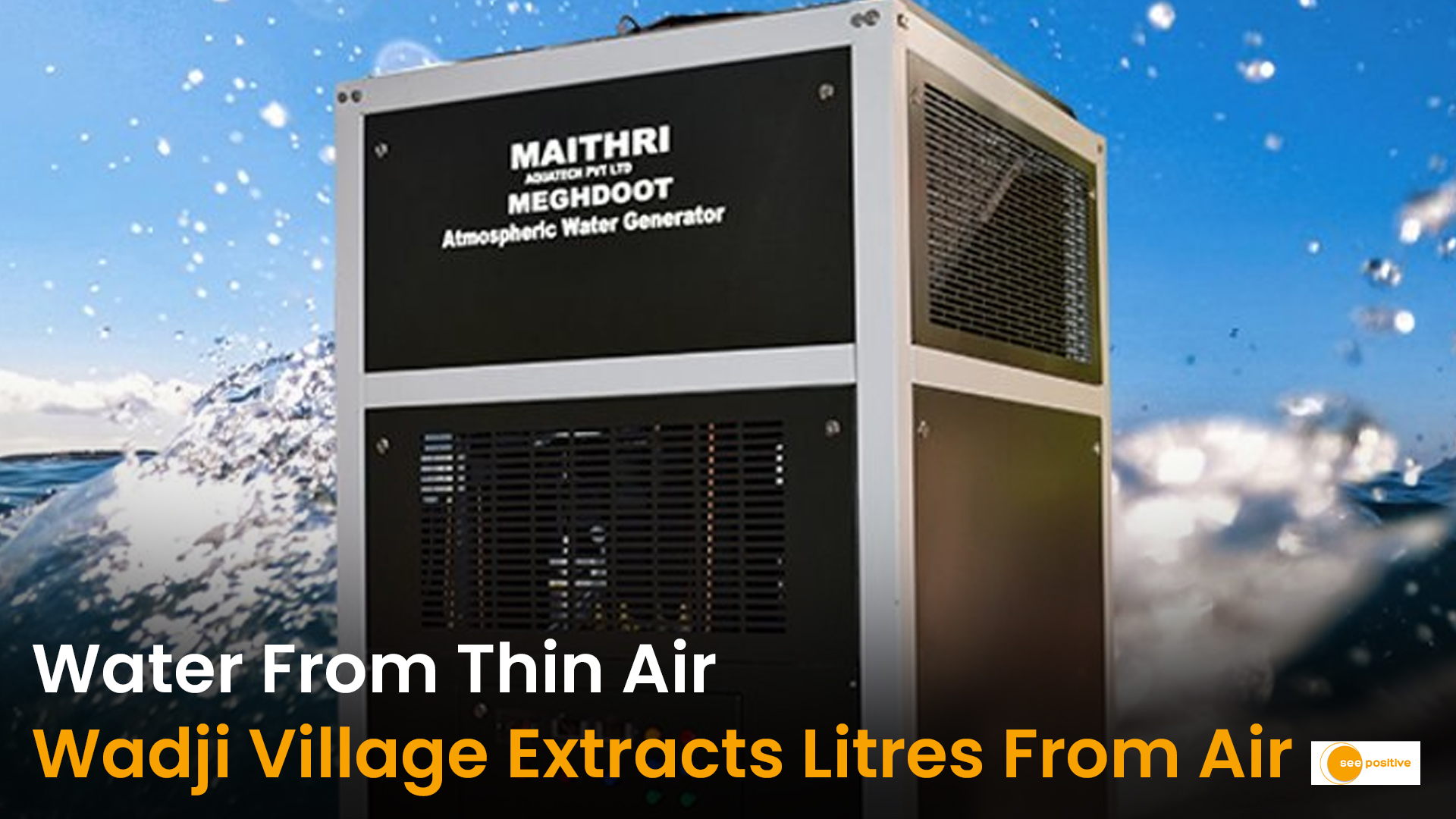
For many decades, families in Washim district faced severe daily water shortages. Consequently, residents of Wadji village had to walk long distances every single day just to fetch basic drinking water. However, a remarkable technological solution has completely changed this daily struggle. Today, the installation of Wadji village water from air technology generates 500 litres of pure drinking water every day.
By harvesting atmospheric moisture, this small rural community in Maharashtra has solved its drinking water crisis without relying on depleted underground borewells.
1. How Wadji Village Water from Air Technology Works
Traditional water sources depend heavily on rainfall and local rivers. In contrast, atmospheric water generation extracts pure moisture directly from humidity in the surrounding atmosphere.
- Air Filtration: First, powerful intake fans draw ambient air through multi-stage filters. These filters clean out airborne dust particles and local impurities.
- Cooling and Condensation: Next, the purified air passes over specialized cooling coils. As the air cools down to its dew point, moisture naturally condenses into clean water droplets.
- Multi-Stage Purification: Finally, the collected water passes through carbon filters and ultraviolet (UV) treatment. Therefore, the water becomes completely safe for daily drinking.
Furthermore, this continuous process works efficiently even during hot dry seasons when traditional wells dry up.
2. The Impact of Meghadoot Technology in Wadji
The breakthrough system behind the Wadji village water from air project is called Meghadoot. This technology was developed by scientists at CSIR-IICT in Hyderabad alongside Maithri Aquatech.
- Strategic Location: The installation team placed the main unit inside the local Zilla Parishad Primary School.
- Direct Community Benefits: Consequently, school children and nearby Anganwadi workers receive fresh drinking water throughout the day.
- Groundwater Protection: Moreover, the local community no longer needs to over-extract local groundwater reserves.
As a result, health standards in the village have improved significantly over recent months.
3. Why Air-to-Water Innovation Matters for Rural India
Water scarcity creates huge challenges for rural villages across India. Traditional pipeline projects often require expensive infrastructure and frequent maintenance. However, atmospheric water systems offer unique structural advantages for remote areas.
- Complete Independence: These machines do not require local rivers or groundwater tables to function smoothly.
- Decentralized Production: Water is produced right at the point of use. Therefore, transportation costs are eliminated.
- Easy Scalability: In addition, these units can be easily installed at local health centers, schools, and bus stations.
Final Thoughts
The success of the Wadji village water from air project highlights the power of practical scientific innovation. By turning atmospheric moisture into drinking water, Wadji sets a inspiring example for sustainable rural development across India.

