

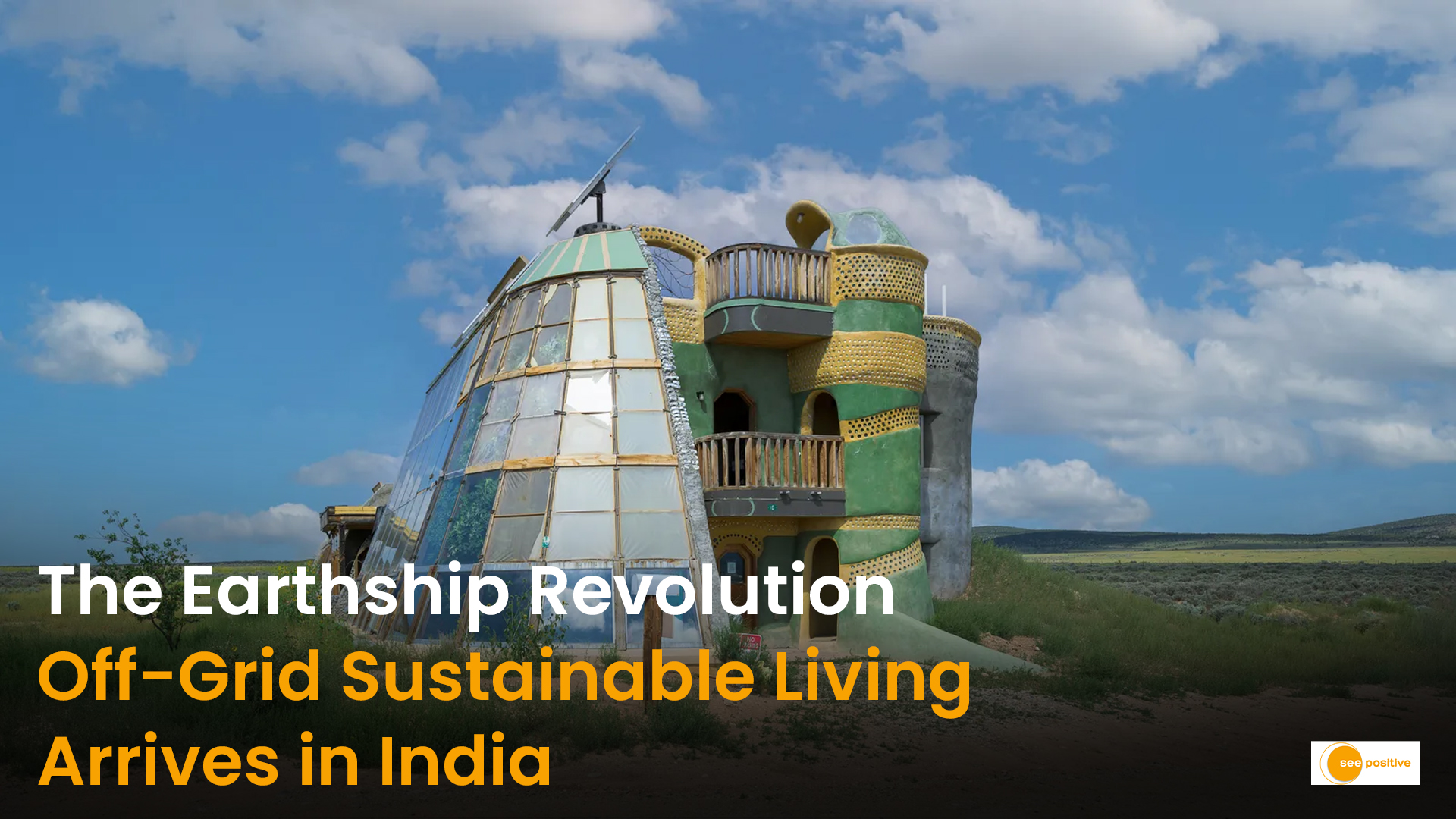
Imagine living in a house that warms and cools itself naturally. Picture a home that harvests its own water, generates its own power, and grows its own food. Moreover, builders construct this house using old tires, glass bottles, and packed soil.
This innovative idea is called an Earthship. American architect Michael Reynolds created this eco-friendly building style in the 1970s. Today, Earthships prove that people can live comfortably without relying on city power grids or fossil fuels.
What Is an Earthship? The 6 Key Principles
An Earthship functions as a self-sustaining ecosystem. It relies on six core architectural ideas to stay fully off-grid:
1. Building with Recycled Waste
Workers build the main structural walls using old rubber tires. First, they pack these tires tightly with soil. Then, they stack them like heavy bricks. As a result, these strong walls can easily withstand earthquakes. Additionally, builders craft inner walls using discarded glass bottles and metal cans. These bottle walls let colorful sunlight shine through like stained glass.
2. Natural Heating and Cooling
Earthships do not need electric heaters or air conditioners. Instead, they use thick earth walls to trap heat during the day. At night, these dense walls release warmth back into the rooms. Furthermore, large south-facing glass windows capture natural sunlight. Consequently, the home maintains a comfortable indoor temperature all year round.
3. Renewable Solar and Wind Energy
Solar panels on the roof collect sunlight during the day. Similarly, small wind turbines capture breeze energy. The system then stores this electricity in powerful batteries. Therefore, residents have reliable power for lights, computers, and home appliances.
4. Rainwater Harvesting
An Earthship collects every drop of rain and snow from its roof. First, the water drains into large holding tanks. Next, a multi-stage filter cleans the water thoroughly. As a result, the household gets clean water for drinking, cooking, and bathing.
5. On-Site Water Recycling
An Earthship reuses its water up to four times. For example, used water from sinks and showers feeds indoor garden plants. After that, this recycled water flushes the toilets. Finally, the toilet water feeds outdoor non-edible landscaping.
6. Indoor Food Production
Most Earthships feature a long greenhouse along the front glass wall. This sunny space acts as a natural heater. Besides regulating temperature, this greenhouse allows families to grow fresh vegetables, herbs, and fruits indoors all year.
Earthship Homes in India: Scope and Challenges
India faces rapid urban growth and severe climate change issues. Therefore, decentralized eco-homes are becoming very attractive to Indian homeowners.
Great Opportunities for India
- Abundant Sunshine: Most Indian states enjoy over 300 sunny days each year. Consequently, solar panels and passive heating work at peak efficiency.
- Waste Repurposing: India produces vast amounts of scrap tires and glass waste. Thus, Earthship methods offer a cheap way to recycle trash into durable homes.
- Extreme Weather Relief: Soil walls protect homes from harsh summer heat in Rajasthan. Similarly, they keep homes warm during freezing winters in Ladakh and Himachal Pradesh.
Real Examples in India
In 2014, Michael Reynolds led a team to build an official Earthship in Karunagappally, Kerala. Additionally, local builders in Spiti Valley, Himachal Pradesh use similar earth-building ideas to keep high-altitude community spaces warm without burning wood.
Current Challenges
However, building full Earthships in India still has some hurdles. Municipal authorities often lack safety codes for tire construction. Furthermore, heavy monsoon rains in coastal regions require high-quality waterproofing to prevent dampness.
Final Thoughts
Although high-rise city apartments cannot easily use full Earthship designs, individual concepts are spreading fast. Today, many modern Indian green buildings use rainwater recycling, solar power, and natural earth walls. Earthships clearly show that sustainable living can turn everyday waste into comfortable, energy-independent homes.

