

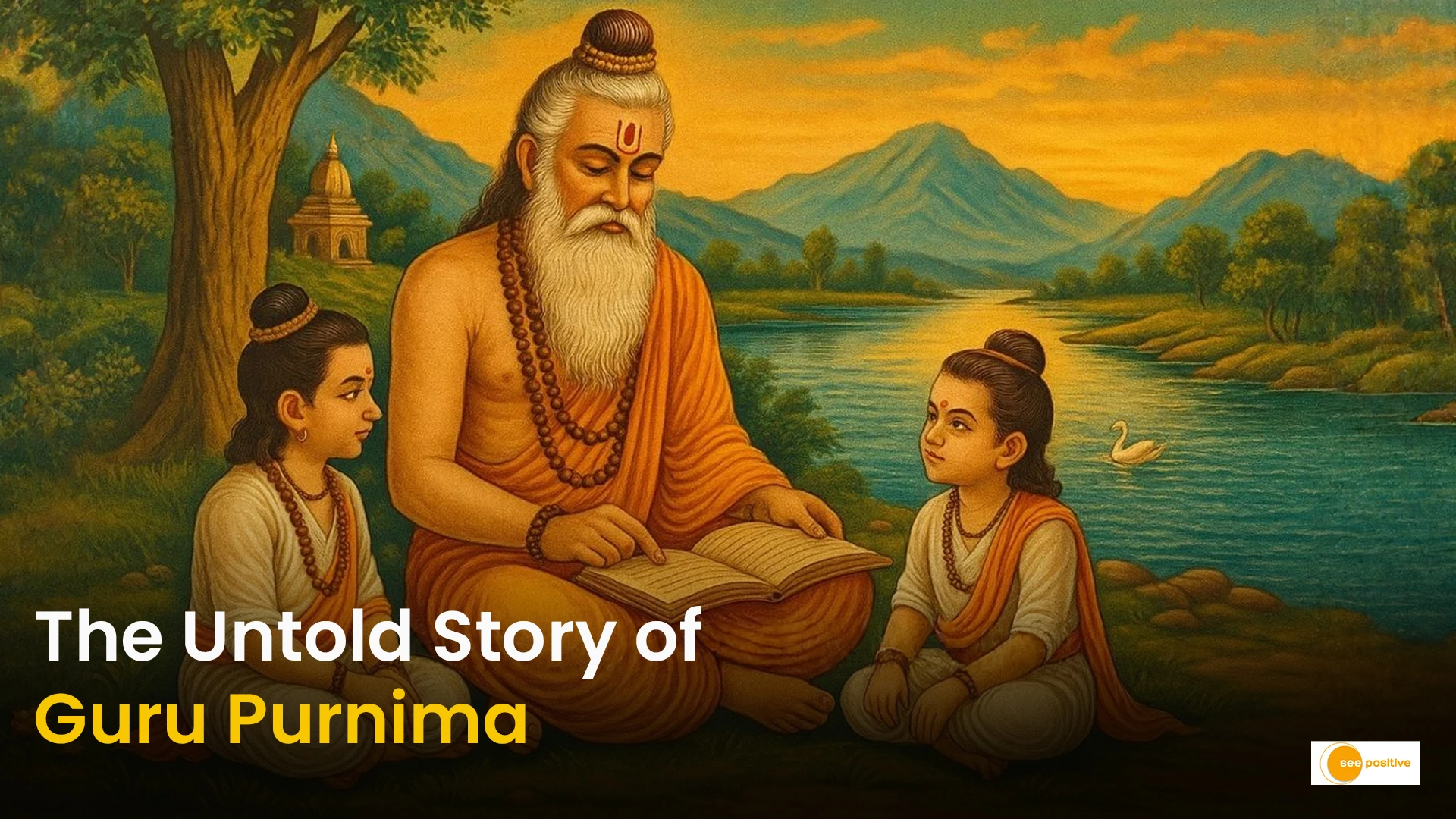
Every year, millions of Indians celebrate Guru Purnima by expressing gratitude to their teachers, spiritual masters, and mentors. While most people know it as a day to honor gurus, few are aware of the fascinating stories hidden in Hindu scriptures that explain how this sacred tradition began.
From the wisdom of Maharishi Ved Vyasa to the teachings of Lord Shiva as Adi Guru, Guru Purnima represents much more than a festival—it is a timeless celebration of knowledge, enlightenment, and the eternal bond between a guru and a disciple.
What Is Guru Purnima?
Guru Purnima is celebrated on the full moon (Purnima) of the Hindu month of Ashadha, usually falling in July.
The word Guru comes from Sanskrit:
- Gu means darkness.
- Ru means remover.
In Hindu philosophy, a guru is regarded as the bridge between ordinary knowledge and spiritual realization.
Why Is Guru Purnima Also Called Vyasa Purnima?
One of the most important stories behind Guru Purnima is connected with Maharishi Ved Vyasa, one of the greatest sages in Indian history.
According to Hindu tradition, Maharishi Vyasa was born on this sacred full moon day.
He is credited with:
- Compiling the four Vedas
- Writing the Mahabharata
- Composing the Brahma Sutras
- Compiling the eighteen Puranas
- Preserving India’s spiritual knowledge for future generations
Because of his unparalleled contribution to Hindu philosophy and literature, Guru Purnima is also known as Vyasa Purnima.
Even today, many spiritual institutions begin the day by paying homage to Maharishi Ved Vyasa.
The Lesser-Known Story of Lord Shiva as the First Guru
Long before formal schools existed, Hindu scriptures describe Lord Shiva as the world’s first Guru, or Adi Guru.
Ancient traditions narrate that after attaining supreme knowledge through meditation, Lord Shiva remained silent for a long time in the Himalayas.
Seven devoted seekers patiently waited for years, hoping to receive his wisdom.
Impressed by their dedication, Shiva accepted them as his disciples.
These seven disciples later became famous as the Saptarishis, who carried spiritual knowledge across different regions of the world.
Many spiritual traditions believe that this divine transmission of knowledge took place on the day now celebrated as Guru Purnima.
This is why Guru Purnima symbolizes not only respect for teachers but also the beginning of humanity’s spiritual education.
Guru-Shishya Tradition: India’s Greatest Legacy
Guru Purnima celebrates one of India’s oldest educational systems—the Guru-Shishya Parampara.
Unlike modern classrooms, ancient learning focused on the complete development of an individual.
A guru taught:
Spiritual Wisdom
Helping disciples understand life beyond material success.
Moral Values
Teaching truthfulness, compassion, discipline, and self-control.
Practical Skills
From philosophy and medicine to astronomy, warfare, music, yoga, and governance.
Students often lived in Gurukuls, where education was considered a way of life rather than merely acquiring information.
Why the Guru Is Considered Equal to God
Hindu scriptures describe the guru as one who guides a seeker toward the Divine.
The famous Sanskrit verse says:
Guru Brahma Guru Vishnu Guru Devo Maheshwara, Guru Sakshat Parabrahma Tasmai Shri Gurave Namah.
This verse means that the guru embodies the creative, sustaining, and transformative principles of the universe because the guru leads the disciple toward ultimate truth.
The teaching emphasizes reverence for wisdom rather than worship of an individual.
The Spiritual Meaning Behind Guru Purnima
Guru Purnima is not limited to honoring religious teachers.
A guru can be:
- Parents
- School teachers
- Spiritual masters
- Mentors
- Coaches
- Guides who inspire positive change
The festival reminds us that every meaningful lesson in life comes through someone willing to share knowledge.
Guru Purnima Beyond Hinduism
Although rooted in Hindu tradition, Guru Purnima is also significant in other Indian faiths.
In Buddhism
It commemorates the day when Gautama Buddha delivered his first sermon at Sarnath after attaining enlightenment.
In Jainism
The day honors Lord Mahavira’s first disciple, Gautam Swami, highlighting the importance of the teacher-disciple relationship.
This shared observance reflects the deep cultural value placed on learning and guidance across Indian traditions.
Fascinating Facts About Guru Purnima
- Guru Purnima is celebrated across India, Nepal, and many other countries with Indian spiritual traditions.
- The festival is observed on the first full moon after the summer solstice in the traditional Hindu calendar.
- Maharishi Ved Vyasa is regarded as one of the greatest editors and preservers of Vedic knowledge.
- The Guru-Shishya tradition influenced classical Indian music, yoga, Ayurveda, philosophy, and martial arts.
- Many spiritual organizations initiate new students on Guru Purnima because it is considered an auspicious day for beginning the pursuit of knowledge.
Why Guru Purnima Still Matters Today
In an age where information is available instantly, Guru Purnima reminds us that wisdom cannot be downloaded—it is cultivated through guidance, discipline, humility, and experience.
Whether your guru is a parent, teacher, mentor, coach, or spiritual guide, this festival celebrates those who illuminate the path from confusion to clarity.
Its timeless message is simple yet profound: civilizations flourish when knowledge is respected, preserved, and passed from one generation to the next.

