

The festive season of Diwali and Dhanteras is traditionally considered an auspicious time to purchase real estate. Driven by festive discounts, flexible payment plans, and zero-stamp-duty schemes, thousands of families gear up to invest in their dream homes.
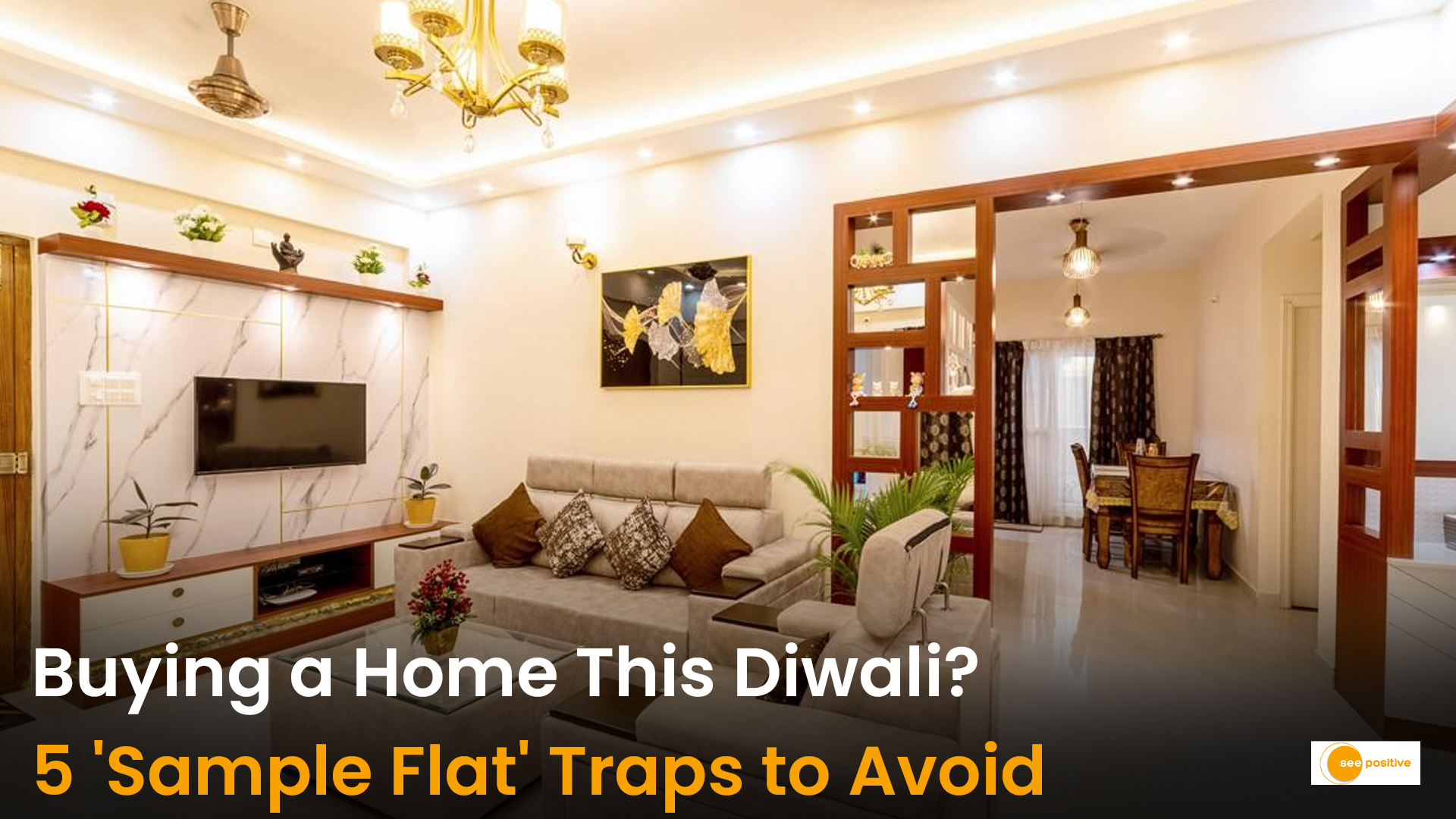
However, many buyers book an apartment simply after getting mesmerized by the glitz and glamour of a sample flat, only to regret their decision later. A sample flat is built as a marketing showcase designed to look far more spacious, bright, and luxurious than the actual handed-over unit.
Before making a major financial commitment to any residential project, it is essential to do a thorough background check.
Here are 5 crucial things you must inspect before booking a property based on a sample flat.
1. Do Not Fall for Custom “Micro-Furniture” and Missing Walls
When walking into a professionally staged sample flat, the rooms often feel exceptionally open and airy. However, developers frequently use clever design tricks to create a false sense of space.
- Micro-Sized Furniture: Developers often use custom-built furniture that is slightly smaller than standard market dimensions—such as 5×6 feet beds instead of standard king-size beds or extra-thin wardrobes.
- Removed Partition Walls: In many sample flats, solid interior walls between the living room and balcony or kitchen are replaced with glass dividers or left open entirely.
- The Reality Check: Always request the approved floor layout plan with exact room measurements in feet and inches. Measure the actual usable floor area using a tape measure rather than trusting your visual impression.
2. Differentiate Carpet Area from Super Built-Up Area
In real estate brochures, developers often promote large figures like “1500 sq. ft. 3BHK.” Buyers must verify how much of that space is actually livable.
Understanding Area Definitions under RERA:
- Carpet Area: The net usable floor space inside the outer walls where you actually place furniture and live.
- Built-Up Area: The carpet area plus wall thickness and private balcony spaces.
- Super Built-Up Area: The built-up area plus proportionate shared common spaces like elevator shafts, lobbies, staircases, and amenities.
Under RERA (Real Estate Regulatory Authority) guidelines, builders are legally required to quote and sell properties based strictly on Carpet Area. Ensure that your allotment letter explicitly mentions the exact carpet area you are paying for, rather than a vague super built-up figure.
3. Thoroughly Verify RERA Registration and Approved Sanctions
Never pay a booking amount or token fee for any under-construction project without verifying its regulatory status on the official state RERA portal.
- Mandatory RERA Number: Every active project must display a unique RERA registration number on all promotional boards, brochures, and advertisements.
- Check Possession Timelines: Search the project on your state’s RERA website to confirm the declared completion date, legal land title, financial disclosures, and bank encumbrance status.
- Local Municipal Sanctions: Ensure the project has received layout approvals and building plan sanctions from the local municipal corporation and urban planning authorities.
4. Uncover Hidden “Extra” Charges Beyond the Base Price
During festive Diwali campaigns, builders often market an attractive “base price” per square foot. However, the final out-of-pocket cost is significantly higher once mandatory add-ons are calculated.
Common Hidden Costs to Calculate Before Booking:
- Clubhouse and Amenity Charges: One-time fees for access to gymnasiums, swimming pools, and community halls.
- Electrification and Water Connection Charges: Infrastructure fees levied for utility pipeline linking and high-voltage transformer installations.
- Preferred Location Charges (PLC): Extra costs charged for park-facing, corner, or higher-floor units.
- Stamp Duty and Registration Fees: Government statutory taxes and legal registration charges.
- Maintenance Security Deposit: Advance maintenance fees collected for 12 to 24 months.
Always insist on a detailed complete cost sheet (All-Inclusive Price) in writing from the developer before making a booking decision.
5. Inspect Natural Lighting, Ventilation, and Surrounding Infrastructure
Sample flats are illuminated with artificial warm lighting, concealed LED strips, and continuous air conditioning. This masks potential architectural flaws regarding natural ventilation and sunlight.
- Visit at Different Times of Day: Visit the actual site during daytime (between 12:00 PM and 2:00 PM) to evaluate natural sunlight exposure in bedrooms and kitchens.
- Examine Neighboring Plots: Check if adjacent vacant land is earmarked for future high-rise commercial structures that could block your natural light or privacy.
- Evaluate Local Infrastructure: Inspect approach road width, monsoon drainage systems, municipal water supply, and proximity to public transport hubs or major highways.
Final Thoughts
Buying a home during Diwali is a cherished life milestone. While festive offers and free gifts are tempting, looking beyond the initial dazzle of a sample flat and verifying RERA details, carpet dimensions, and hidden fees will protect your hard-earned savings. Take your time, inspect the fine print, and make a well-researched property decision this festive season.

