

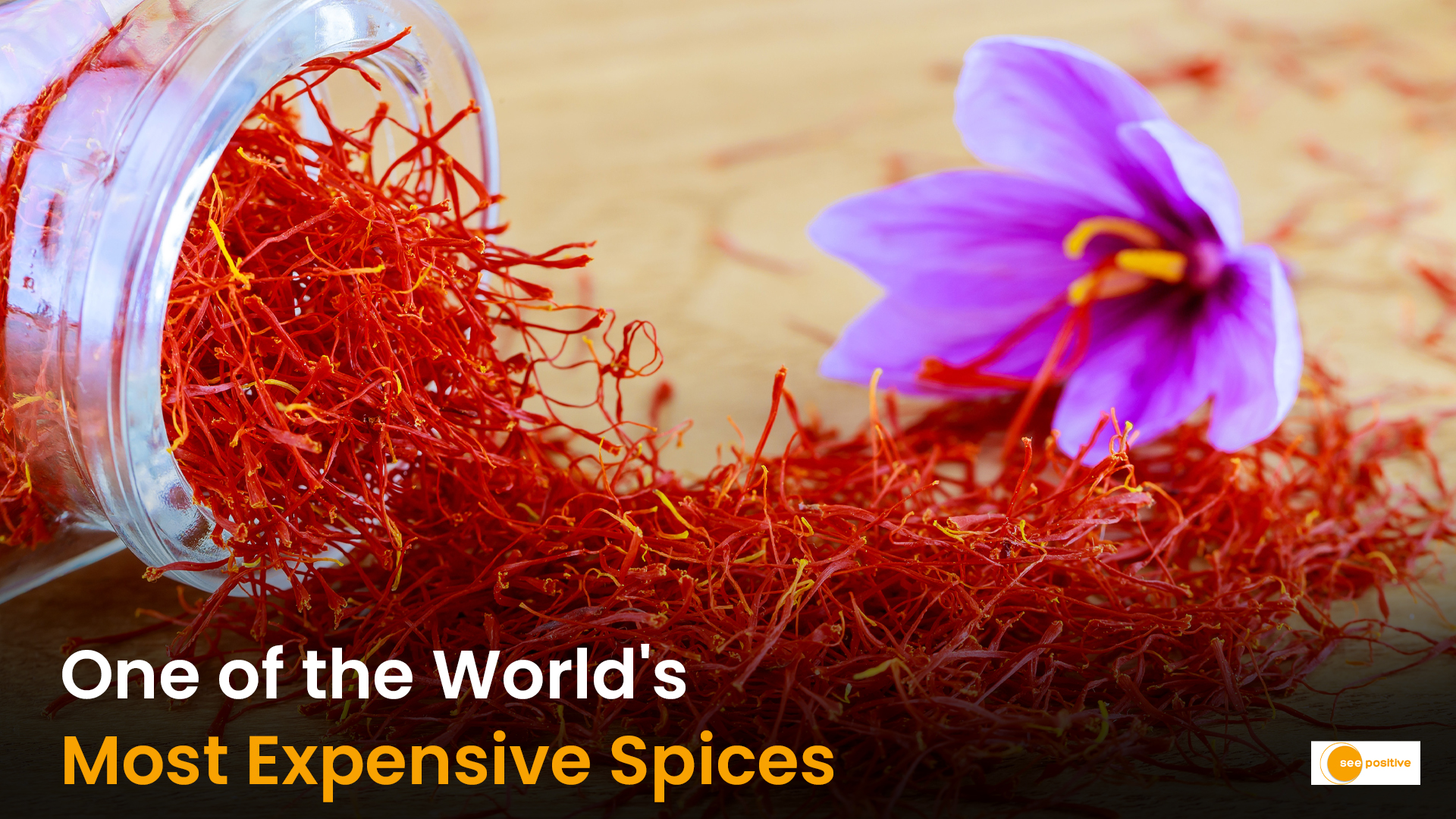
Every autumn, a remarkable transformation takes place in the fields of Kashmir. As November arrives, patches of farmland turn into a beautiful carpet of delicate purple flowers. While the sight looks like something straight out of a painting, these flowers hold something far more valuable than their beauty — saffron, often called the world’s red gold.
The saffron flowering and harvesting season has begun in Kashmir, bringing colour back to the fields of Pampore in south Kashmir’s Pulwama district. Farmers have started collecting the delicate flowers, hoping for a better harvest after weather-related losses in the previous season.
But what makes this tiny flower so valuable? And why does producing just one kilogram of saffron require an extraordinary amount of human effort?
The Purple Flower That Produces Red Gold
The saffron plant, scientifically known as Crocus sativus, produces beautiful purple flowers. Hidden inside each flower are three delicate red-orange stigmas — the threads that are carefully separated, dried and processed to produce saffron.
Unlike many agricultural crops, saffron harvesting is largely a manual process. Farmers and their families collect the flowers and carefully remove the precious red threads by hand.
One of the most fascinating facts about saffron is the sheer number of flowers needed to produce it. Approximately 150,000 to 200,000 flowers may be required to obtain one kilogram of dried saffron, depending on the quality and processing conditions.
This labour-intensive process is one of the major reasons behind saffron’s high market value.
Why Pampore Is Known as Kashmir’s Saffron Capital

Pampore, located in Pulwama district, is widely known as the saffron capital of Kashmir. Its traditional saffron-growing areas are characterised by Karewa soil formations — elevated plateau-like landscapes that have long supported saffron cultivation.
The region’s soil conditions, climate and seasonal weather play an important role in the growth and quality of saffron.
Kashmiri saffron is particularly valued for its distinctive aroma, rich colour and flavour. It has also received a Geographical Indication (GI) tag, recognising its regional identity and origin.
For generations, saffron cultivation has remained an important part of Kashmir’s agricultural heritage and the livelihood of farming families.
An Interesting Fact: Saffron Does Not Grow From Seeds

Here’s a fact that might surprise you: saffron is not normally cultivated from seeds.
The plant grows from underground structures called corms, which look similar to small bulbs. These corms produce leaves and flowers during the growing season and multiply underground, allowing farmers to continue cultivation.
The flowering period is relatively short, making the harvesting process particularly time-sensitive. Farmers have to collect the flowers at the right stage to preserve the quality of the saffron threads.
More Than a Beautiful Flower: Why Saffron Matters
Saffron is much more than an expensive kitchen ingredient. It has been valued for centuries in food, traditional preparations, perfumery and cultural practices.
Its distinctive aroma and golden colour make it an important ingredient in dishes such as Kashmiri Kahwa, pulao, biryani and traditional desserts.
Saffron contains naturally occurring compounds such as crocin, which contributes to its colour, and safranal, which is associated with its characteristic aroma.
Its cultural and culinary significance has made it an important part of Kashmir’s identity.
2026 Saffron Harvest: Why This Season Matters for Kashmir’s Farmers

This year’s saffron season has brought renewed hope to growers in Pampore.
According to reports published on November 1 and 2, 2026, flowering and harvesting have begun across several saffron-growing villages, including Pampore, Munpora, Konibal, Dusoo, Ladhoo, Chandhara and Lethpora.
Farmers are reporting encouraging signs compared with last year’s difficult season. Some growers have credited timely rainfall and irrigation for the improvement.
Last year’s crop suffered severe losses in several areas, with some farmers reporting production declines of nearly 80 per cent. Erratic rainfall, inadequate moisture and changing weather conditions remain major concerns for saffron cultivation.
For thousands of farming families, this year’s harvest is not just about producing a valuable spice. It is also about protecting a traditional agricultural livelihood that has been passed down through generations.
Can Kashmir Protect Its Precious Saffron Heritage?
Despite its global reputation, Kashmir’s saffron industry faces several challenges.
Changing weather patterns, insufficient irrigation, declining soil moisture and the shrinking area under traditional cultivation have raised concerns about the future of saffron farming.
Initiatives such as the National Saffron Mission have focused on improving irrigation infrastructure and supporting farmers through better cultivation practices.
Protecting traditional saffron-growing land, improving water availability and encouraging scientific farming methods will be important for sustaining the industry.
A Short Season, A Timeless Legacy
The sight of purple saffron flowers blooming across Pampore is one of Kashmir’s most beautiful seasonal spectacles.
But behind every tiny red thread lies a story of delicate flowers, careful harvesting, traditional knowledge and immense human effort.
The flowers may disappear after a brief flowering season, but the golden spice they produce continues to carry Kashmir’s identity, culture and agricultural heritage to kitchens around the world.
And perhaps that is what makes Kashmiri saffron truly special: it is not just a spice. It is a story of a place, its people and generations of farming traditions.

