

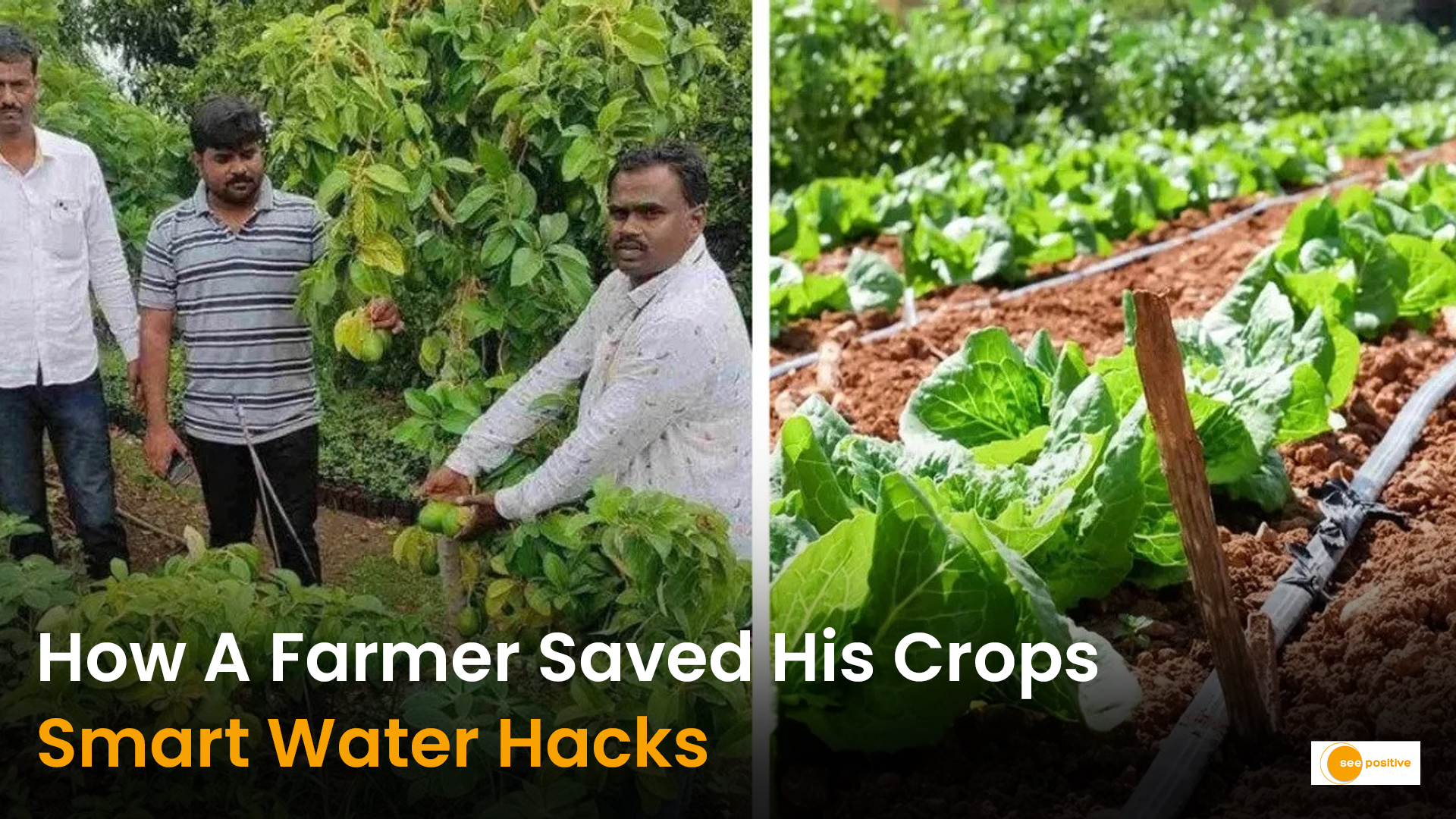
The Marathwada region in Maharashtra is notorious for severe droughts and unpredictable monsoon cycles. In the heart of this dry belt lies the Beed district, where farming often feels like an uphill battle against nature.
However, Parmeshwar Thorat, an innovative farmer from Beed, proved that water scarcity does not have to mean crop failure. Instead of giving up on his land, he implemented smart water management practices and modern micro-irrigation techniques to secure his agricultural future.
The Challenge: Farming in Drought-Prone Marathwada
For years, Parmeshwar faced the same devastating realities as his neighboring farmers:
- Depleting Groundwater Levels: Deep borewells were running completely dry during the peak summer months.
- Heavy Crop Losses: Traditional flood irrigation wasted massive amounts of water through evaporation and soil runoff.
- Financial Instability: Unpredictable rainfall cycles directly threatened his household income and farm investments.
Recognizing that relying on traditional flooding methods was no longer viable, Parmeshwar decided to rethink his entire approach to water usage.
The Solution: Smart Water Conservation Strategies
Rather than waiting for government relief, Parmeshwar adopted a multi-layered strategy focused on capturing, storing, and efficiently using every drop of rainwater.
1. Precision Drip Irrigation
Parmeshwar completely replaced flood irrigation with drip irrigation systems. By delivering water directly to the root zones of his plants, he drastically reduced water evaporation. Consequently, his overall water consumption dropped by over 50% while crop health improved.
2. On-Farm Rainwater Storage (Farm Ponds)
To survive the dry months, he constructed dedicated farm ponds (Shet Tali) to capture monsoon runoff. He lined these storage ponds with plastic sheets to prevent seepage loss. As a result, his farm maintained a reliable, reserve water source throughout the scorching summer season.
3. Soil Mulching to Retain Moisture
Additionally, Parmeshwar adopted organic and plastic mulching around crop beds. Mulching keeps the soil covered, which significantly reduces soil moisture loss, suppresses weed growth, and keeps soil temperatures stable during intense heatwaves.
4. Crop Diversification
Instead of relying solely on water-intensive crops, he introduced climate-resilient fruits and vegetables suited for dry arid belts. This diversification stabilized his seasonal income and protected him from market price shocks.
Results and Impact: A Model for Dryland Farmers
Through disciplined water auditing and modern irrigation, Parmeshwar successfully turned his drought-hit land into a profitable, year-round green farm.
His journey offers actionable lessons for smallholder farmers across drought-prone regions in India:
- Water Efficiency Over Water Abundance: High yields depend on precise water delivery to the roots, not on flooding the field.
- Investment in Infrastructure: Simple tools like drip lines, farm ponds, and mulching pay for themselves rapidly through saved input costs.
- Community Inspiration: Today, farmers across Beed visit Parmeshwar’s farm to learn low-cost water conservation methods firsthand.
Parmeshwar Thorat’s story shows that climate resilience begins at the ground level. By combining modern micro-irrigation with traditional rainwater harvesting, dryland farmers can overcome extreme climate challenges and build sustainable livelihoods.

