

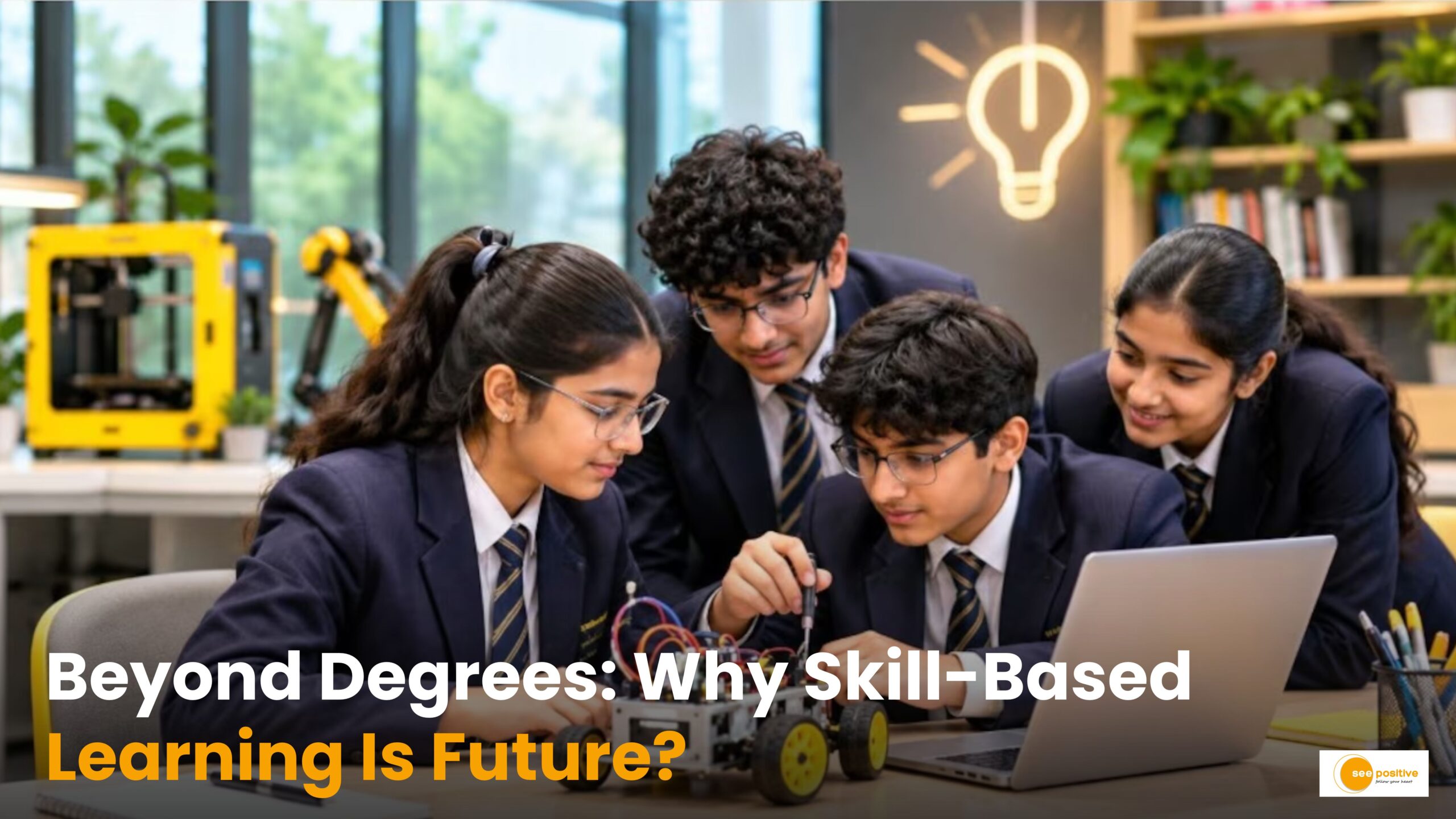
The world of education and employment is changing faster than ever. A university degree was once considered the strongest foundation for a successful career. Today, however, employers are increasingly looking beyond academic qualifications. They want individuals who can think critically, solve problems, communicate effectively, adapt to change, and apply their knowledge in real-world situations.
From artificial intelligence and digital marketing to entrepreneurship, communication, data analysis, and creative thinking, practical abilities are becoming essential in almost every profession. This shift highlights an important reality: the future belongs to skill-based learners who continuously develop their abilities rather than depend only on academic qualifications.
Education is no longer simply about collecting certificates or memorising information. It is about learning how to use knowledge, develop useful abilities, and prepare for opportunities that may not even exist today.
Why Is Skill-Based Learning Becoming So Important?
For decades, traditional education systems have largely focused on textbooks, examinations, theoretical knowledge, and academic performance. Although these remain important, they do not always prepare students for the practical challenges of professional life.
Imagine two candidates applying for the same job. One has excellent academic scores but limited practical experience. The other has a relevant qualification, strong communication skills, problem-solving abilities, and experience working on real projects.
Depending on the role, the second candidate may have a stronger advantage because they can demonstrate what they are capable of doing.
This is one reason skill-based learning is gaining importance.
According to the World Economic Forum’s Future of Jobs Report 2025, employers expect 39% of workers’ existing skill sets to be transformed or become outdated between 2025 and 2030. The report also identifies analytical thinking, resilience, flexibility, leadership, creative thinking, and technological literacy among important workforce skills.
This suggests that future career success will depend not only on what individuals know but also on how effectively they can apply, update, and expand that knowledge.
1. The Changing Demands of the Modern Job Market

The modern job market is evolving with technological advancements, global competition, automation, and changing business requirements.
Employers increasingly need people who can combine technical knowledge with practical abilities. For example:
- A marketing professional needs creativity, communication, and digital marketing skills.
- A software developer needs programming knowledge, logical thinking, and problem-solving abilities.
- An entrepreneur needs business understanding, financial literacy, leadership, and decision-making skills.
- A teacher needs subject knowledge, communication, digital literacy, and the ability to engage students.
- A healthcare professional needs technical expertise, critical thinking, and interpersonal skills.
A degree can establish a foundation, but practical skills help individuals perform effectively in their chosen professions.
The message is clear: education must evolve alongside the demands of the workplace.
2. Artificial Intelligence Is Making Human Skills More Valuable

Artificial intelligence is transforming how people study, work, communicate, and solve problems. AI tools can help generate content, analyse information, automate repetitive tasks, and improve productivity.
However, using technology effectively requires more than knowing which buttons to press.
People must understand how to ask the right questions, evaluate AI-generated information, identify errors, protect data, and make responsible decisions.
This is where human skills become especially important.
Critical thinking, creativity, emotional intelligence, ethical judgement, adaptability, and communication remain valuable because technology does not remove the need for human understanding and responsibility.
Instead of competing with AI in every task, future learners must develop the ability to work alongside technology.
The real advantage will belong to people who combine technological knowledge with human intelligence.
3. Practical Knowledge Is as Important as Academic Education

One of the biggest limitations of traditional learning is the gap between theoretical understanding and practical application.
A student may understand business management concepts but struggle to manage an actual project. Another may study computer science but lack experience developing a working application.
Practical learning helps bridge this gap.
Students can develop real-world abilities through:
- Internships and industry exposure.
- Project-based learning.
- Vocational and technical training.
- Workshops and practical assignments.
- Entrepreneurship programmes.
- Internships, apprenticeships, and professional mentorship.
These experiences allow learners to make mistakes, solve actual problems, work in teams, and develop confidence.
Academic education provides knowledge, while practical experience teaches learners how to use it.
The combination creates a stronger foundation for professional growth.
4. The Most Important Skills Students Should Develop for the Future
Not every student needs to become a programmer or technology expert. The future requires a combination of technical, professional, and personal skills.
Some of the most valuable skills include:

Digital and AI Literacy
Understanding digital tools, artificial intelligence, data, cybersecurity, and emerging technologies will help students participate in an increasingly technology-driven world.

Communication and Interpersonal Skills
Expressing ideas clearly, listening actively, collaborating with others, and building professional relationships are essential across industries.

Critical Thinking and Problem-Solving
The ability to analyse situations, evaluate information, make informed decisions, and find solutions is becoming increasingly valuable.

Entrepreneurship and Financial Literacy
Understanding money, business models, budgeting, risk management, and innovation can help individuals create opportunities instead of depending entirely on traditional employment.

Adaptability and Lifelong Learning
The willingness to learn new things, accept change, and upgrade existing abilities is essential in a rapidly changing professional environment.
These skills are not limited to a particular profession. They provide a foundation for students to succeed in different career paths.
5. India’s Education System Is Moving Towards Skill-Based Learning
India has recognised the importance of practical education and vocational training through the National Education Policy (NEP) 2020.
One of the policy’s important objectives is to reduce the gap between academic education and vocational learning. It promotes experiential learning, internships, vocational exposure, critical thinking, and multidisciplinary education.
The policy also proposed that at least 50% of learners should have exposure to vocational education by 2025. This was a policy target, not a confirmation that it had been achieved.
Under initiatives such as Samagra Shiksha, vocational education has been incorporated into school education, while students are encouraged to gain exposure to practical activities and different professional fields.
The introduction of skill-based courses, internships, practical projects, and vocational training reflects an important change in the way education is being approached in India.
The objective is not to replace academic education but to make it more meaningful, practical, and connected to real-world opportunities.
6. The Role of Schools, Colleges, and Teachers in Skill Development

Skill development cannot be treated as an individual responsibility alone. Educational institutions also have an important role in preparing students for the future.
Schools and colleges must create opportunities where learners can explore their interests, experiment with ideas, and develop practical abilities.
Instead of focusing exclusively on examination results, institutions can introduce:
- Project-based and experiential learning.
- Communication, leadership, and teamwork activities.
- Career guidance and industry interaction.
- Coding, robotics, and digital literacy programmes.
- Entrepreneurship and financial awareness sessions.
- Internships, vocational exposure, and practical workshops.
Teachers, too, need opportunities to develop their digital knowledge and adopt innovative teaching methods.
A modern classroom should not simply be a place where students receive information. It should be an environment where they learn to question, experiment, collaborate, and create.
7. Lifelong Learning Will Become the Key to Career Success
One of the biggest misconceptions about education is that learning ends after completing school, college, or university.
In reality, professional learning continues throughout life.
A person who graduates today may find that their industry has changed significantly within a few years. New technologies, business models, and professional expectations can make previously acquired knowledge insufficient.
This makes upskilling and reskilling increasingly important.
- Upskilling means improving existing abilities to perform better in a current role.
- Reskilling means learning new abilities to move into a different role or career.
Online courses, professional certifications, workshops, industry training, mentorship, and self-directed learning make it easier to continue developing skills.
The World Economic Forum’s 2025 report highlights curiosity and lifelong learning among the skills expected to grow in importance towards 2030.
Ultimately, the most successful professionals may not necessarily be those who know everything today, but those who are willing and capable of learning tomorrow.
8. Degrees and Skills: Why We Need Both
Does skill-based learning mean that traditional degrees are becoming unnecessary?
Not at all.
Academic qualifications continue to play an important role, particularly in professions that require specialised knowledge, formal training, and professional licensing.
Doctors, engineers, researchers, lawyers, and educators, for example, need strong academic foundations alongside practical competencies.
The real challenge is not choosing between degrees and skills. It is recognising that both are important.
A degree demonstrates formal academic learning, while practical skills demonstrate the ability to apply knowledge effectively.
When students combine qualifications with relevant experience, technical expertise, communication, and problem-solving abilities, they become better prepared for professional responsibilities.
The future is not about choosing skills over education; it is about making education more skill-oriented.
9. How Students Can Prepare Themselves for the Future
The transition towards skill-based learning does not require students to make dramatic changes overnight. Small, consistent efforts can create meaningful improvements.
Here are some practical steps students can follow:
- Identify personal interests and career goals.
- Choose at least one practical skill to develop alongside academic studies.
- Take relevant online courses and participate in workshops.
- Work on real-life projects to build practical experience.
- Improve communication, writing, and presentation skills.
- Learn to use AI and digital tools responsibly.
- Participate in internships, competitions, and collaborative activities.
- Build a portfolio to demonstrate completed projects and achievements.
- Seek feedback from teachers, mentors, and professionals.
- Make continuous learning a lifelong habit.
Students should remember that skill development is a gradual process. Consistency, curiosity, and practical experience matter more than collecting certificates without applying the knowledge.

