

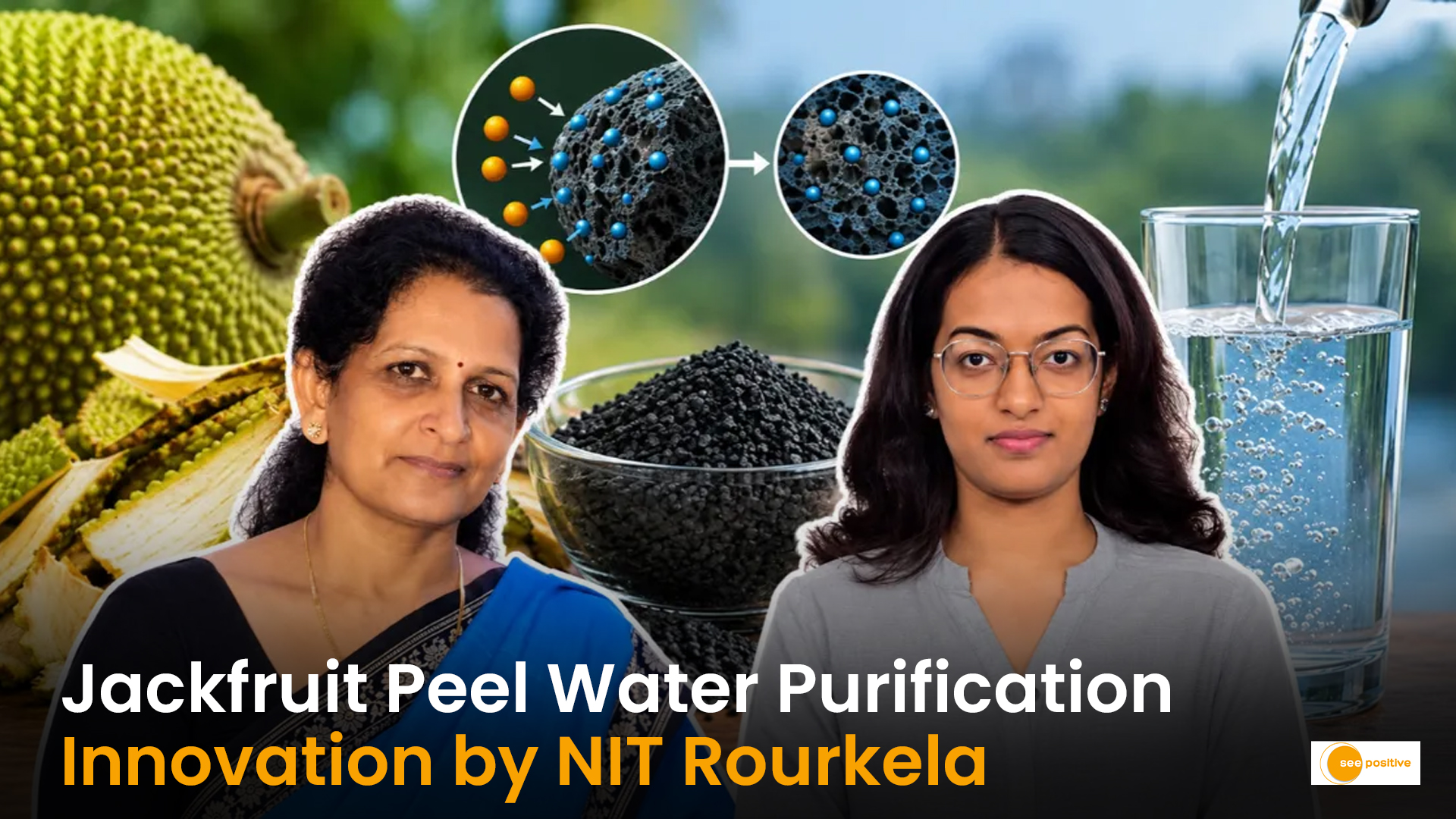
For millions of people across India, high fluoride concentration in groundwater poses a severe health threat. Consequently, long-term exposure to excess fluoride leads to dental and skeletal fluorosis. Traditional water treatment methods like reverse osmosis often involve high costs and complex maintenance.
However, a research team at the National Institute of Technology (NIT) Rourkela has found a sustainable solution. By utilizing discarded jackfruit peels, they successfully developed a low-cost material that removes over 90% of harmful fluoride from contaminated water.
The Science Behind the Innovation
This breakthrough was engineered by Prof. Susmita Mishra from the Department of Chemical Engineering along with researcher Dr. Pratima Minz.
- Waste-to-Resource Approach: Instead of discarding thick jackfruit skins into garbage bins, researchers convert this agricultural waste into activated carbon.
- Zirconium Modification: Furthermore, scientists modify the carbonized peel with zirconium. This metal dramatically enhances the material’s ability to trap fluoride ions.
- Rapid Action: In laboratory tests, the treated material removed over 90% of fluoride within just 10 to 20 minutes.
A Cost-Effective Solution for Rural Communities
Developing sustainable water treatment methods requires keeping production costs low.
- Affordable Synthesis: Based on material and electricity usage, the team estimates the preparation cost at approximately ₹37 per gram.
- Official Recognition: Moreover, the innovation has achieved Technology Readiness Level 4, and the team has successfully secured an official patent for the technology.
Next Steps Toward Practical Deployment
Although laboratory results show great promise, the technology remains in the developmental phase.
- Prototype Development: Moving forward, the research team plans to design physical filter prototypes. Therefore, they can evaluate long-term durability and field operating costs.
- Future Impact: Once scaled up, agricultural waste filtration could provide budget-friendly water purification systems for fluoride-affected rural regions.
Final Thoughts
The NIT Rourkela team’s innovation highlights how circular-economy strategies solve pressing public health crises. By transforming everyday food waste into an advanced filtration medium, science continues to pave the way for a safer, more sustainable future.

