

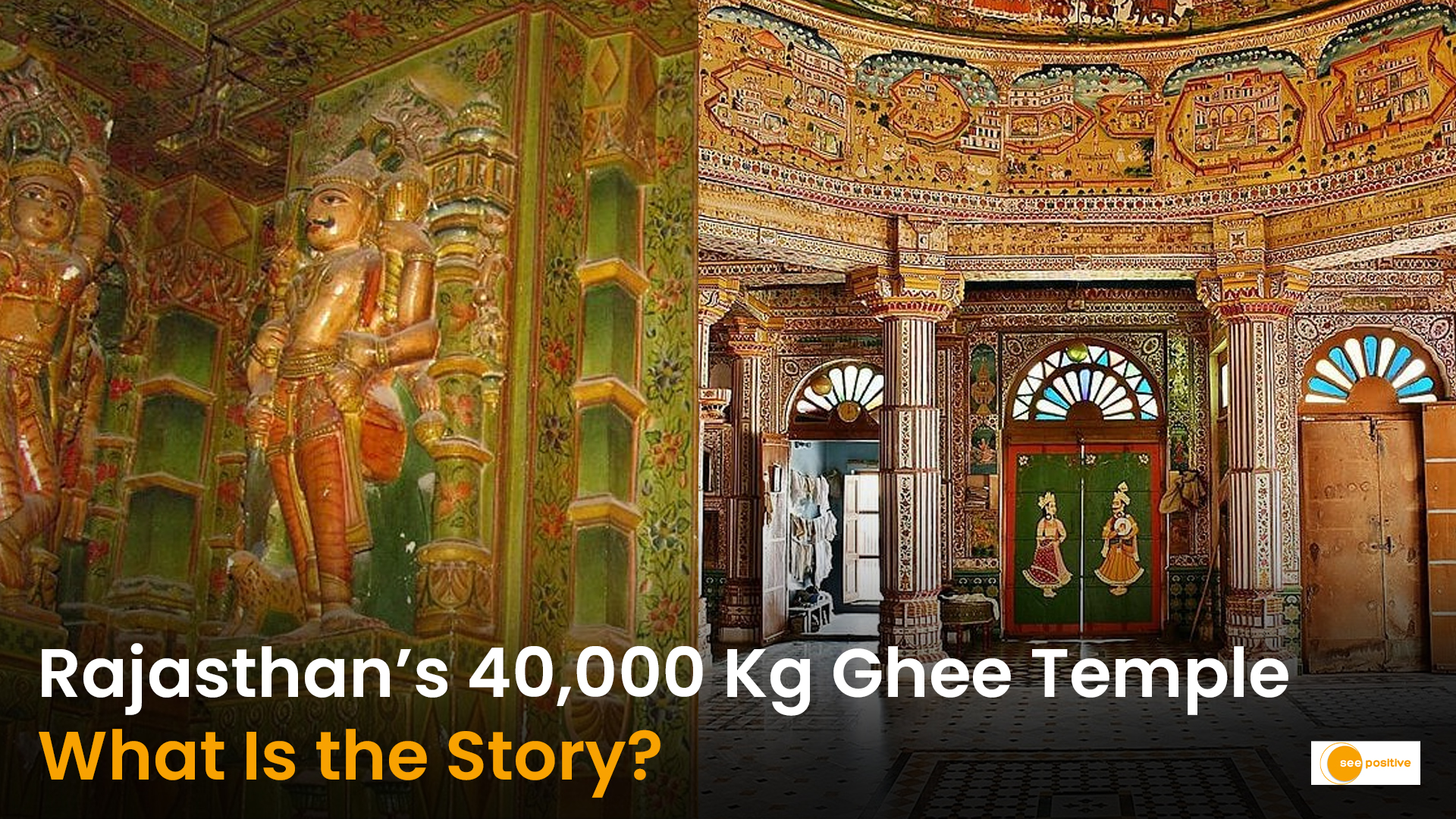
Imagine a temple associated with a story so unusual that it has fascinated visitors for generations: 40,000 kilograms of ghee allegedly used in its construction instead of water. This remarkable tale is linked to Bhandasar Jain Temple, a historic Jain shrine in Bikaner, Rajasthan.
But the temple’s appeal goes far beyond this extraordinary legend. Its colourful murals, intricate mirror work, gold-leaf paintings and centuries-old religious heritage make it one of Bikaner’s distinctive architectural attractions.
Where Is the Bhandasar Jain Temple Located?


Bhandasar Jain Temple is located in the old city of Bikaner, in Rajasthan. Dedicated to Lord Sumatinath, the fifth Tirthankara of Jainism, it is recognised by Rajasthan Tourism as one of the city’s oldest monuments and an important destination for religious and heritage tourism.
The temple is associated with the Jain merchant Bhanda Shah Oswal, whose devotion and patronage are central to its history. Its distinctive appearance and elaborate interiors set it apart from many other historic religious structures in the region.
The 40,000 Kg Ghee Mystery: What Is the Story?

The most talked-about story surrounding the temple is the belief that approximately 40,000 kilograms of ghee were used in preparing the mortar during construction, rather than relying on water in the usual way.
According to local folklore, water scarcity in the desert region inspired this unusual building tradition. Another version of the story tells of a merchant who was criticised for carefully saving even a small drop of ghee and subsequently decided to demonstrate his generosity through an extraordinary act of religious devotion.
Over time, these stories became closely associated with the temple’s identity. Some accounts also claim that traces resembling ghee or butter emerge from parts of the structure during hot weather. However, this remains a local belief rather than a scientifically established phenomenon.
An important distinction: The 40,000 kg figure belongs to the temple’s popular legend. It should not be presented as a construction fact verified by scientific testing or conclusive historical evidence.
A Historic Jain Temple With Remarkable Artwork

While the ghee story attracts attention, the temple’s artistic heritage offers equally compelling reasons to visit.
- Intricate murals: Its interiors feature detailed paintings and decorative motifs that reflect Rajasthan’s rich artistic traditions.
- Gold-leaf artwork: Gold detailing adds depth and visual richness to parts of the temple’s painted surfaces.
- Decorative mirror work: Carefully arranged mirror pieces create striking patterns within the interiors.
- Stone craftsmanship: The structure combines sandstone architecture with finely decorated pillars, walls and religious spaces.
- Jain religious heritage: Its dedication to Sumatinath connects the monument with the spiritual traditions of Jainism.
These features make Bhandasar Jain Temple a compelling destination for architecture enthusiasts, photographers, history lovers and travellers exploring Bikaner’s cultural heritage.
How Old Is Bhandasar Jain Temple?
The temple’s exact dating is not entirely consistent across published sources. Rajasthan Tourism identifies it as a 15th-century temple, while an archival monument record published through the Indira Gandhi National Centre for the Arts notes that its architectural style has been assigned to approximately the 12th century and that it underwent substantial renovation in later periods.
This difference is worth acknowledging rather than assigning the monument a single definitive construction date without qualification. What is clear is that Bhandasar Jain Temple has a long architectural and religious history and remains an important part of Bikaner’s heritage.
Why Should You Visit This Temple in Bikaner?

Bhandasar Jain Temple offers more than an unusual historical story. It provides an opportunity to explore Jain religious traditions, appreciate traditional craftsmanship and discover a lesser-known aspect of Rajasthan’s architectural landscape.
Consider visiting if you are interested in:
- Historic Jain temples and religious architecture.
- Traditional frescoes, mirror work and decorative painting.
- Heritage photography and cultural tourism.
- Exploring Bikaner’s old city and its historic monuments.
You may also like: 5 Mysterious Sun Temples That Showcase Ancient India’s Genius

