

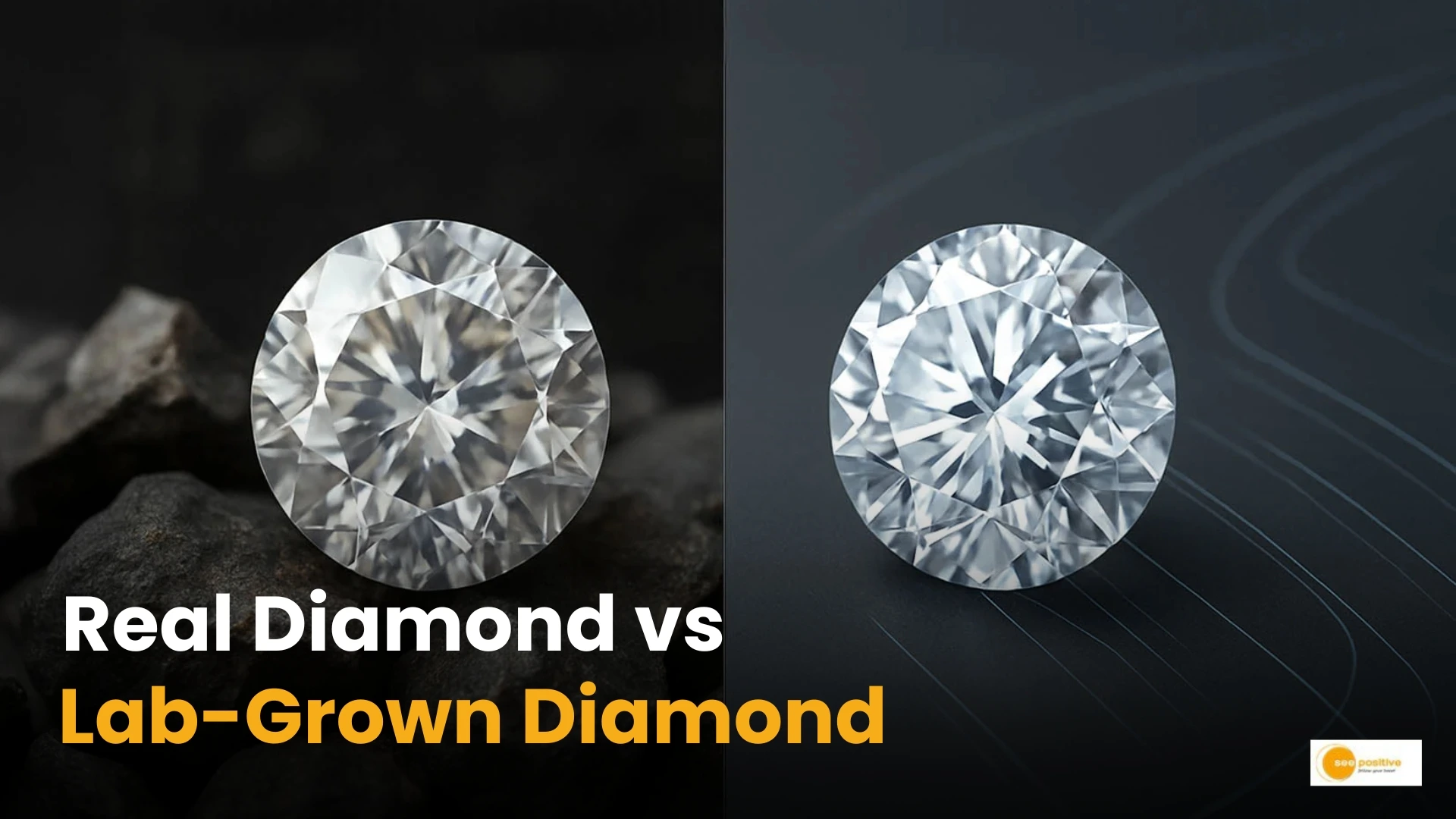
Choosing between a real diamond and a lab-grown diamond is no longer just about tradition—it is about science, price, and lifestyle. Both look identical to the naked eye, but their origin, value, and long-term behavior in the market are very different.
What is a Real Diamond?
A real diamond (natural diamond) is formed deep inside the Earth under extreme heat and pressure over 1 to 3 billion years. Composed of pure carbon atoms arranged in a crystal lattice,
Formed at depths of ~140–190 km below Earth’s surface, Brought to the surface through volcanic eruptions (kimberlite pipes), This long natural process is what makes diamonds rare.
What is a Lab-Grown Diamond?
A lab-grown diamond is created in controlled laboratory conditions using advanced technology. It has the same chemical and physical structure as a natural diamond. There are two main methods:
- HPHT (High Pressure High Temperature)
Mimics Earth’s natural formation process - CVD (Chemical Vapor Deposition)
Carbon gas is deposited layer by layer to grow a diamond crystal
Differences Explained
Composition & Structure
- Both are made of pure carbon (C)
- Same crystal structure: cubic lattice
Physically identical
Real Diamond vs Lab-Grown Diamond – Price Difference
- Real diamonds: expensive due to rarity and mining costs
- Lab-grown diamonds: 30% to 70% cheaper
Appearance & Quality
- Both have same brilliance, hardness (10 on Mohs scale), and sparkle
- Lab-grown diamonds often have fewer inclusions (more “perfect”)
Resale Value
- Real diamonds: better market demand, but still depreciate
- Lab-grown diamonds: low resale value currently
Environmental Impact- Real Diamond vs Lab-Grown Diamond
- Natural diamonds involve mining, land disturbance, and energy use
- Lab-grown diamonds reduce mining but require high electricity consumption
Emotional & Cultural Value
- Real diamonds: tradition, rarity, heirloom value
- Lab-grown diamonds: modern, ethical, budget-friendly luxury
Scientific Truth You Should Know
- Both diamonds are made of carbon atoms arranged in identical crystal structure
- Both show the same hardness, refractive index, and brilliance
- Even advanced tools like spectroscopy are needed to differentiate them
Which One Should You Buy?
Choose Real Diamonds if you want:
- Long-term traditional value
- Better resale perception
- Rare and natural origin
Choose Lab-Grown Diamonds if you want:
- Bigger stone at lower cost
- Modern lifestyle jewellery
- Ethical and sustainable option
Market Trend (2026 Insight)
- Lab-grown diamond demand is rising globally due to affordability
- Natural diamonds still dominate luxury and investment segments
- Younger buyers are shifting toward design + price efficiency over rarity
Also read: 5 Incredible Gold Buildings Around the World You Won’t Believe Exist

