

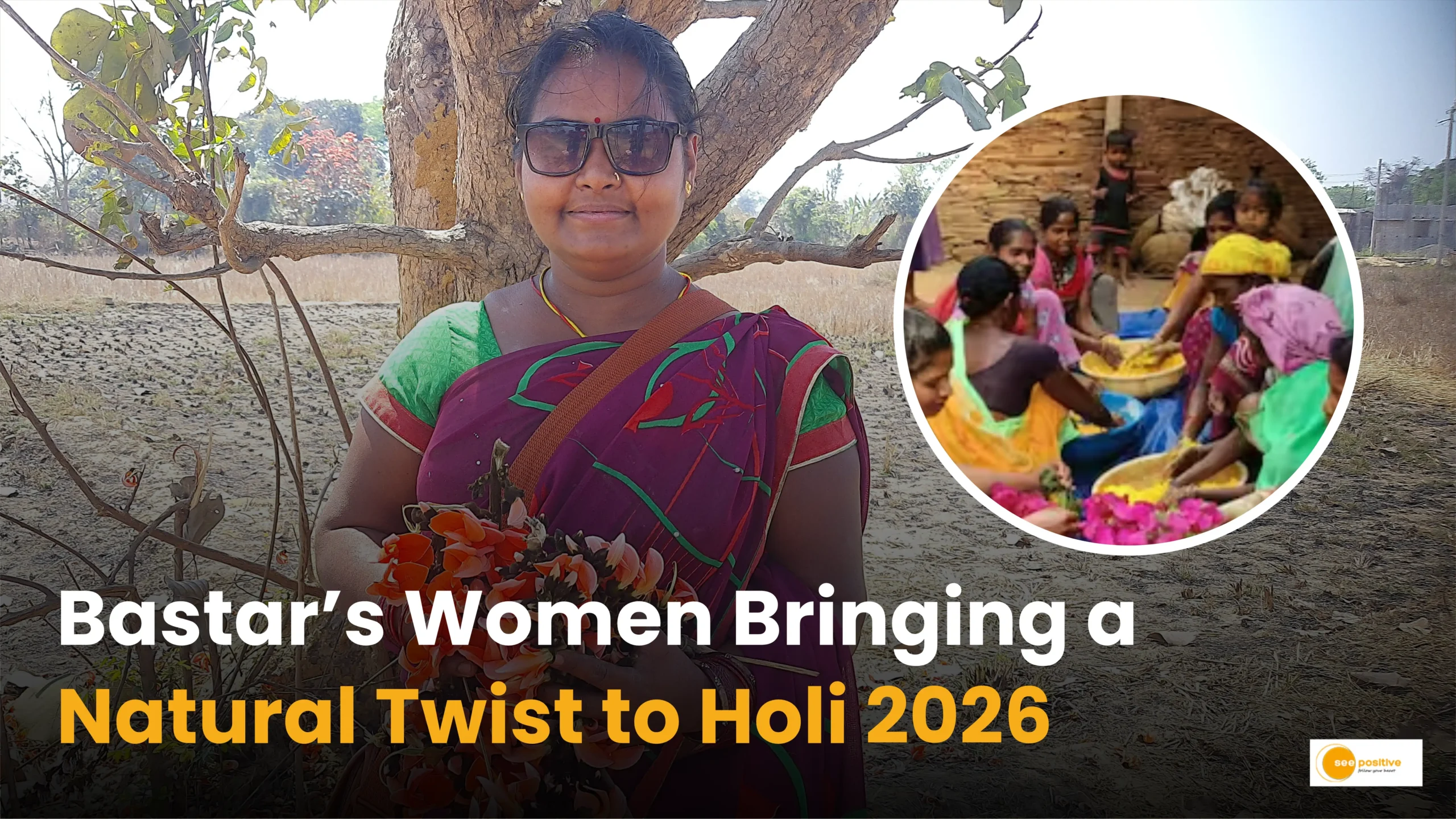
This Holi 2026, celebrations in Bastar district will not just be colorful — they will also be safe for health and the environment. Bastar Women associated with Self-Help Groups (SHGs) under the National Rural Livelihood Mission (NRLM), locally known as Bihan, are producing herbal gulal using natural ingredients sourced from their kitchens and backyards. Bastar Women are making Herbal Gulal from Spinach, Beetroot & Palash Flowers for Holi 2026. Instead of synthetic market colors that often contain harmful chemicals, these women are preparing skin-friendly, eco-conscious gulal made from vegetables and flowers.
Herbal Gulal Made from Spinach, Red Amaranth & Palash Flowers
Natural Ingredients Used
Under the NRLM initiative, women are preparing vibrant colors using:
- Spinach leaves to create green gulal
- Red amaranth (lal bhaji) for red shades
- Palash flowers for saffron (kesariya) tones
- Beetroot extract for deeper red hues
- Rose and marigold petals for fragrance and texture
- Rose water and natural perfume (ittar) for a pleasant aroma
The base material used for preparing the gulal is corn flour, into which vegetable extracts are blended to create smooth, biodegradable color powders.
Since no chemical substances are used in the preparation, the gulal is safe for skin, hair and eyes.
Why Herbal Gulal Is a Safer Choice
In recent years, market-bought synthetic colors have often been found to contain chemical additives that can cause:
- Skin irritation
- Allergic reactions
- Eye damage
- Long-term dermatological issues
The herbal gulal prepared by Bastar’s SHG women is completely free from harmful chemicals, making it human-friendly and suitable for worry-free celebrations.
Special Training at Jagdalpur Horticulture College
Scientific & Modern Methods for Natural Color Production
To strengthen this initiative, the district administration has organized a two-day residential training program at the Krantikari Debridhur College of Horticulture and Research Centre, Jagdalpur.
Women from nine Self-Help Groups across various development blocks of Bastar district are receiving specialized training in scientific and modern methods of preparing natural gulal using locally available resources.
This structured training ensures:
- Standardized production methods
- Better quality control
- Improved packaging and marketing potential
Target: 500 to 1,000 Kilograms of Herbal Gulal
After completing their training, the women have set an ambitious target of producing 500 to 1,000 kilograms of herbal gulal for Holi 2026.
Sales & Distribution Plan
To ensure wide accessibility:
- Special stalls will be set up at key locations in Jagdalpur city
- Counters will be installed in government offices
- Products will also be sold in local markets at the block and district levels
The goal is to make this chemical-free, locally produced gulal available to the general public across the district.
Empowerment Through Sustainable Livelihood
For the women associated with Bihan under NRLM, this initiative is more than seasonal production — it is a pathway to economic empowerment and self-reliance.
By converting easily available vegetables and flowers into value-added products, they are:
- Generating local employment
- Increasing household income
- Promoting eco-friendly alternatives
- Encouraging sustainable festive practices
This effort not only strengthens women-led rural entrepreneurship but also provides citizens with a safer alternative to chemical-based colors.
A Healthier & Greener Holi 2026
Bastar district is setting an example of how traditional festivals can be celebrated responsibly. By choosing herbal gulal made from spinach, beetroot, palash flowers and other natural ingredients, residents can celebrate Holi without compromising their health or harming the environment.
This Holi 2026, the colors on your face may come straight from a rural kitchen — crafted with creativity, care and sustainability by the women of Bastar.

