

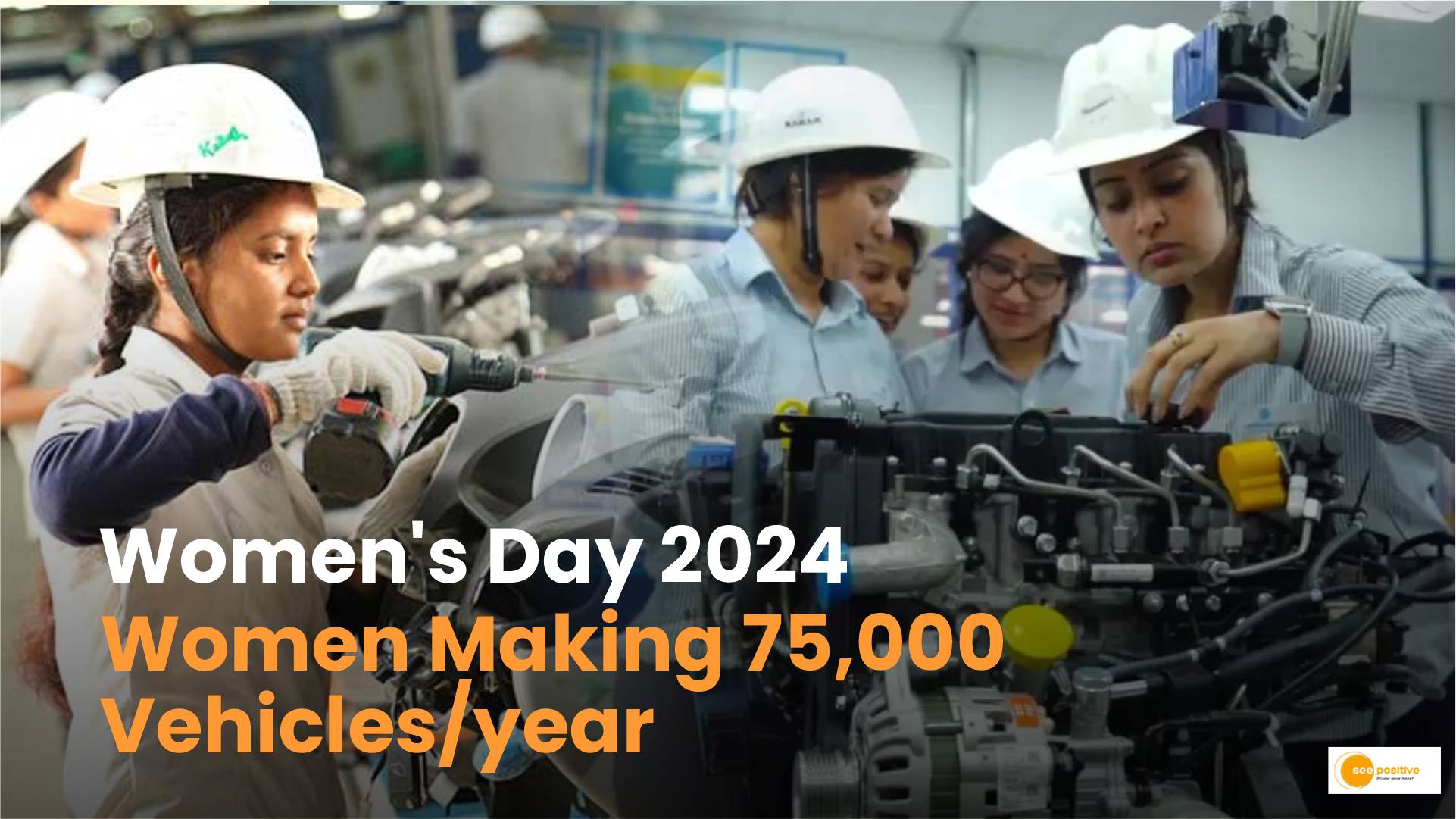
Women’s Day 2024: In a groundbreaking move, women in India are making their mark in the automotive industry by producing around 75,000 vehicles annually. This achievement is attributed to the country’s only plant where women are involved in every step of SUV manufacturing, from assembly to quality checks.
Bhavani’s Inspiring Journey at Tata Motors
Bhavani, an employee at Tata Motors’ Pune manufacturing plant, faced skepticism when she first joined. However, her determination prevailed as she successfully overcame challenges, such as the perception that women might be physically weaker. Bhavani not only proved her capability but also became a tire-fitting expert, completing nearly 100 cars on her first day.
Transforming Assembly Lines for Women
The manufacturing plant initially faced resistance when it redesigned the assembly line to include women. Critics argued for starting with 150 cars before considering 1500. The initiative, however, began with the vision of Vice President Sitaram Kandi, who witnessed a lone girl clearing a truck filled with bumpers.
Dreams and Aspirations of Women in Automotive Manufacturing
The initiative started by giving opportunities to women from underprivileged areas who had limited access to education and employment. Teams from the company visited backward regions in Maharashtra to inform 150 girls about the program. Now, these women, once on the verge of marriage, are pursuing diploma courses, aiming for higher positions in the industry.
Remarkable Growth in Women’s Participation
Over the course of three years, the number of women in the manufacturing plant has grown tenfold. Starting with 150 women in 2021, the plant now sees the daily involvement of 250 women in manufacturing, with a goal to reach 2000 by 2024.
Positive takeaway
As we celebrate Women’s Day in 2024, the story of these women breaking stereotypes and excelling in automotive manufacturing stands as a testament to the power of determination and equal opportunities. The journey of Bhavani and her colleagues showcases the potential for women to thrive in traditionally male-dominated industries, marking a significant step towards gender equality.

