



Introduction
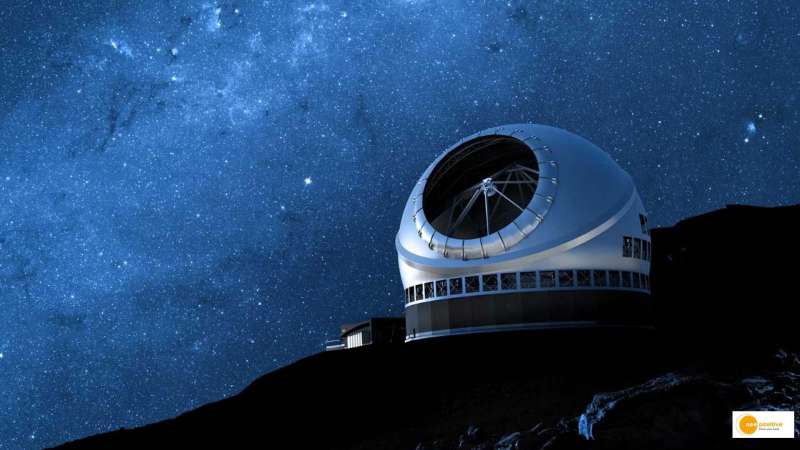
India is helping build the world’s largest telescope as part of an international project to map the universe in 3D. The Thirty Meter Telescope (TMT) is scheduled to be built on Mauna Kea in Hawaii, and when it’s completed it will be the largest optical telescope in the world.
TMT has been given the go-ahead by the University of California which owns half of the land upon which it will be constructed. It will incorporate four main mirrors, each more than 36m in diameter and with a diameter of ten meters.
India will help build the world’s largest telescope as part of an international project to map the universe in 3D
The India-led project to build the world’s largest telescope is set to start this year, with the Indian Space Research Organisation (ISRO) providing the key technical support.
The Thirty Meter Telescope (TMT) will be built at the summit of Mauna Kea on Hawaii Island, which is home to two other telescopes: the Subaru Telescope and the Keck I Telescope. The project aims at mapping our universe in 3D as well as studying dark energy and dark matter – all major scientific questions facing astronomers today.
It will be the largest optical telescope in the world
The Thirty Meter Telescope (TMT) is scheduled to be built on Mauna Kea in Hawaii, and when it’s completed it will be the largest optical telescope in the world. The TMT will be built by an international consortium of universities and institutions that include:
• The University of California, Berkeley (U.C. Berkeley), which hosts the first-ever undergraduate astronomy program at its Lawrence Hall of Science campus
• Caltech
• Cornell University
• Johns Hopkins University Applied Physics Laboratory
• Jodrell Bank Observatory; and more!
The University of California owns half of the land upon which it will be constructed
TMT has been given the go-ahead by the University of California which owns half of the land upon which it will be constructed.
The TMT is being built on Mauna Kea, a dormant volcano on the Big Island of Hawaii. The mountain’s summit is 13,796 feet above sea level and is the highest point in the state. The name Mauna Kea comes from the Hawaiian word for “white mountain.” The volcano last erupted about 4,000 years ago.
TMT incorporates four main mirrors, each more than 36m in diameter and with a diameter of ten meters
The $1 billion Thirty Meter Telescope (TMT) will be built on the summit of Mauna Kea in Hawaii. These giant mirrors will be arranged in a square formation, forming an interferometric array that can capture images from anywhere on Earth with its high resolution and sensitivity.
The TMT will have three main components: a primary mirror; an adaptive optics system that compensates for distortions caused by atmospheric turbulence; and a
secondary mirror that allows astronomers to manipulate their view using deformable mirrors so they can view objects far beyond where other telescopes cannot see them due to light pollution or dust clouds blocking out starlight
The project comprises three partners; one Indian institution and two American universities. The Thirty Meter Telescope (TMT) is a collaboration between the University of California, the California Institute of Technology, and the Indian Institute of Astrophysics.
The project comprises three partners
The TMT will be the world’s largest telescope, with a mirror six times the size of Hubble’s and a resolution 10 times better than any other optical telescope. The project is expected to create jobs for 5,000 people during construction and up to 200 jobs in Hawaii once it’s finished.
India is helping build this giant telescope
India is helping to build the world’s largest thirty-meter telescope, which will be located on Mauna Kea in Hawaii. The TMT (Telescope Mirror Telescope) will be the largest optical telescope in the world and will have four main mirrors, each more than 36m in diameter.
The project was sooner affirmed in 2009 by:
• Dr. Richard Casagrande of UC Berkeley and Dr. James Luyendyk from UC Santa Cruz
• Professors Nergis Mavalvala from MIT & Harvard University
• Debabrata Basak from Princeton University
• Shivaji Adhikari from Johns Hopkins University
• Anil Kulkarni who led the Indian contingent at NASA Ames Research Center during the last three decades now works at the Tata Institute of Fundamental Research (TIFR)
• Praveen Bakshi who served as Principal Investigator for eight projects funded by NSF since 2003 until recently when he moved back home following retirement.
Conclusion
The Thirty Meter Telescope is set to be the world’s most advanced ground-based observatory on Earth, thanks to its novel design. The telescope has not just one but four primary mirrors, doubling the usual number in such an instrument.
It will weigh as much as 200 cars and its giant light-collecting area will allow it to see deeper into space than other telescopes. It will also conduct studies into the nature of dark energy and dark matter and perhaps allow new insights into how stars and galaxies formed.

