

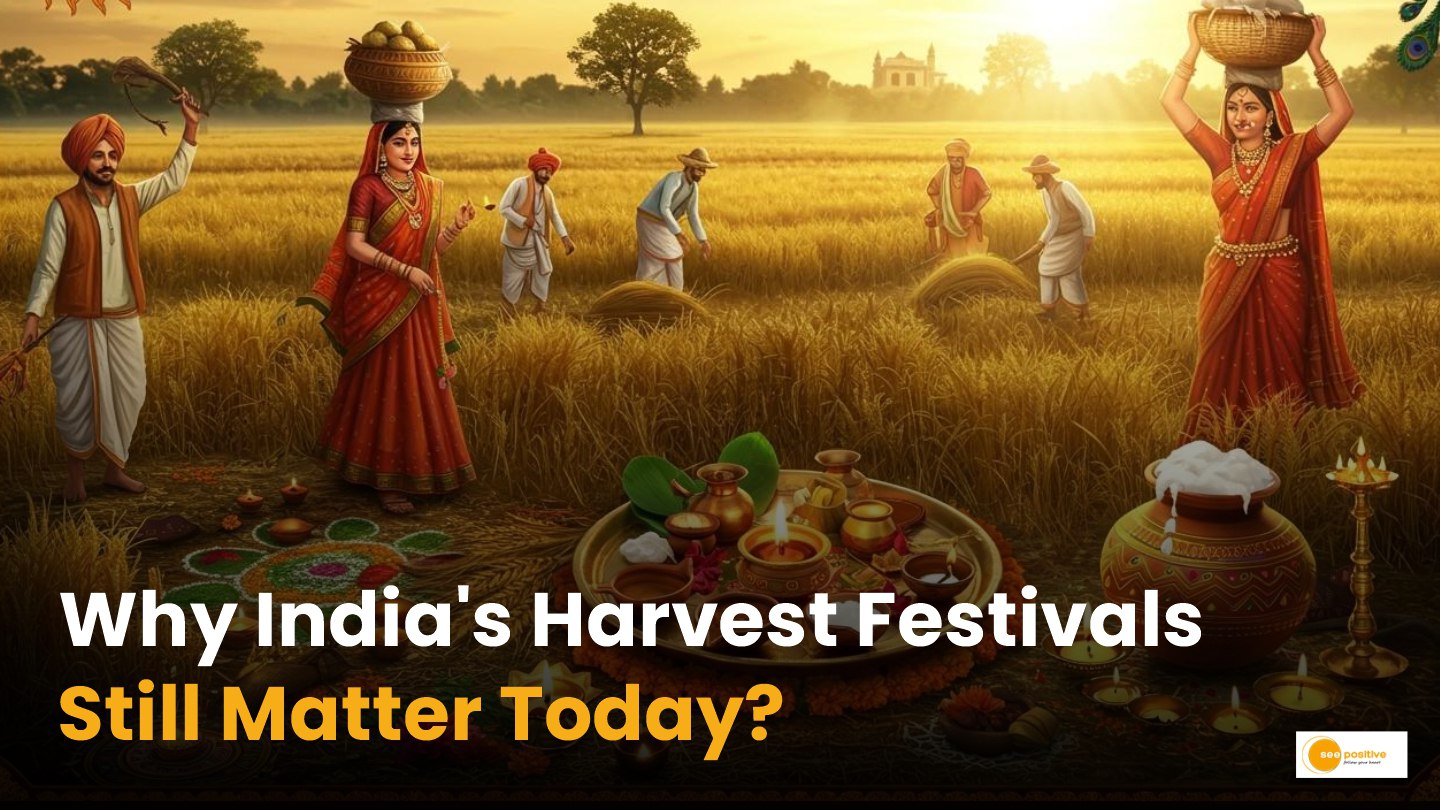
Harvest festivals in India are more than celebrations of crops; they are a reflection of the country’s deep connection with nature, seasons, and human health. Celebrated across regions under different names, these festivals mark the transition of seasons, thank nature for agricultural abundance, and align human life with natural cycles. Even in modern times, harvest festivals remain relevant due to their scientific, cultural, and Ayurvedic significance.
Makar Sankranti – North & Central India
Harvest festivals in India
Regions: Uttar Pradesh, Bihar, Madhya Pradesh, Rajasthan, Maharashtra
Significance: Marks the Sun’s transition into Capricorn (Makara Rashi). It signifies longer days and the end of winter. Foods made of sesame and jaggery are consumed to generate body heat and improve digestion during seasonal change.
Pongal – Tamil Nadu
Harvest festivals in India
Significance: A four-day harvest festival dedicated to the Sun God, cattle, and farmers. Fresh rice, milk, and jaggery are cooked as “Pongal,” symbolizing prosperity and gratitude toward nature.
Lohri – Punjab & Haryana
Harvest festivals in India
Significance: Celebrated around fire to mark the end of winter and the rabi crop cycle. The bonfire symbolizes warmth, renewal, and agricultural fertility.
Baisakhi – Punjab
Harvest festivals in India
Significance: Marks the harvesting of wheat and also holds religious importance for Sikhs. It represents abundance, new beginnings, and community bonding.
Onam – Kerala
Significance: A harvest festival linked with the legend of King Mahabali. It celebrates prosperity, equality, and nature’s bounty, accompanied by boat races and traditional feasts.
Bihu – Assam
Significance: Celebrated thrice a year, with Rongali Bihu marking the harvest and agricultural new year. It reflects harmony between humans, land, and seasons.
Nuakhai – Odisha & Chhattisgarh
Significance: The first offering of new rice to deities before consumption. It emphasizes gratitude, community unity, and respect for farmers.
Importance of Harvest Festivals in Indian Culture
Harvest festivals play a vital role in preserving India’s agrarian identity. They promote gratitude toward nature, recognize farmers’ contributions, and strengthen social bonds. These festivals encourage community participation, sharing of food, and collective joy, which are essential for emotional and social well-being.
Scientific Relevance of Harvest Festivals
Seasonal transitions significantly affect the human body. According to modern science and circadian rhythm studies, changes in daylight, temperature, and food availability impact metabolism, immunity, and mental health.
Harvest festivals are strategically placed at seasonal junctions, helping the body adapt naturally:
- Winter to spring (Makar Sankranti, Lohri)
- Monsoon to autumn (Onam, Nuakhai)
- Agricultural cycles aligning with solar movement
Traditional diets during these festivals are rich in seasonal grains, natural sugars, and warming ingredients that support digestion and immunity.
Ayurveda and Seasonal Alignment
In Ayurveda, Ritucharya (seasonal lifestyle) is crucial for health. Harvest festivals naturally follow Ayurvedic principles:
- Sesame, jaggery, rice, and ghee help balance Vata dosha in winter
- Fresh grains aid digestion and nutrient absorption
- Community fasting and feasting reset metabolic patterns
These practices promote detoxification, mental clarity, and physical balance during seasonal shifts.
Why Harvest Festivals Are Relevant Today
In an era of fast food, climate change, and sedentary lifestyles, harvest festivals remind us to:
- Eat local and seasonal food
- Respect farmers and sustainable agriculture
- Align lifestyle with nature
- Preserve mental and physical well-being
They bridge ancient wisdom with modern health science, making them timeless and essential even today.
Positive Takeaway
Harvest festivals of India are not just cultural traditions but scientific, ecological, and health-oriented practices deeply rooted in Indian knowledge systems. They celebrate life, nature, and balance — values that are more important than ever in the modern world.

