

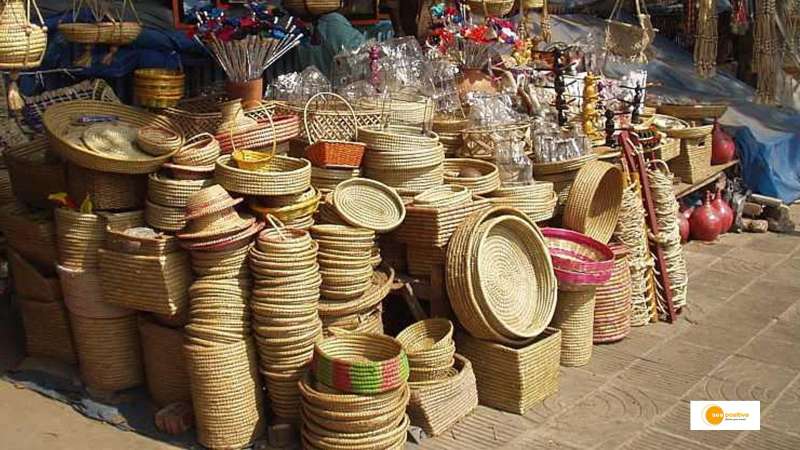


Nestled in the heart of Chhattisgarh, the captivating land of Bastar unveils a world where nature’s splendor and rich cultural heritage converge. The region’s raw and untouched beauty draws you in, inviting you to explore its rich biodiversity. This hidden gem of India boasts a unique blend of breathtaking landscapes and vibrant traditions that have intrigued travelers for generations. The local tribes, with their distinct languages and customs, offer a glimpse into India’s rich heritage. But beyond this, the region’s tribal communities are known for their exceptional craftsmanship, producing intricate works of art that reflect their deep-rooted traditions.
The tribal civilization of Bastar is about 4500 years old and is considered to be the oldest primitive tribe after Javanga tribe of Andaman and Nicobar. It would not be an exaggeration to say that Bastar’s local tribe creatively reflect their imagination in their crafts.
The artistic skills of the castes and tribes in the Bastar region encompass a variety of crafts and handicrafts.
Woodcraft – In the lush forests of Bastar, a region known for having the largest forest area in the state, a rich tradition of woodcraft has thrived. A remarkable example of woodcraft can be found between Jagdalpur and Dantewada in the form of “Maadeya Khama,” memorial pillars carved in memory of the deceased. These pillars feature lifelike carvings that vividly depict scenes from the lives of the departed. Birds are often carved on top of these memorial pillars.
Leaf Art – The forest-covered areas of Bastar’s Sambal region showcase an excellent example of leaf art using leaves from various trees. Leaves play an important role in the local way of life, much like livestock in plains regions. The leaves of Palash and Sinyari trees, common in the forest areas of Bastar, are utilized in various artistic creations. They are skillfully shaped into protective roof coverings called “Chhatoḍī” to shield against rain and sun. These leaves are also used to make plates and bowls, known locally as ‘Dobla-Dobli’ and ‘Patari,’ based on their sizes.
Additionally, the fibers from the Sal, Sinyari, and Palash leaves are used to make strong ropes. Tendu leaves are employed to create “Chongi,” a local term for handmade beedis or traditional rolled cigarettes. The small variety of Khajur (date palm) found in Bastar, known as “Chhind,” serves a variety of purposes, including in local tribal life and even as an essential component in wedding ceremonies.
Weaving Craft- Chhattisgarh, including the Bastar region and neighboring Koraput in Odisha, is nurtured by its rich natural resources, sustaining indigenous cultures and traditions. The region boasts a unique weaving tradition where plant-dyed fibers are used to create vibrant textiles. The woven fabrics, called “Pata” and “Phenta,” are adorned with colors derived from plant sources. “Pata” resembles a sari and is primarily worn by tribal women, while “Phenta” is a cloth worn by men as turbans or shoulder wraps. The craft of dyeing and weaving fibers using natural plant-based colors has been handed down through generations, orally and through personal communication, for at least two centuries due to the absence of written records.
This domain has three main communities of weavers- Panka, Mahar, and Chandaar. Weavers begin training their children in dyeing and weaving around the age of 10-12, and by the age of 17-18, they become skilled artisans. While men are involved in tasks like preparing the thread and weaving, women play a major role in dyeing the fabric and marketing the products.
Cowrie Shell Craft – The cowrie shell, a sea creature found in the ocean, holds cultural and religious significance. In ancient times, it was even used as currency. Given that Bastar is not located near the sea, the entry of cowrie shells and their integration into the region’s artistic tradition can be attributed to the trading and business interactions with the Banjara community, known for their nomadic lifestyle.
They brought this craft to the region, as the cowrie shell was of great value in their culture.
Dhokra or Bell metal
Among all other crafts of Chhattisgarh, the most renowned one is Dhokra art or Bell metal. It is commonly used to make dull gold figurines. It has captured the hearts of many art enthusiasts, collectors, and decorators. This unique folk style draws inspiration from tribal themes, incorporating animals, mythical creatures, humans, and natural shapes.
Bastar is home to a diverse population, with over 70% belonging to various tribal communities like Gond, Abhuj Maria, Bison Horn Maria, and more. Among them, the Ghadwa tribe excels in Dhokra craft, creating intricate metal artworks. Accessible from the city of Raipur, the craft’s centers are Kondagaon and Jagdalpur, both offering a deep dive into this age-old tradition.
‘Ghadwas’ Tribes practice this art form and bring products to life with lost wax technique or hollow casting. Each piece is custom made and no two pieces can ever be the same. The traditional technique of Dhokra is simple but requires great precision and each product, whether it is created for daily use or spiritual purposes, is intricate and detailed. One of the most popular crafts of Chhattisgarh, the excellence of Dhokra appeals to travellers from all over the world and this unique craft represents the state internationally.
The method of making the Dhokra is practiced in India for over 4,000 years, remains relevant. Dhokra crafts is manually created through brass and bronze casting using wax vanishing methods. The craft adorns pieces with intricate depictions of deities, nature, and more.
Historically, the Dhokra craft finds its origins in the Mohenjo-daro and Harappan civilizations, seen through relics. The dancing girl statue serves as a testament to its continuity. This enduring tradition and the art’s inherent rawness and vitality have made Dhokra pieces coveted collector’s items worldwide.
In Bastar, Ghadwa artisans, often known as Ghasia, Khaser, Mangan, or Vishwakarma, craft intricate brass and copper objects. Legends link their name to their craft, with stories of how a Dhokra necklace gifted to a ruler’s wife led to the term “Ghadwa.” The artisans shape the metal through the lost wax technique, infusing their creations with soul and heritage. Dhokra art remains a captivating symbol of Chhattisgarh’s cultural legacy, weaving tales of tradition and craftsmanship.
Preserving the Tradition
The artistic traditions of Bastar’s indigenous communities form the foundation of the present and past art forms of mainstream society. It’s our responsibility to safeguard these magnificent traditions, which encompass both tangible and intangible artworks, for the generations to come.

