

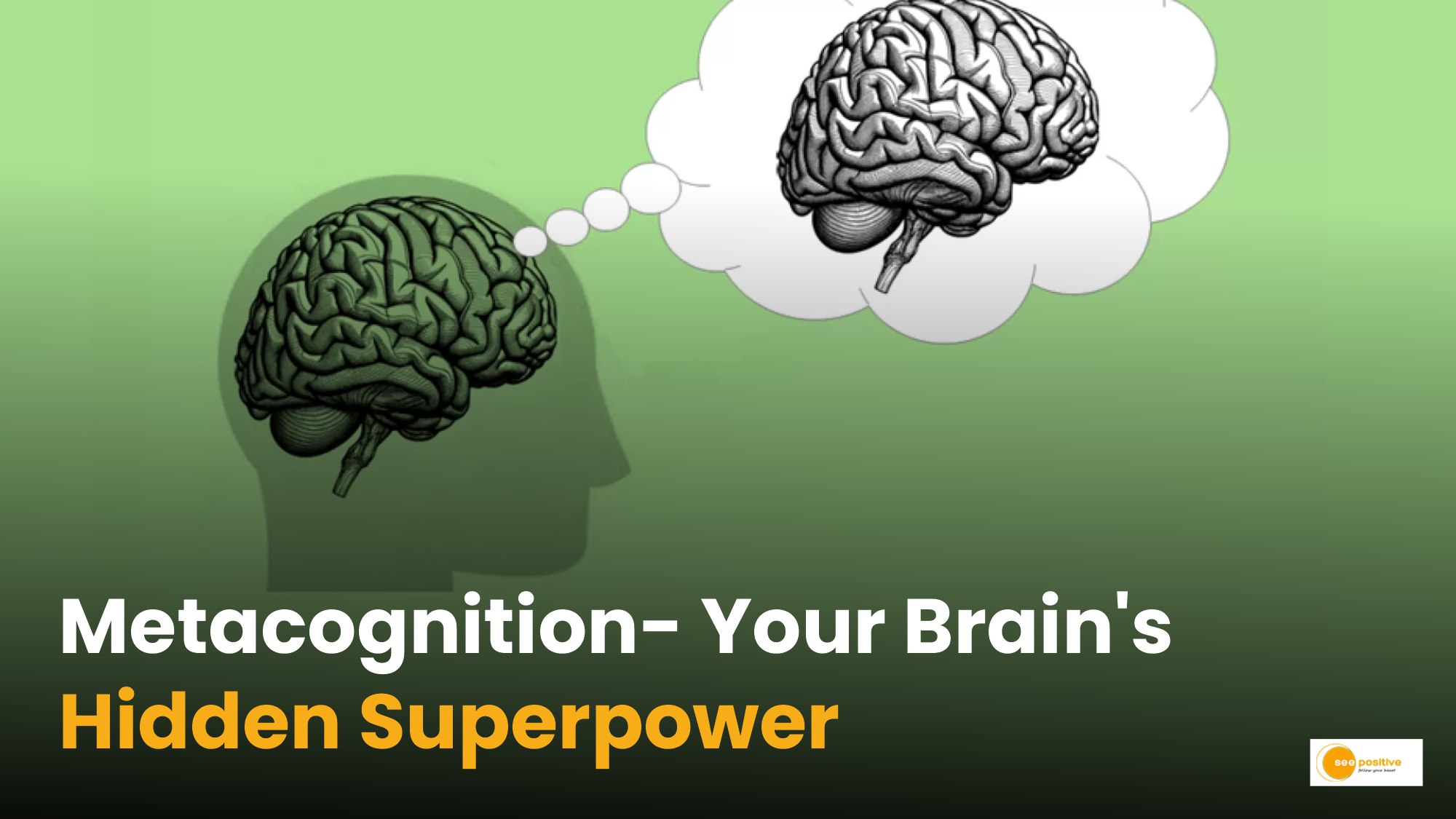
Have you ever paused while studying and thought, “Do I really understand this?”
That moment of self-questioning is not doubt — it is metacognition, one of the most powerful skills the human brain can develop. Scientists call metacognition “thinking about thinking.” Research shows that people who use it regularly learn faster, make better decisions, and perform more consistently — even if they are not the smartest in the room. Let’s break down what metacognition really is, what science says about it, and why it matters in everyday life.
What Is Metacognition?
The Science of Thinking About Thinking
Metacognition is your brain’s ability to:
- Notice how you think
- Judge whether your thinking is working or not
- Change strategies when needed
Instead of learning on autopilot, metacognition puts you in the driver’s seat.
Simple example:
A student realizes memorizing is not helping, so they switch to explaining the topic in their own words. That switch is metacognition in action.
The Scientific Proof
The Science of Thinking About Thinking
Psychologist John Flavell, who coined the term metacognition, found that children who were aware of their thinking performed better in problem-solving tasks than those who were not.
His research proved that awareness of thought processes improves learning outcomes,
Students who used metacognitive strategies like self-testing, monitoring understanding, and adjusting methods outperformed those who relied on passive methods like rereading.
The study ranked self-reflection and monitoring among the most effective learning techniques.
Why Metacognition Makes Learning Faster
The Science of Thinking About Thinking
Instead of asking:
“How long did I study?”
Metacognitive learners ask:
Did my method actually work?”
This constant feedback loop helps the brain:
- Strengthen useful neural pathways
- Discard ineffective habits
- Build deeper understanding
Neuroscience studies using brain imaging show that metacognitive thinking activates the prefrontal cortex, the area responsible for decision-making and self-control.
Metacognition in Daily Life
The Science of Thinking About Thinking
Metacognition is not limited to classrooms
You use it when you:
- Realize you are emotionally reacting and pause before responding
- Notice a bad habit and consciously replace it
- Reflect on why a decision failed and adjust next time
In workplaces, studies show metacognitive employees adapt better to change and solve complex problems faster.
Can Metacognition Be Learned? Science Says Yes
Multiple educational studies confirm that metacognition is a skill, not a talent.
Proven techniques:
- Asking yourself “Why did this work?”
- Explaining ideas in your own words
- Predicting outcomes before checking answers
- Reflecting after mistakes instead of ignoring them
A 2018 study in Educational Psychology Review found that explicitly teaching metacognitive strategies increased student performance by up to 30%.
Why Metacognition Matters in the Age of AI
Metacognition: The Science of Thinking About Thinking
In an era where information is unlimited, thinking well matters more than knowing more.
Metacognition helps humans:
- Detect misinformation
- Think critically instead of blindly trusting answers
- Improve creativity and judgment — skills machines struggle to replicate
Experts believe metacognition will be a core skill of the future workforce.
The Quiet Power of Self-Awareness
Metacognition does not make noise.
It does not demand attention.
But science proves it quietly separates effective thinkers from overwhelmed learners.
You may also like: https://seepositive.in/innovationtech/fascinating-science-facts-that-you-wouldnt-know/

