

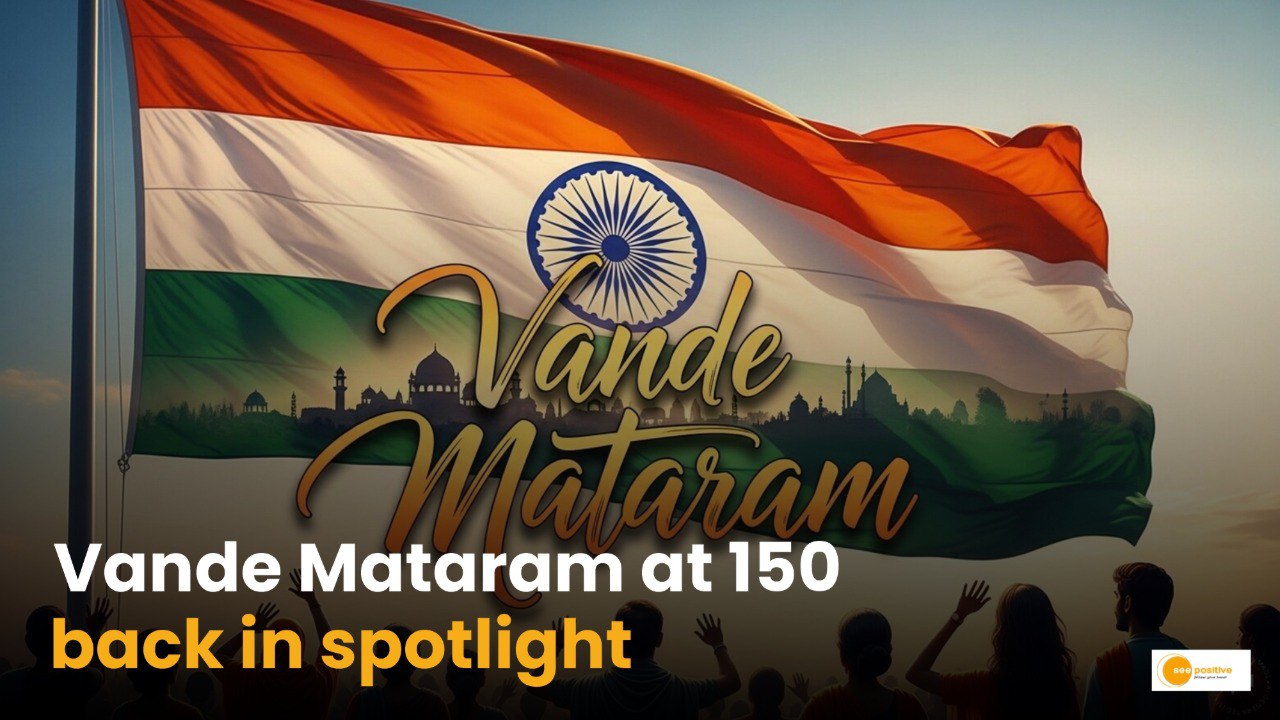
As India marks 150 years of Vande Mataram, the iconic national song is once again at the centre of public discourse. The song has achieved an official status similar to the National Anthem? The government has officially issued order to play the national song before the national anthem atleast 6 stanzas ae compulsory.
Why Back in Focus
Vande Mataram gets Official Status Like the National Anthem
Composed by Bankim Chandra Chatterjee in 1875, Vande Mataram played a defining role in India’s freedom struggle, inspiring generations with its call for unity and devotion to the motherland. In 2026, the song completes 150 years, triggering nationwide commemorations, cultural programmes, and policy discussions.
The Republic Day 2026 theme—“150 Years has further amplified attention, with tableaux, performances, and mass singing events across states.
What Does ‘Official Status’ Mean?
Official Status Like the National Anthem
Unlike Jana Gana Mana, which enjoys constitutional recognition as the National Anthem,It is officially designated as the National Song. Vande Mataram gets new guidelines: 6 stanzas to be played, citizens must stand up. National song to be played for 190 seconds rom now, according to a notification issued by the Home Ministry. The Centre has issued further guidelines on how and when it needs to be sung or played.
From Policy to Public Practice
Official Status Like the National Anthem
Vande Mataram will now be played during the unfurling of the national flag, arrival of the President at events, both before and after her addresses to the nation as well as speeches, and before and after the speeches and arrivals of governors.
Mass singing directives in schools and government offices
Cultural events centred around the song
Inclusion in official ceremonies beyond Independence and Republic Day
These practices signal a shift from symbolic reverence to everyday civic engagement.
A Song That Still Shapes the Nation
At 150, Vande Mataram remains more than a song—it is a cultural force. Whether through formal protocol or public practice, its renewed prominence reflects India’s ongoing dialogue with its past, present, and shared national spirit.
Read more: Indian brands that you didn’t know are Indian origin: The Surprising Origins Behind Iconic Labels

