

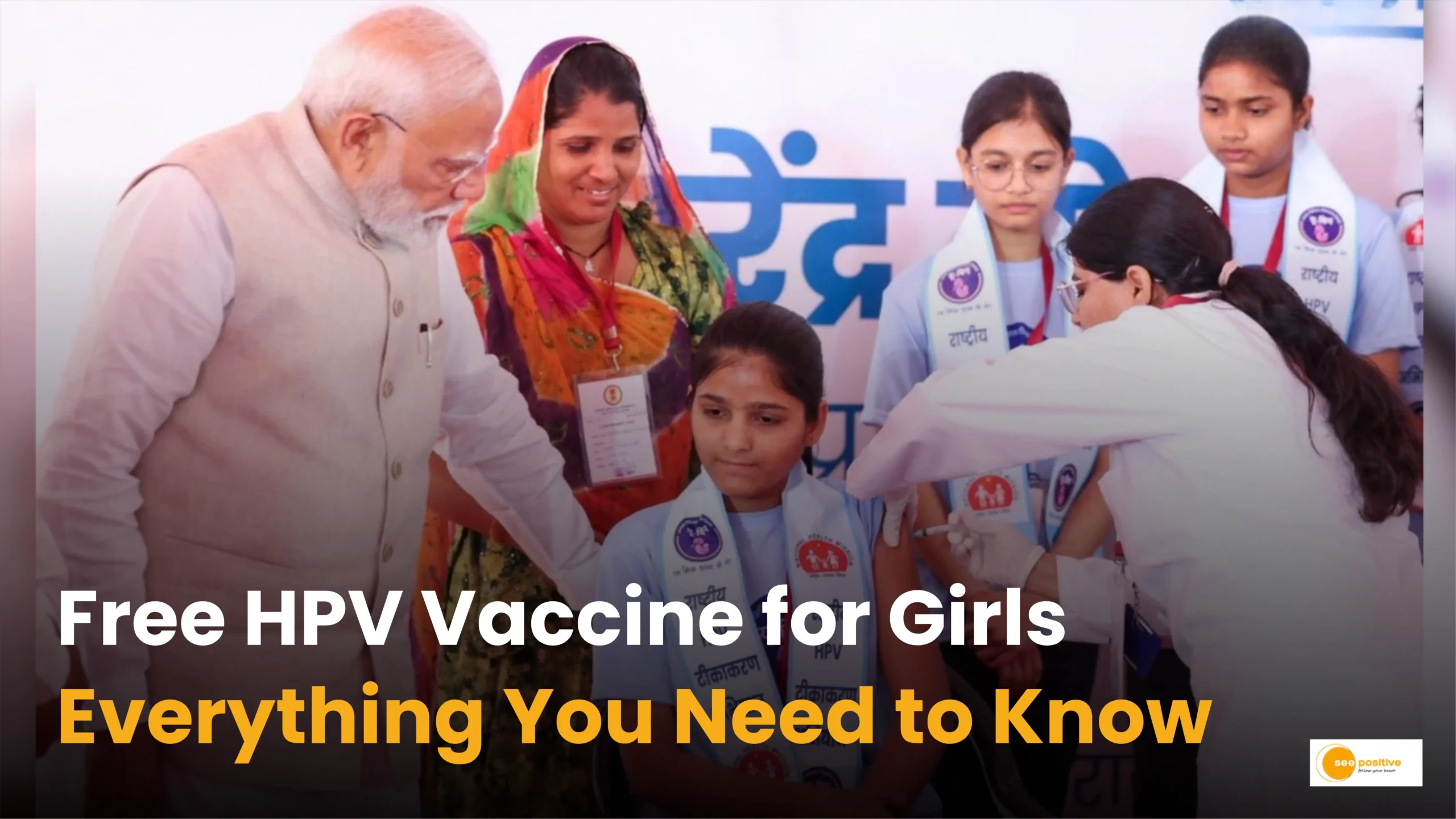
Prime Minister Narendra Modi officially inaugurated India’s nationwide Human Papillomavirus (HPV) vaccination campaign for cervical cancer. This is for 14-year-old girls and started from Ajmer, Rajasthan. (HPV) vaccination marks a historic milestone in the country’s battle against one of the most preventable yet deadly cancers i.e. cervical cancer.
The programme aims to vaccinate approximately 1.15 crore girls aged 14 years. Every year across all States and Union Territories, offering the vaccine free of cost at government health facilities. This will include primary health centres (Ayushman Arogya Mandirs), community health centres, sub-district and district hospitals, and medical colleges.
What Is Cervical Cancer?
Why Is Cervical Cancer a Major Health Concern in India?
Cervical cancer is a malignant tumour that develops in the cervix. The lower part of the uterus that connects to the vagina. It is caused almost exclusively by persistent infection with high-risk types of Human Papillomavirus (HPV). Its a very common virus transmitted through intimate skin-to-skin contact.
Globally, cervical cancer is the fourth most common cancer in women, with around 660,000 new cases and 350,000 deaths reported annually. Most of these occur in low- and middle-income countries due to limited access to vaccination, screening, and treatment services.
In India, cervical cancer continues to be a major public health challenge. Traditionally ranking as the second most common cancer among women. Estimates suggest there are more than 1.2 lakh (120,000) new cases and around 80,000 deaths each year, placing a heavy burden on families and healthcare systems.
How HPV Causes Cervical Cancer
Why Is It a Major Health Concern in India?
Most people acquire HPV at some point in their lives, and in most cases the immune system clears it naturally. However, when certain high-risk strains — especially HPV types 16 and 18 — persist over time, they can cause abnormal changes in cervical cells. Over 15–20 years, these abnormal cells may develop into cancer if left undetected or untreated.
The Science Behind the HPV Vaccine
Scientific Evidence Behind the HPV Vaccine’s Effectiveness
The HPV vaccine works by stimulating the immune system to produce antibodies that prevent infection with HPV types most strongly linked to cancer. The vaccine used in India’s campaign — Gardasil 4 — protects against four HPV strains. Types 16 and 18 (high-risk cancer-causing) and types 6 and 11 (cause genital warts).
Extensive scientific research has shown that HPV vaccines are highly effective — preventing up to 93–100% of cervical cancers caused by vaccine-covered HPV types when administered before exposure. They have a strong safety record, supported by hundreds of millions of doses administered worldwide.
Why Target 14-Year-Old Girls?
PM Modi Launches Nationwide HPV Vaccination Drive
Vaccinating girls before they become sexually active is key because HPV infection usually occurs soon after the onset of sexual activity. By targeting girls at age 14 — before most are exposed to HPV — the programme maximises the vaccine’s protective potential.
This strategy also aligns with the World Health Organization’s global strategy to eliminate cervical cancer as a public health problem, which aims for 90% of girls vaccinated by age 15, among other targets.
Impact of the Government’s HPV Campaign
India’s nationwide HPV vaccination rollout is expected to:
- Drastically reduce the incidence of cervical cancer over the coming decades by preventing HPV infections early in life.
- Improve health equity, since the vaccine is provided free at public facilities.
- Relieve the emotional and economic burden on families and the healthcare system by reducing advanced cancer treatments and associated costs.
- Contribute to India’s alignment with global elimination goals for cervical cancer.
What Happens Next?
The campaign will run through designated health facilities with trained medical officers supervising vaccination sessions. Consent from parents or guardians is required, and healthcare teams are prepared to handle rare adverse events following immunisation, ensuring safety and quality.
Also Read: Fit, Focused, and Strong at 40: Your Guide to Peak Performance

