

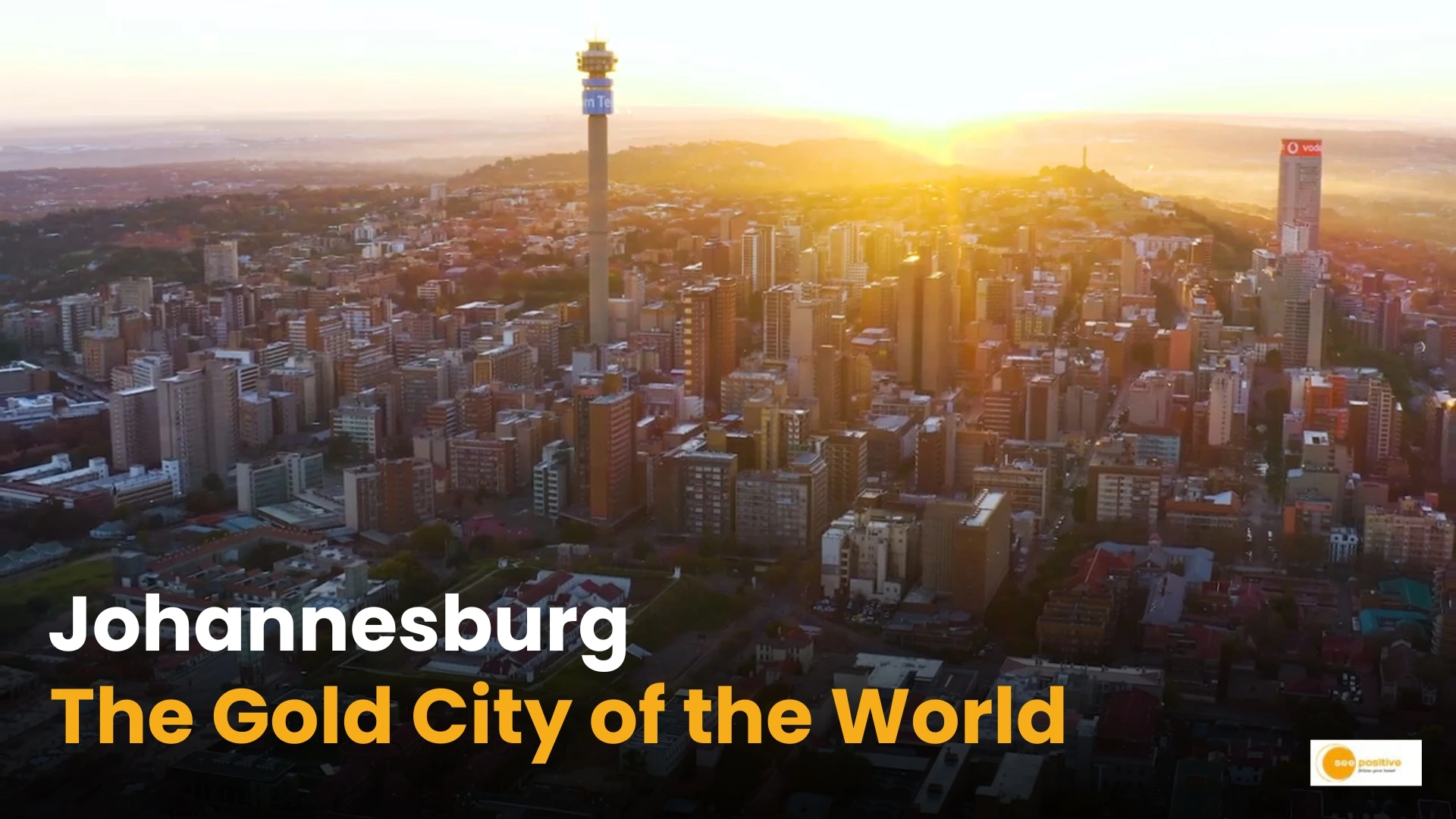
Gold has always symbolized wealth, power, and prosperity. Even today, it remains one of the rarest and most valuable metals on Earth. So far, humans have mined approximately 209,000 tonnes of gold, while an estimated 52,000 tonnes still lie beneath the surface. Countries such as China, Australia, and Russia dominate global reserves. However, one city stands apart when it comes to gold history and production—Johannesburg.
Why Johannesburg Is Known as the Gold Capital of the World
Johannesburg, located in South Africa, earned the title “Gold Capital of the World” due to its extraordinary gold deposits. In fact, the discovery of gold in the Witwatersrand Basin in 1886 transformed this region into one of the richest gold-producing areas in history. As a result, Johannesburg rapidly grew from a small settlement into a thriving economic hub.
Moreover, the Witwatersrand Basin has produced a significant portion of all the gold ever mined globally. Because of this, Johannesburg continues to hold a legendary status in the mining world.
The Geological Mystery Behind Its Gold Riches
Interestingly, scientists believe that a massive geological event occurred around 2.7 billion years ago, which played a crucial role in forming these gold deposits. Some researchers suggest a meteor impact, while others point to volcanic activity. Either way, these events helped concentrate and preserve vast amounts of gold deep within the Earth.
In addition, ancient microorganisms known as cyanobacteria contributed to this process. These microscopic life forms trapped gold particles in sediment layers, gradually creating rich deposits over billions of years.
The Deepest Gold Mines on Earth
Johannesburg is also home to some of the deepest and most advanced gold mines in the world. For example, the Mponeng Gold Mine extends nearly 4 kilometers (2.5 miles) below the surface. At such extreme depths, temperatures naturally reach up to 60°C, making mining operations both challenging and technologically demanding.
Nevertheless, these mines continue to produce significant amounts of gold, reinforcing Johannesburg’s global reputation.
A City Built on Gold—and Trees
While Johannesburg is famous for gold, it also surprises visitors with its greenery. The city boasts over 10 million trees, forming one of the largest man-made forests in the world. In fact, this dense vegetation is visible from satellite images, offering a striking contrast to its mining legacy.
Hidden Gold Still Lies Beneath
Despite centuries of mining, geologists estimate that nearly 50% of the world’s remaining gold reserves may still be buried in the Witwatersrand region. However, much of this gold lies too deep underground to be economically or technologically accessible at present.
Therefore, Johannesburg’s golden story is far from over. With advancements in mining technology, the city could continue to play a vital role in the global gold industry.
Untapped reserves, hidden treasures
In conclusion, Johannesburg rightfully earns its title as the Gold Capital of the World. From its rich geological history to its deep mines and untapped reserves, the city represents both the past and future of gold mining. As science and technology evolve, Johannesburg may continue to reveal even more of its hidden treasures.

