

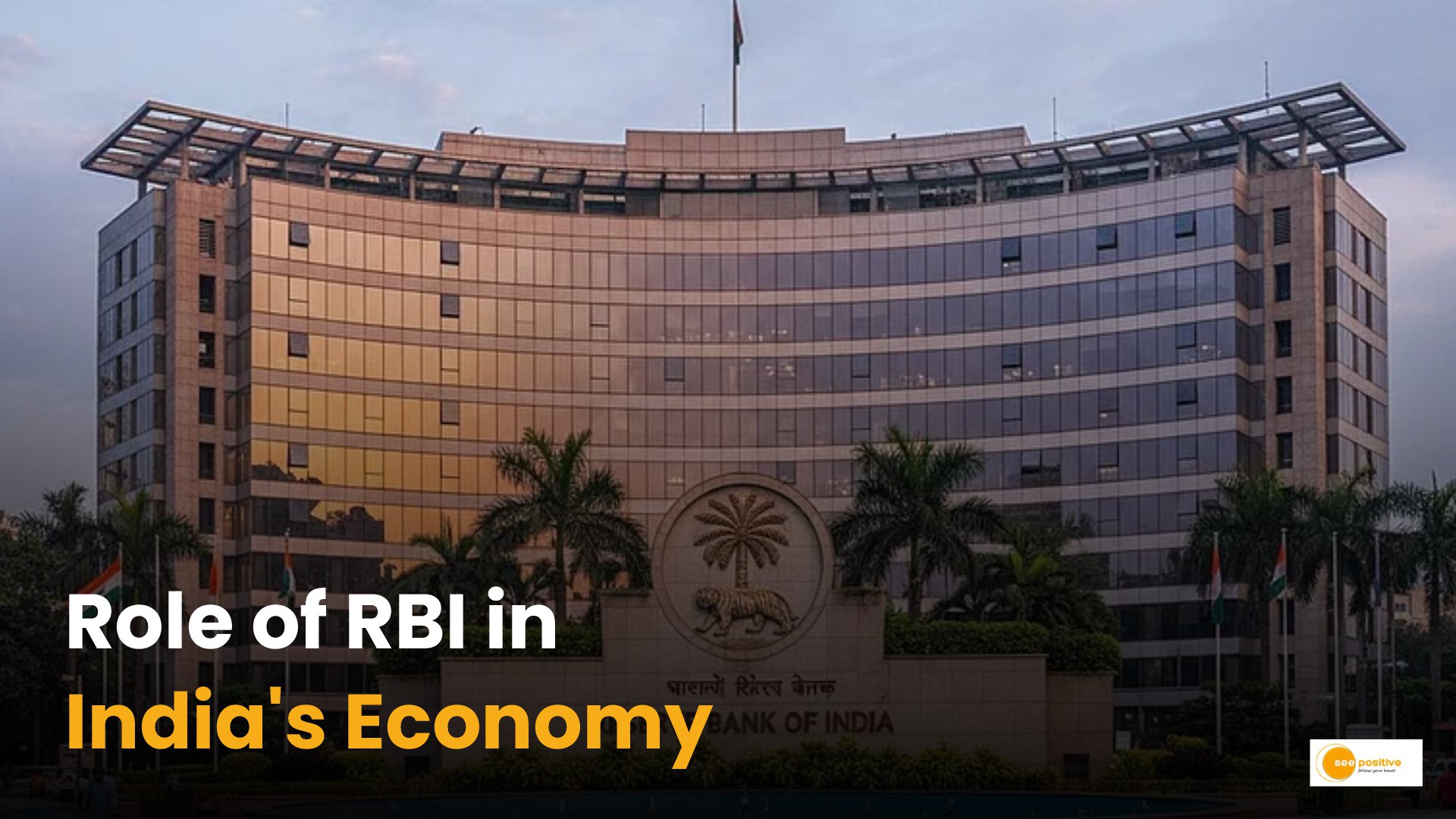
The Role of RBI in India’s Economy is always central to the nation’s financial stability and growth. It is India’s apex monetary authority. The Reserve Bank of India ensures that the country’s financial system is properly regulated, inflation is managed, and economic development is supported. In this article, the key responsibilities of the RBI are explained in detail while keeping the entire content in passive voice for clarity and consistency.
How the RBI Shapes India’s Monetary Policy
Role of RBI in India’s Economy
A major part of the Role of RBI in India’s Economy is played through the formulation of the monetary policy.
Under this function, the supply of money in the economy is controlled, interest rates are influenced, and inflation is kept in check.
Through tools such as the repo rate, reverse repo rate, and CRR, demand in the economy is moderated and financial stability is promoted.
Regulation of Banks and Financial Institutions
Role of RBI in India’s Economy
The banking sector in India is supervised and regulated by the RBI.
Licenses to banks are issued, performance is monitored, and strict guidelines are enforced to ensure that customer deposits are protected.
Through these measures, transparency is improved and trust within the financial system is strengthened.
Currency Issuance and Circulation Management
Role of RBI in India’s Economy
The responsibility for issuing currency in India is vested almost entirely in the RBI, except for one-rupee notes and coins.
Counterfeit currency is prevented through updated security features, and adequate cash availability is ensured across the country.
By fulfilling this role, smooth financial transactions are facilitated and public confidence in the currency system is maintained.
Financial Inclusion and Rural Development
A significant contribution to the Role of RBI in India’s Economy is made through financial inclusion initiatives.
Banking access is expanded in rural and remote regions, digital payments are encouraged, and priority sector lending guidelines are implemented so that underserved communities are supported.
As a result, economic participation is increased and balanced development is promoted.
Oversight of Payment and Settlement Systems
Role of RBI in India’s Economy
India’s fast-growing digital economy is kept secure and efficient through the RBI’s oversight of payment systems such as UPI, NEFT, RTGS, and digital wallets.
Technological innovations are promoted, while risk management standards are enforced.
Through this approach, safer digital transactions are enabled and the nation’s shift toward a cash-lite economy is supported.
Foreign Exchange Management and External Stability
The RBI manages India’s foreign exchange reserves and ensures that the external sector remains stable.
Through interventions in the forex market, volatility in the rupee is reduced and investor confidence is reinforced.
Policies under FEMA (Foreign Exchange Management Act) are also implemented to regulate foreign investments and cross-border financial flows.
Why the Role of RBI in India’s Economy Is Indispensable
India’s economy is kept stable, resilient, and growth-oriented through the continuous efforts of the Reserve Bank of India.
From controlling inflation to regulating banks, from ensuring smooth payment systems to promoting financial inclusion, every aspect of national economic life is impacted by the RBI’s policies.
Therefore, the Role of RBI in India’s Economy is seen as indispensable in shaping a stronger and more sustainable financial future.

