

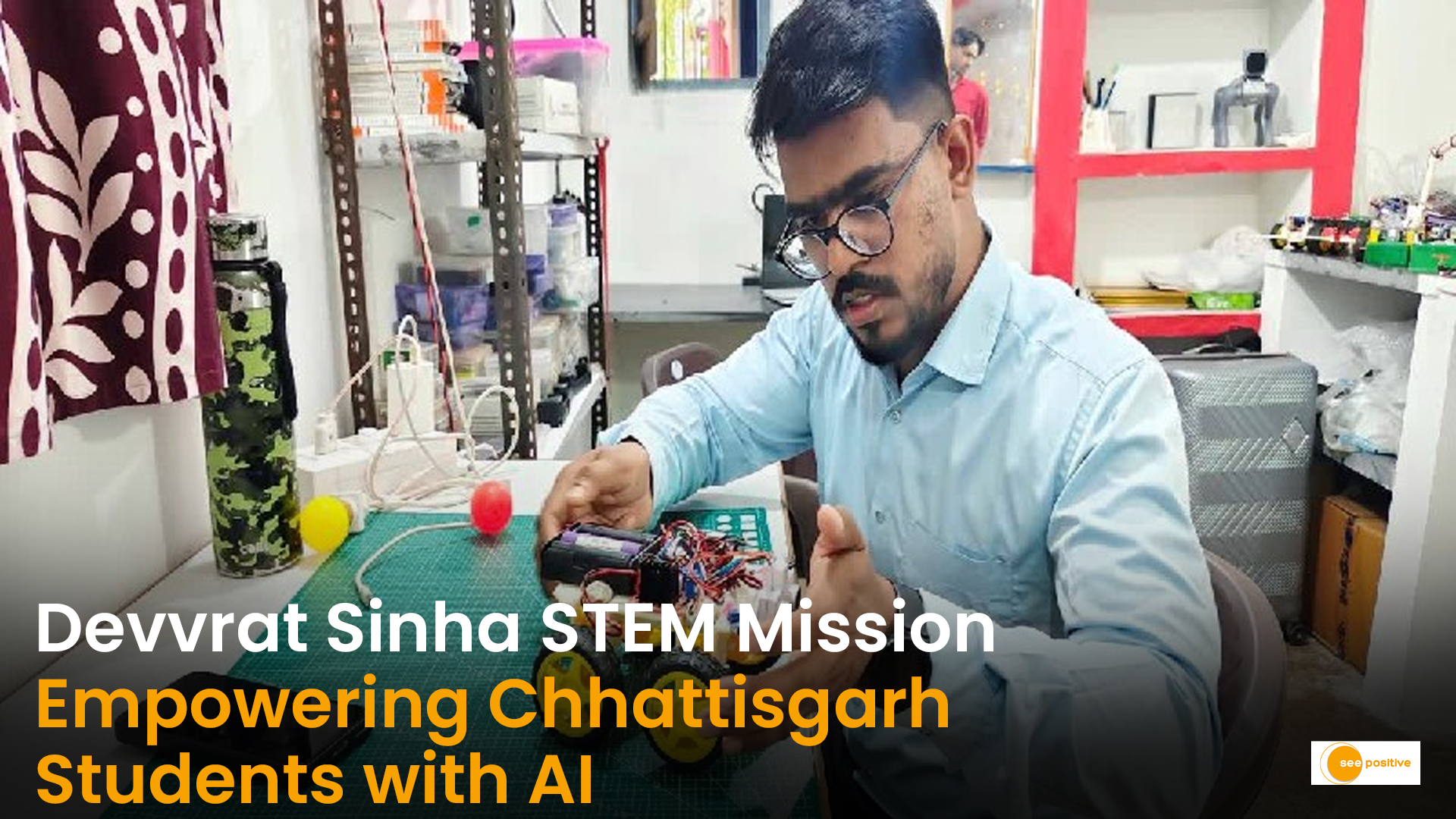
Technological literacy is quietly taking deep roots in the rural heartland of India. While advanced education in artificial intelligence and robotics is often limited to elite urban institutions, one young innovator is changing the narrative from a small town in Chhattisgarh.
Meet Devvrat Sinha, a B.Tech engineer hailing from a farming family in the Magarlod block of Dhamtari district. Leaving behind standard corporate avenues, Devvrat chose to establish STEM Ropo Hub India.
His mission is clear: bringing cutting-edge technology—including Artificial Intelligence (AI), Robotics, Internet of Things (IoT), and 3D printing—to school children across government schools in Chhattisgarh completely free of cost.
Here is an inspiring look at his self-taught journey, his home innovation lab, and his ambitious vision to empower the next generation of rural innovators.
From COVID-19 Lockdown to a Self-Built Home AI Lab
Devvrat’s journey into advanced technology began with self-directed determination during a challenging period.
- Self-Taught Mastery: Having completed his B.Tech degree around the COVID-19 pandemic, Devvrat utilized the lockdown to master complex fields independently.
- Home-Built Innovation Hub: Without relying on financial aid from his father, he left his job and set up an advanced IT and AI research lab right inside his home in Magarlod.
- Building Custom AI Models: Today, his lab houses custom-built microcontrollers, automated vehicles, 3D printers, and a specialized AI system developed entirely through his own experimentation.
Bridging the Tech Gap: Introducing STEM from Grade 8
Devvrat’s primary motivation stems from a personal realization regarding traditional engineering curricula.
Devvrat Sinha’s STEM Learning Framework for Schools:
- Early Exposure (Grades 8 & 9): Teaching the fundamentals of logic, problem-solving, and basic coding syntax.
- Hands-On Hardware Assembly: Guiding students to build basic sensors, microcontrollers, and robotics kits.
- Advanced Concepts: Introducing practical applications in 3D printing, drone assembly, and AI logic.
- Self-Driven Prototyping: Encouraging students to innovate and design solutions for local community issues.
Additionally, Devvrat notes that he only discovered technologies like 3D printing after completing his engineering degree. Consequently, he believes introducing these concepts early in middle school allows students to experiment much sooner. Furthermore, he conducts regular hands-on workshops in government institutions, including Swami Atmanand schools across the district. His ultimate goal is to transform students from passive technology users into active technological creators.
Administrative Support and Expanding Horizons
Devvrat’s grassroot movement has garnered significant support from local administrative leaders who recognize the impact of digital literacy.
- Recognition from District Leadership: Dhamtari Collector Abinash Mishra commended Devvrat’s selflessness and technical mastery during a public demonstration.
- Establishing Dedicated Labs: The district administration is collaborating with Devvrat to set up a specialized, fully equipped robotics and STEM laboratory in Magarlod.
- Philosophical Drive: Guided by a quote from the Bhagavad Gita displayed in his lab—focusing on action without fear—Devvrat remains steadfast during setbacks, constantly refining his models.
What Makes Devvrat Sinha’s Mission Stand Out?
- Self-Reliant Innovation: He demonstrates that high-tech research does not require expensive metropolitan infrastructure—only persistence and internet access.
- Grassroot Community Impact: By training hundreds of rural students in Dhamtari, he is democratizing tech education for underrepresented youth.
- National Vision: Through STEM Ropo Hub India, he aims to scale this model statewide, positioning Chhattisgarh as an emerging hub for young technical talent.
Devvrat Sinha’s story proves that passion combined with technical curiosity can transcend geographical boundaries. By igniting the spark of robotics and AI among children in Chhattisgarh, he is not just teaching code—he is shaping the future architects of India’s digital economy.

