

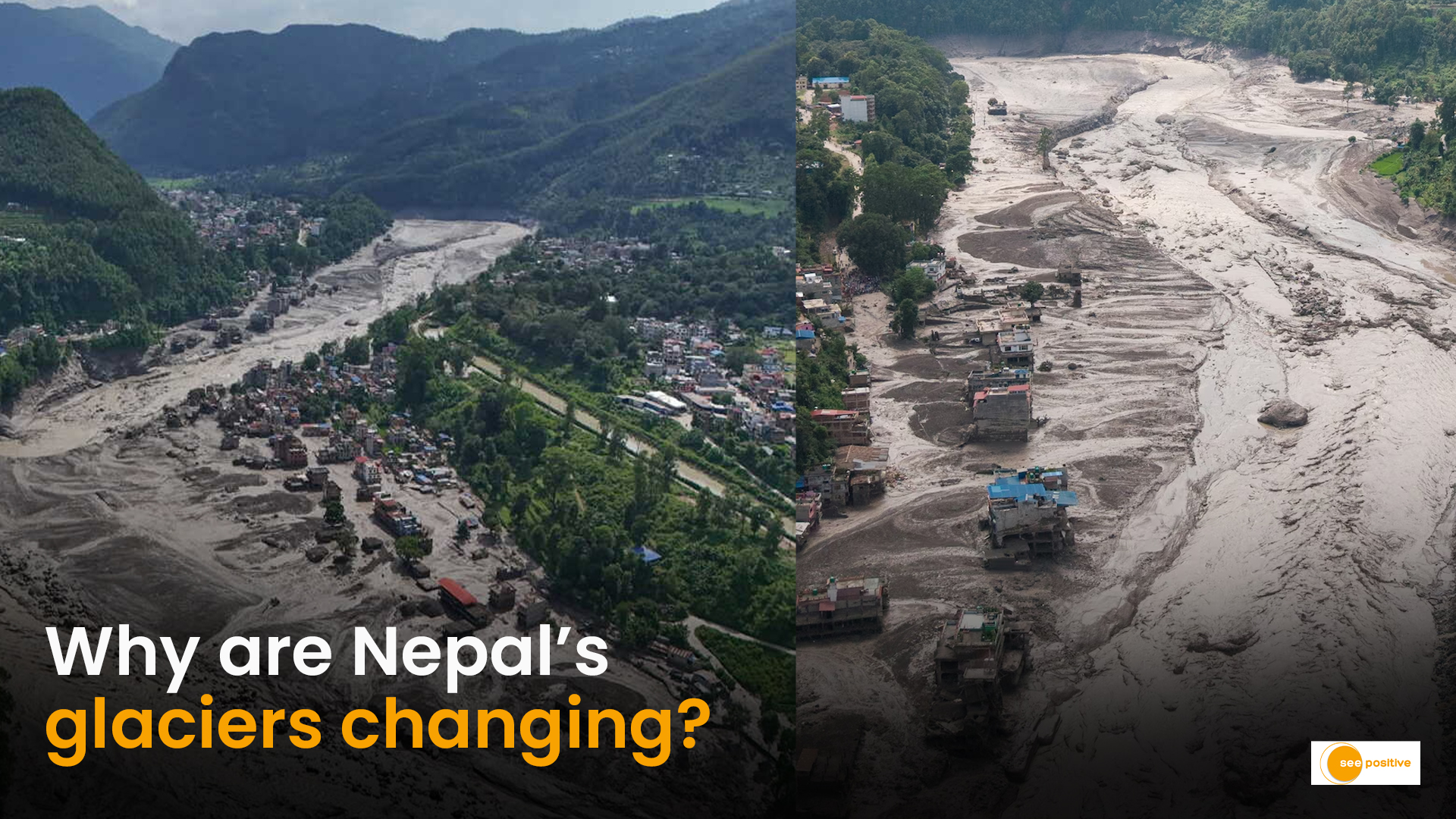
Nepal is home to some of the world’s most spectacular glaciers. From the high mountains of the Everest region to remote valleys across the Himalayas, these vast bodies of ice are an important part of Nepal’s natural environment and water system.
But Nepal’s glaciers are changing.
Scientists have observed glacier retreat, ice loss and the expansion of glacial lakes across parts of the Himalayas. These changes have raised concerns about water resources, mountain ecosystems and the growing risk of glacial lake outburst floods (GLOFs).
So, why are Nepal’s glaciers changing?
The answer involves a combination of rising temperatures, changing snowfall patterns, atmospheric pollution and natural glacier processes.
Rising Temperatures Are a Major Factor
One of the biggest factors affecting Nepal’s glaciers is a warming climate.
Glaciers depend on a balance between snowfall adding new ice and melting removing ice. When temperatures rise, more snow and ice can melt, particularly during warmer seasons.
If melting consistently exceeds the amount of new snow accumulating on a glacier, the glacier can lose mass and gradually retreat.
The higher elevations of the Himalayas are not isolated from global climate change. Changes in temperature can affect even remote mountain environments.
Changing Snowfall Can Affect Glacier Growth
Temperature is only part of the equation.
Glaciers also depend heavily on snowfall. Fresh snow can accumulate and eventually become compressed into glacier ice.
Changes in precipitation patterns can therefore influence whether a glacier gains or loses mass.
If a glacier receives less snowfall, or if precipitation increasingly falls as rain rather than snow at certain elevations, less new ice may be added to compensate for melting.
This can accelerate long-term glacier loss.
Dark Particles Can Increase Melting
Another factor scientists study is black carbon, often called soot.
Black carbon can travel through the atmosphere and eventually settle on snow and ice. Dark particles absorb more sunlight than clean snow, potentially increasing the amount of solar energy absorbed by the surface.
This can contribute to faster melting under certain conditions.
Because atmospheric pollution can travel long distances, some pollutants affecting Himalayan snow and ice may originate far beyond the mountains themselves.
Glacial Lakes Are Expanding in Some Areas
As glaciers retreat, meltwater can collect in depressions near the glacier, creating or enlarging glacial lakes.
These lakes are a natural part of changing mountain landscapes, but some can become a hazard when large quantities of water are held behind unstable natural dams.
A sudden release can produce a glacial lake outburst flood, or GLOF.
This is one reason scientists closely monitor both glaciers and the lakes forming around them.
Why Glacier Changes Matter to Nepal
Glaciers are more than frozen landscapes.
The Himalayas store enormous amounts of freshwater in snow and ice. Meltwater contributes to rivers and streams that support communities, agriculture, ecosystems and economic activities downstream.
However, glacier change can create different risks at different times.
In the short term, increased melting can contribute to greater water availability in some areas. Over the longer term, continued ice loss can reduce the amount of water stored as glacier ice.
At the same time, changing glaciers and expanding glacial lakes can increase certain mountain hazards.
Scientists Are Watching the Changes
Despite the challenges, scientists have more tools than ever to study Nepal’s glaciers.
Satellite imagery allows researchers to observe remote mountain areas repeatedly. Ground measurements, drones, weather stations and other technologies can provide additional information about glacier conditions.
Researchers can compare observations from different years to determine how glaciers and glacial lakes are changing.
This information is essential for identifying areas that may require additional monitoring or disaster-preparedness measures.
Can Nepal Stop Its Glaciers From Changing?
Nepal cannot stop global warming by itself, and individual glaciers cannot simply be returned to their previous size.
However, Nepal can reduce the risks associated with glacier change.
Better glacier monitoring, early-warning systems, climate-resilient infrastructure and community preparedness can help protect people living in vulnerable mountain valleys.
A Changing Himalaya, and a Growing Scientific Response
Nepal’s glaciers are changing because the Himalayan environment is responding to a combination of warming temperatures, changing snowfall and precipitation, atmospheric pollution and natural glacier dynamics.
The changes are serious, but scientists are not simply watching from a distance.
Modern satellite technology, improved monitoring systems and climate research are helping researchers understand what is happening across Nepal’s high mountains.
The better scientists understand these changes, the better Nepal can prepare for the future.
The glaciers may be changing, but so is our ability to monitor them, understand their behavior and protect the communities that depend on the Himalayan environment.

