

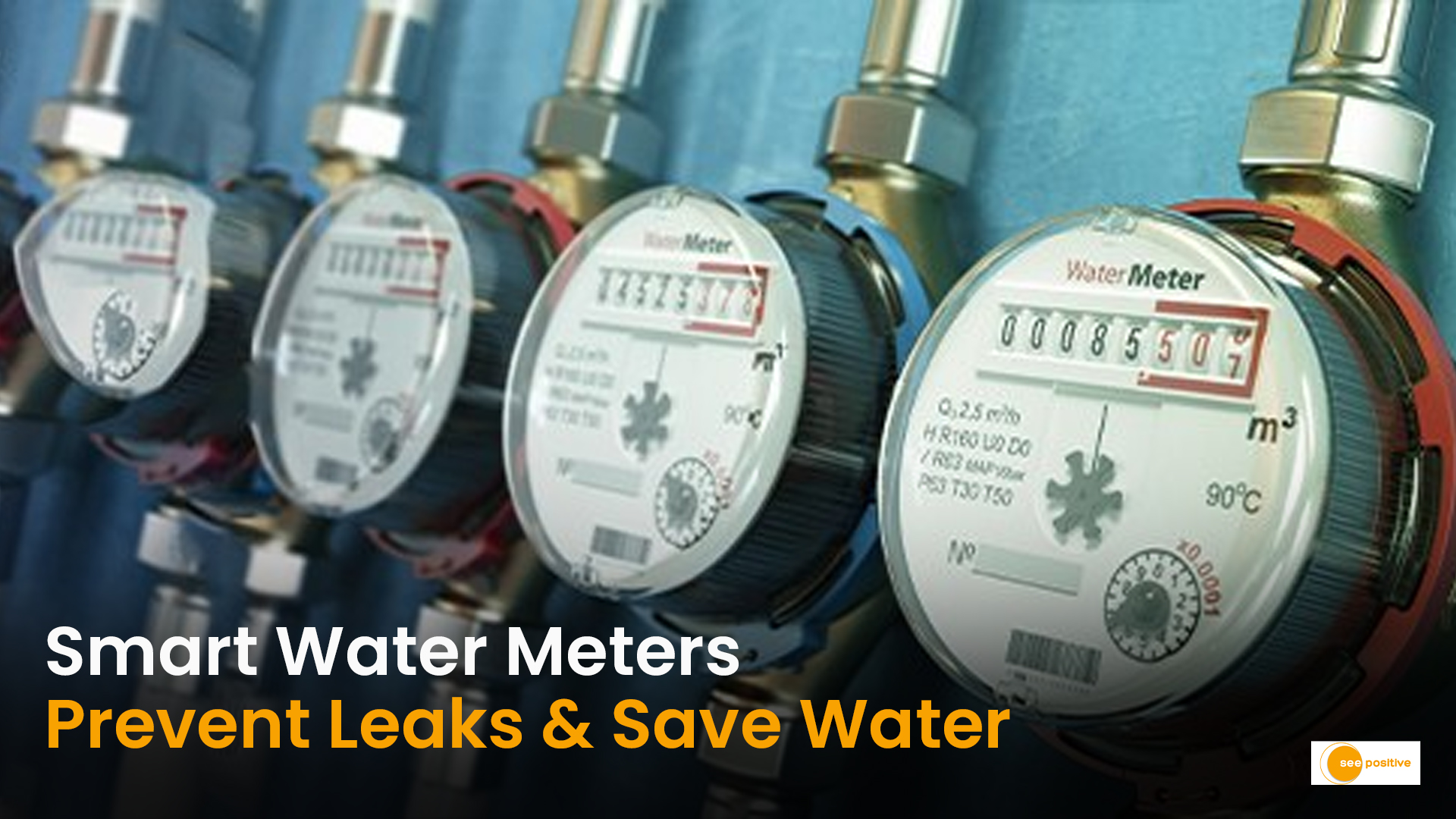
Water scarcity and underground pipe leaks are growing challenges across rapidly expanding Indian cities like Bengaluru, Mumbai, and Delhi. Traditional water meters only record total volume once a month, making it impossible to detect hidden pipe leaks early or monitor daily consumption patterns.
To solve this problem, modern technology has introduced Smart Water Meters. Driven by Internet of Things (IoT) sensors, wireless sensor networks, and advanced microcontrollers, these intelligent devices monitor water flow continuously, detect leaks automatically, and help households and municipal corporations conserve precious water.
What Is a Smart Water Meter?
A smart water meter is an electronic utility device that measures the exact volume of water flowing through a pipeline in real time. Unlike mechanical meters that require manual reading by a utility technician, smart meters use digital sensors to record flow rates and transmit the data wirelessly to a mobile application, cloud database, or central municipal dashboard.
Key Components of IoT-Based Water Meters
Smart water management relies on a structured ecosystem of hardware sensors and software platforms designed for high visibility:
- Flow Sensors & Ultrasonic Transducers: These sensors sit inside or around the pipe to measure how fast water flows without clogging or restricting water movement.
- Microcontrollers: Compact microchips act as the central processing unit of the device, collecting raw signals, calculating flow rates, and packaging data for transmission.
- Wireless IoT Modules: Technologies like Wi-Fi, LoRaWAN, cellular IoT (NB-IoT), or Bluetooth transmit consumption data securely to cloud servers.
- Mobile App & Web Dashboard: Users receive real-time notifications on their smartphones, enabling them to track daily usage and check water bills instantly.
How Smart Water Meters Prevent Water Waste
- Instant Leakage Alerts: If water flows continuously through a pipe at midnight when all taps are closed, the microcontroller detects the unusual pattern and immediately flags a leak warning on your phone.
- Real-Time Data Access: Instead of waiting for a monthly utility bill, homeowners and building managers can monitor hourly water usage and adjust consumption habits.
- Accurate Consumption Billing: Mechanical meters can degrade over time and show faulty readings. Digital ultrasonic meters maintain high measurement accuracy over many years.
- Automated Valve Shut-off: Advanced smart meters include motorized valves that automatically close the main pipe if a massive pipe burst or high-volume leak is detected.
Why Indian Smart Cities Are Adopting Smart Water Tech
Under India’s Smart Cities Mission, municipal authorities and housing societies are increasingly installing IoT-enabled water management systems. By reducing Non-Revenue Water (NRW)—water lost to leakages and theft before reaching the consumer—cities can conserve millions of liters of clean water every day.
Summary: Traditional vs. Smart Water Meters
| Feature | Traditional Mechanical Meter | IoT Smart Water Meter |
| Reading Frequency | Monthly (Manual entry) | Real-Time / Hourly (Automatic) |
| Leak Detection | Discovered only after visible damage | Instant digital alerts sent to smartphone |
| Data Transmission | Manual physical inspection | Wireless (Wi-Fi, LoRaWAN, Cellular) |
| Accuracy | Drops over time due to wear | High precision using digital/ultrasonic tech |
Upgrading to smart water meters is a vital step toward sustainable urban living. By combining low-cost microcontrollers, IoT connectivity, and smart sensors, these devices empower households and city managers to prevent water waste, lower utility bills, and protect finite water resources for the future.

