

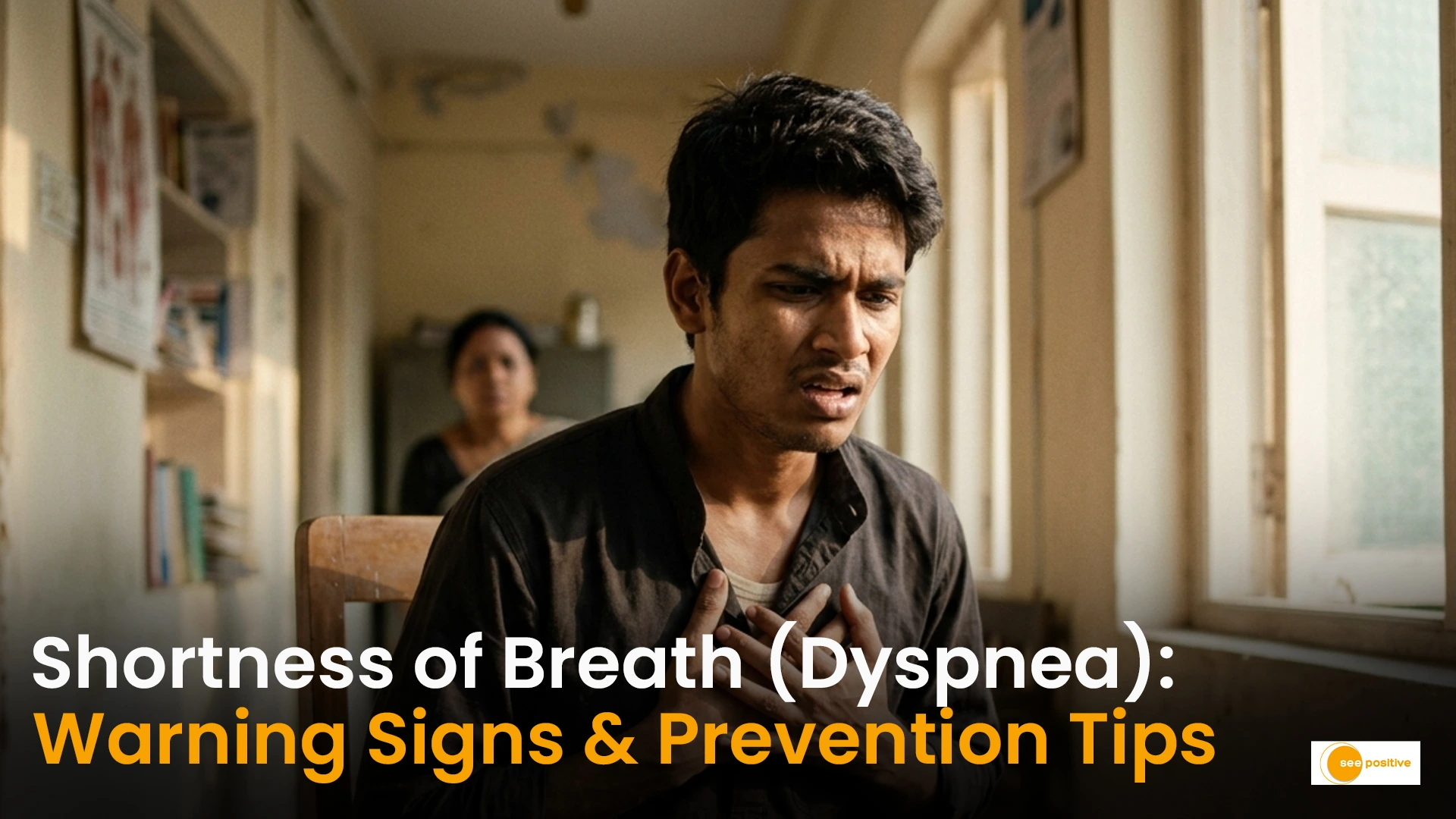
Learn the common causes, warning signs to watch for, and simple prevention tips for healthy lungs
What Is Shortness of Breath?
Shortness of breath, known in medical terms as dyspnea, is the feeling that you cannot get enough air into your lungs. It may feel like your chest is tight, like you are working harder than normal to breathe, like you cannot take a full, deep breath.
A little breathlessness after a hard workout is normal. But if you feel short of breath while resting, doing light tasks, or lying down, it could be a sign of an underlying health problem, and is worth paying attention to.
Common Causes of Shortness of Breath
Breathlessness can come from a lung problem, a heart problem, or something else entirely. Here are the most common causes of dyspnea:
Lung related causes
- Asthma – airway narrow and swell, making it hard to breathe
- COPD (Chronic Obstructive Pulmonary Disease) – a long-term lung disease, often linked to smoking, that blocks airflow.
- Pneumonia – a lung infection that fills the air sacs with fluid
- Pulmonary embolism – a blood clot in the lungs (a medical emergency)
- Collapsed lung
Heart-related causes
- Heart failure
- Heart attack
- Fluid around the heart
- Irregular heart rhythm
Other causes
- Anxiety or panic attacks
- Anemia (low RBC count)
- Allergic reactions (anaphylaxis)
- Choking or a blocked airway
- Obesity or being out of shape
- Extreme heat or cold
Acute vs Chronic Shortness of Breath
Doctors usually sort dyspnea into two types:
- Acute (sudden) dyspnea – comes on quickly, often within minutes to hours. Common causes include an asthma attack, pneumonia, a heart attack, choking, or a panic attack.
- Chronic (long–term) dyspnea – lasts a month or longer. It is often linked to ongoing conditions like asthma, COPD, heart disease, or obesity.
Warning Signs, You Should Never Ignore
Most short bouts of breathlessness after exercise are harmless. But certain warning signs mean you should seek medical help right away:
- Sudden, severe shortness of breath
- Shortness of breath with chest pain or pressure
- Breathlessness with blue lips or fingertips
- Shortness of breath along with nausea, sweating, or dizziness
- Waking up gasping for air at night
- Shortness of breath that gets worse when lying flat
- Swelling in the feet, ankles, or legs along with breathlessness
- A cough that brings up blood
- Breathlessness after very little activity, when it never used to happen before
- High fever, chills, and breathlessness together (possible pneumonia)
If you notice sudden, severe breathing trouble, especially with chest pain, treat it as a medical emergency and seek help immediately.
How Asthma, COPD, and Pneumonia Cause Breathlessness
- Asthma causes the airways to swell and tighten, along with extra mucus, which narrows the path air needs to travel.
- COPD slowly damages the lungs over years, most often due to smoking, making it harder to move air in and out. Breathlessness usually starts during activity and can eventually happen even at rest
- Pneumonia fills the tiny air sacs in the lungs with the fluid or pus, so less oxygen reaches the blood. This often comes with fever, chills and a cough.
Prevention Tips for Healthier Lungs
You can lower your risk of breathlessness and protect your lung heath with a few simple habits:
- Don’t smoke, and avoid secondhand smoke – smoking is the single biggest cause of COPD and long-term lung damage.
- Stay up to date on vaccines – flu and pneumonia vaccines lower your risk of lung infections.
- Wash your hands regularly – this helps prevent respiratory infections like pneumonia.
- Stay active – regular, moderate exercise keeps your lungs and heart strong.
- Maintain a healthy weight – extra weight makes your lungs and heart work harder.
- Avoid polluted air – limit time outdoors on high-pollution days, and improve air quality indoors.
- Manage asthma or allergies properly – take prescribed medication and avoid known triggers.
- Practice breathing exercises – techniques like pursed-lip breathing and deep belly breathing can strengthen your lungs over time.
- Stay hydrated – drinking enough water helps keep mucus thin and easier to clear.
- Get regular check-ups – a simple breathing test (spirometry) can catch lung problems early, especially if you’re over 40 or have a history of smoking.
When to See a Doctor
Book a doctor’s visit if you notice:
- Shortness of breath that keeps coming back
- Breathlessness during activities that used to feel easy
- A cough lasting more than a month
- Ongoing wheezing or chest tightness
Catching a breathing problem early, whether it is asthma, COPD, or something else, makes it fr easier to manage and treat.
This article is for general information only and is not a substitute for professional medical advice. If you’re experiencing shortness of breath, please consult a doctor.

