

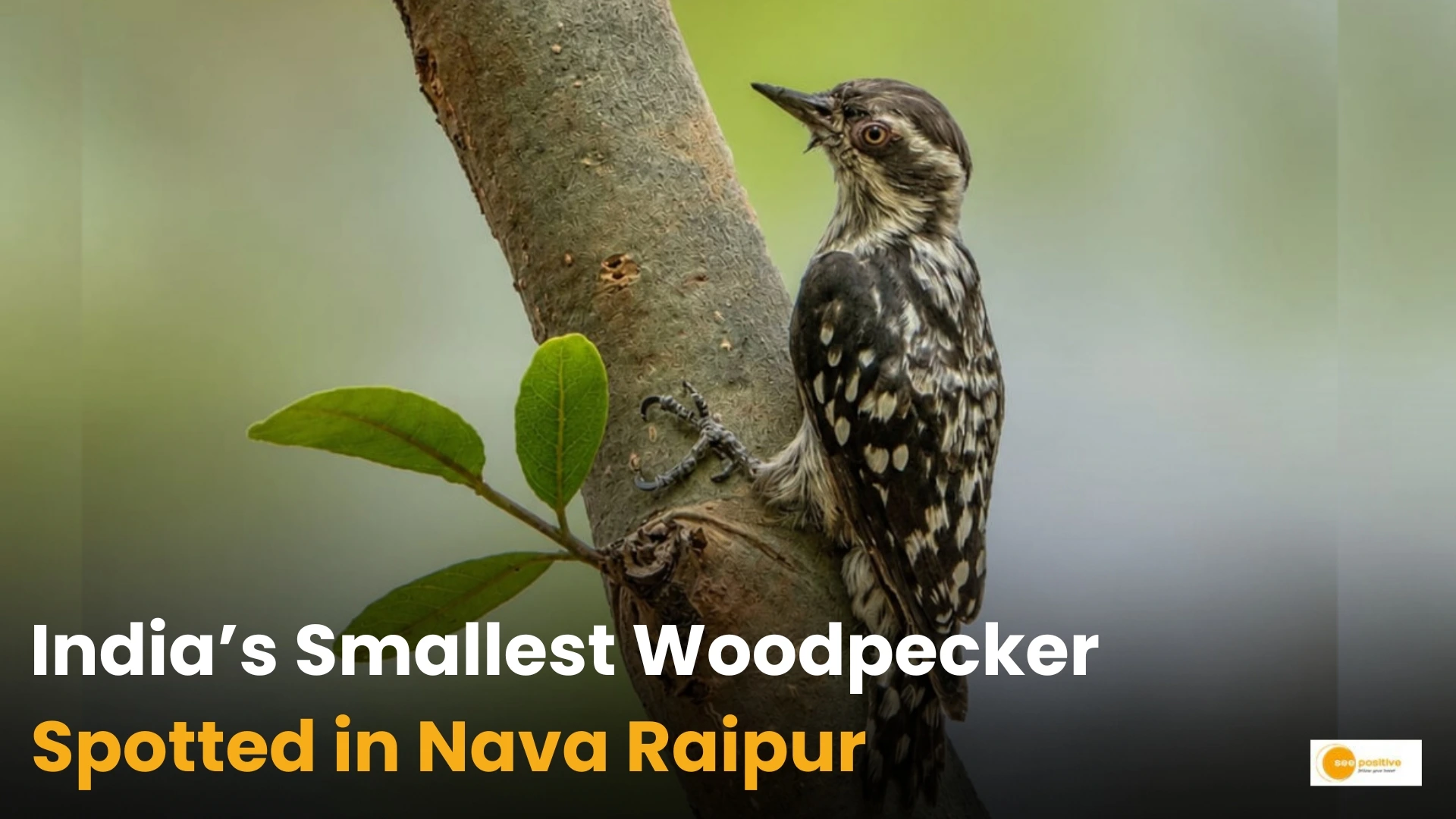
Rare Sighting of India’s Smallest Woodpecker in Chhattisgarh. The Brown-Capped Pygmy Highlights Chhattisgarh’s Growing Biodiversity Conservation Efforts. The question is can rapid urban development and nature thrive together? A remarkable sighting from Chhattisgarh- Nava Raipur is providing a powerful answer. During a recent bird walk at the Botanical Garden inside Nava Raipur Jungle Safari, wildlife photographers documented the Brown-Capped Pygmy Woodpecker. It is one of India’s smallest woodpecker species. The rare bird’s presence in a fast-growing urban landscape is being seen as a significant indicator. This story of successful biodiversity conservation and sustainable development efforts in Chhattisgarh.
From Urban Expansion to a Haven for Wildlife
Nava Raipur was envisioned as a modern, planned city. Alongside infrastructure growth, equal emphasis has been placed on preserving green spaces, natural habitats, and ecological balance.
Today, the Jungle Safari and Botanical Garden have evolved beyond recreational attractions. They are increasingly becoming safe habitats for birds, pollinators, and wildlife that depend on healthy ecosystems.
Under the guidance of Forest and Climate Change Minister Kedar Kashyap, conservation-focused initiatives, habitat protection, and green landscape development have strengthened the ecological value of the region.
The sighting of a rare woodpecker species is now being viewed as evidence that these efforts are delivering measurable results.
Meet the Brown-Capped India’s Smallest Woodpecker
The Brown-Capped Pygmy Woodpecker is among the smallest woodpeckers found in India.
It measures only about 13 to 15 centimeters in length. The bird is known for its agile movements as it rapidly climbs and descends tree trunks in search of food.
Its distinctive brown crown, black-and-white spotted plumage, and energetic behavior make it one of the most fascinating small woodland birds in the Indian subcontinent.
Nature’s Tiny Tree Doctor
Despite its small size, the Brown-Capped Pygmy Woodpecker plays a crucial ecological role.
Using its sharp beak, the bird feeds on insects, larvae, and pests hidden beneath tree bark. By naturally controlling harmful insect populations, it helps maintain tree health and supports forest resilience.
For this reason, woodpeckers are often referred to as the “natural guardians of trees” and important contributors to ecosystem health.
Why This Sighting Matters
The Brown-Capped Pygmy Woodpecker is typically associated with mature trees and relatively quiet forest habitats.
Its appearance in an urban conservation landscape such as Nava Raipur suggests that the area’s ecological restoration and habitat management efforts are creating conditions suitable for sensitive bird species.
Conservation experts consider such sightings important biological indicators, reflecting the quality of habitat, availability of food sources, and overall ecosystem stability.
A Milestone for Biodiversity Conservation in Chhattisgarh
Over the past few years, Chhattisgarh has undertaken several initiatives. The state has focused on biodiversity conservation, wildlife protection, afforestation, and sustainable green development.
Protected green zones like the Nava Raipur Jungle Safari and Botanical Garden are helping create ecological corridors. While also encouraging environmental awareness among citizens.
The presence of the Brown-Capped Pygmy Woodpecker demonstrates that carefully planned urban development can coexist. Also with thriving biodiversity when conservation remains a priority.
You may also like: Mass nesting of olive ridley turtles. A conservation success

