

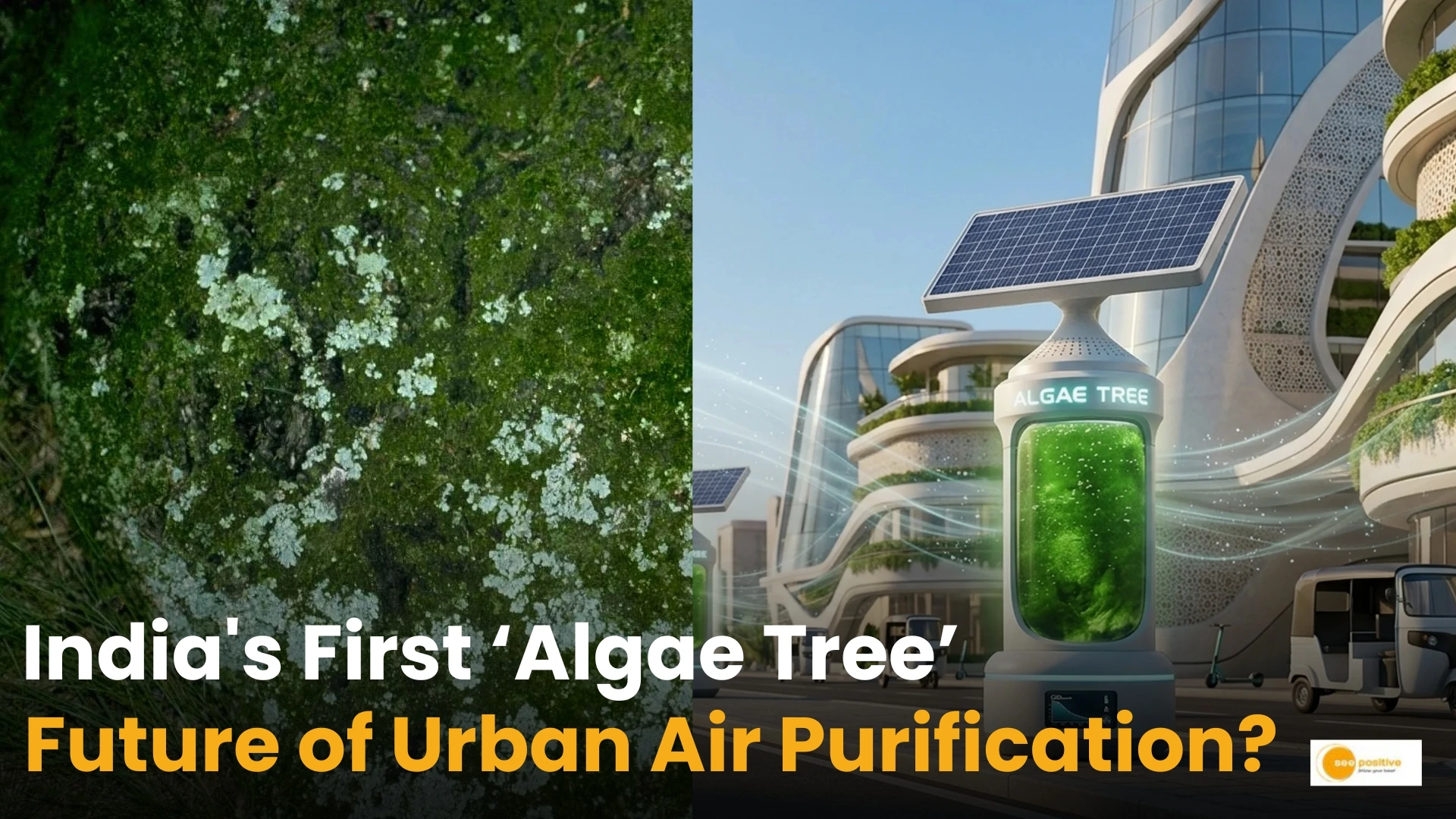
What if a single solar-powered device could do the work of 25 trees?
In a first for India, Bhopal has unveiled an innovative environmental technology called the ‘Algae Tree’ — a smart, solar-powered air purification system that uses microalgae to capture carbon dioxide and release oxygen.
Installed at Swami Vivekananda Park, the futuristic structure is attracting attention not because it resembles a tree, but because of what it can achieve. In a time when cities are grappling with rising pollution, shrinking green spaces, and worsening heatwaves, this green-tech innovation offers a glimpse into what the future of urban sustainability could look like.
What Exactly Is an Algae Tree?
Despite its name, an Algae Tree isn’t a tree at all.
It is a compact, technology-driven unit that harnesses the natural power of microalgae — microscopic organisms known for their remarkable ability to absorb carbon dioxide through photosynthesis.
Housed within a transparent chamber, the algae continuously consume CO₂ from the surrounding air while producing oxygen, much like conventional trees. However, because algae grow rapidly and photosynthesize efficiently, they can absorb carbon at a significantly faster rate.
The system is powered entirely by solar energy, making it a low-carbon solution in itself.
Why Is Everyone Talking About It?
The numbers are impressive.
According to the developers:
- One Algae Tree can perform the carbon-capturing function of approximately 25 mature trees.
- It can absorb nearly 1.5 tonnes of carbon dioxide annually.
- The unit can generate around 1 tonne of oxygen every year.
- It may reduce PM2.5 particulate pollution by 45–55% within a radius of roughly 15 metres.
If these results hold true at scale, the technology could become a valuable tool for cities struggling with air quality issues.
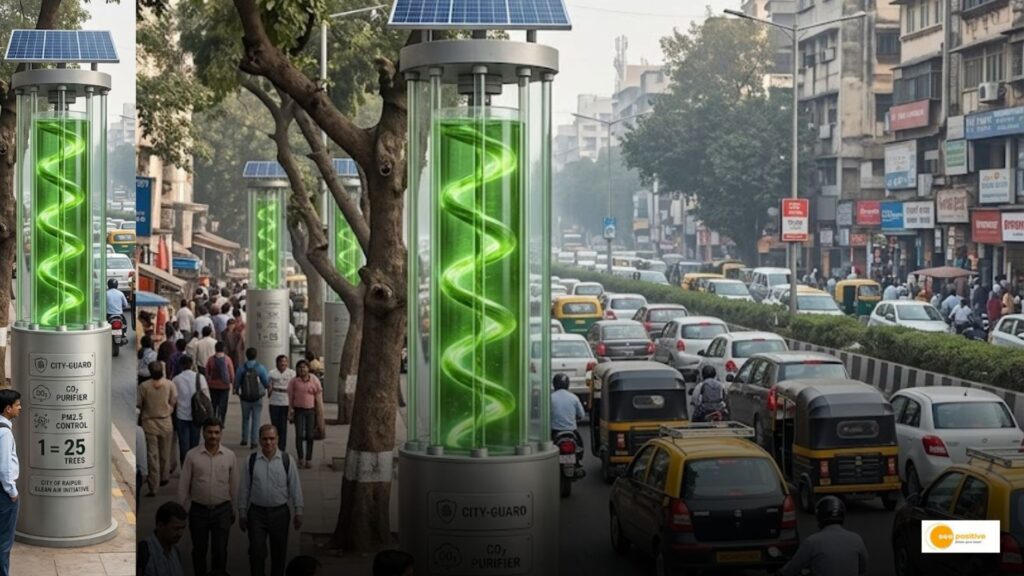
A Solution for Places Where Trees Can’t Grow
Urban planners often face a difficult challenge: cities desperately need more greenery, but many densely populated areas simply don’t have enough space for large-scale tree plantations.
Busy roads, commercial hubs, transit corridors, and crowded public spaces leave little room for traditional green cover.
This is where Algae Trees could make a difference.
Rather than replacing natural trees, the technology is designed to complement them by bringing carbon-capturing capabilities to locations where planting isn’t practical.
Think of them as “micro green lungs” for concrete-heavy urban environments.
The Science Behind the Green Technology
Microalgae have long fascinated scientists for their extraordinary environmental potential.
These tiny organisms are among the planet’s most efficient natural carbon absorbers. They require sunlight, water, and carbon dioxide to thrive and can multiply much faster than most land plants.
Globally, algae-based carbon capture technologies are being explored for:
- Air purification
- Wastewater treatment
- Biofuel production
- Industrial carbon capture
- Sustainable urban infrastructure
The Bhopal installation represents one of the first attempts to bring this concept into India’s public spaces.
Can Technology Replace Trees?
The short answer is no.
Natural trees provide benefits that technology cannot fully replicate — including biodiversity support, shade, cooling effects, soil conservation, and habitats for birds and insects.
However, environmental experts increasingly believe that cities will need a combination of natural and technological solutions to tackle climate challenges.
As urban populations grow and green spaces become harder to create, innovations like Algae Trees could serve as an important supplement to traditional afforestation efforts.
A Glimpse Into the Future of Indian Cities?
With air pollution continuing to affect millions of people and climate-related challenges intensifying, cities are searching for smarter ways to become cleaner and more resilient.
Whether Algae Trees become a common feature in Indian cities remains to be seen. But their arrival marks an interesting shift toward nature-inspired technologies that work alongside traditional environmental solutions.
For now, Bhopal’s Algae Tree stands as a fascinating experiment — one that raises an intriguing question:
Could the future of urban forests include not just trees rooted in soil, but also living systems powered by microscopic algae?
Only time will tell, but the idea is certainly breathing fresh air into the conversation around sustainable cities.

