

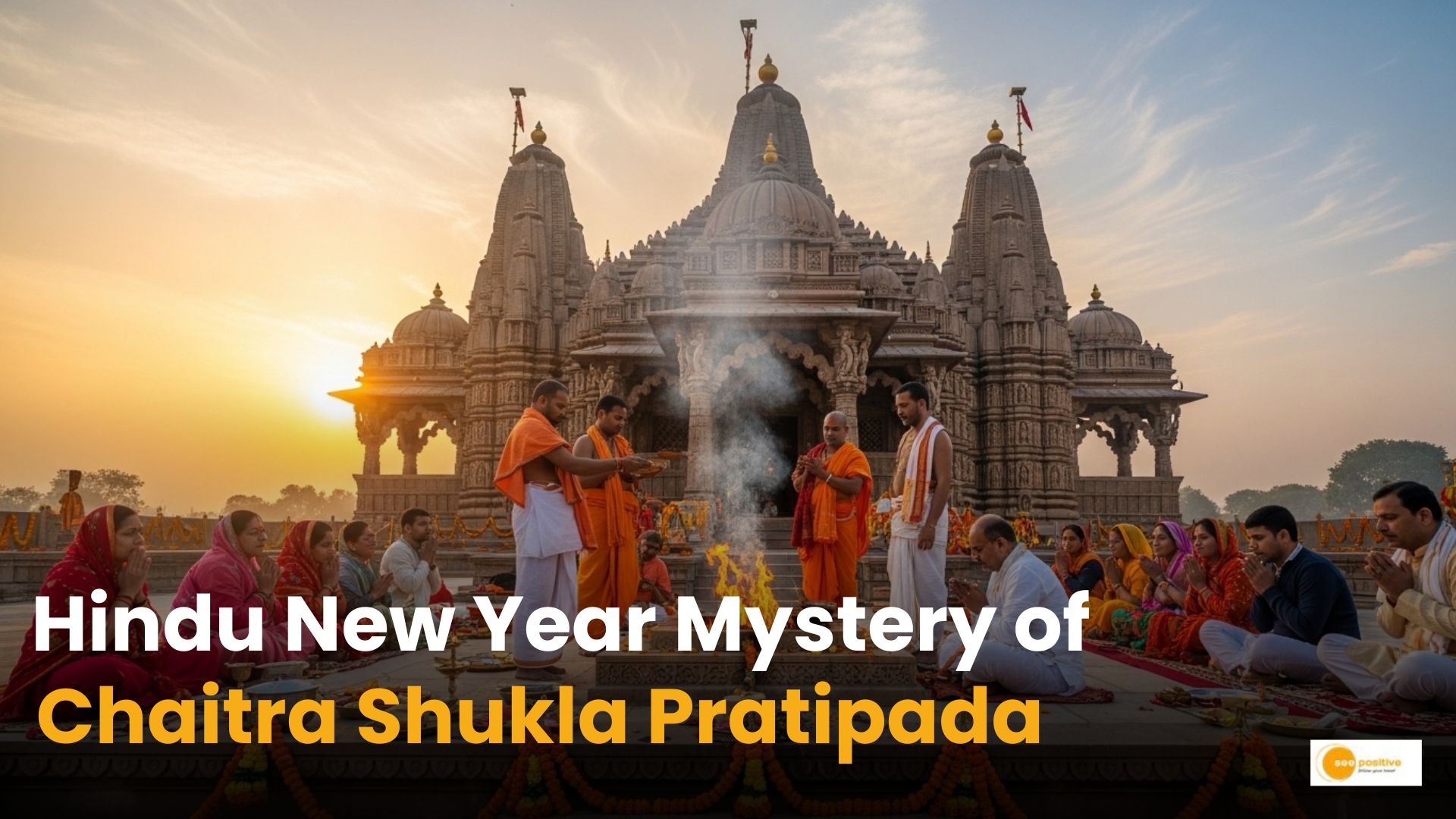
Every year on January 1, millions of people around the world celebrate the start of a new year. But according to ancient Indian traditions, the true beginning of the year is believed to be Chaitra Shukla Pratipada, the first day of the Hindu lunar calendar. This day is not just culturally significant; it is also deeply connected with astronomy, seasonal changes, and spiritual philosophy.
For centuries, Hindu scholars and scriptures have regarded this day as the first day of cosmic creation, marking the moment when the universe began according to Vedic belief.
Why Chaitra Shukla Pratipada Is Considered the First Day of Creation
According to Hindu scriptures, the universe was created on Chaitra Shukla Pratipada by Lord Brahma, the divine creator. It is believed that on this day Brahma began the process of creating the universe, time, and all living beings.
Because of this mythological belief, the day is considered the starting point of existence and cosmic order. Ancient texts describe it as the moment when time itself began moving.
This belief is why many traditions celebrate the Hindu New Year on this day with festivals such as:
- Gudi Padwa
- Ugadi
- Navreh
Although the names differ, the essence remains the same—celebrating the start of a new cosmic cycle.
The Astronomical and Seasonal Logic Behind the Hindu New Year
Unlike the modern Gregorian calendar, the Hindu Calendar is based on both lunar cycles and solar movements.
Chaitra Shukla Pratipada usually falls during the spring season, when nature begins to renew itself. Trees bloom, crops start growing, and the climate becomes pleasant. This natural transformation symbolizes rebirth and fresh beginnings, making it an ideal moment to start a new year.
Ancient Indian astronomers carefully observed planetary movements and lunar phases to design a calendar that stayed aligned with nature. As a result, the Hindu New Year is not just a date on a calendar but a reflection of cosmic rhythms and seasonal balance.
Why Hindu New Year Is Considered More Scientific Than January 1
The widely used Gregorian calendar begins on January 1 mainly due to historical and political reasons. It was introduced during the Roman era and later standardized globally. However, this date has no direct connection with natural cycles or astronomical events.
In contrast, the Hindu New Year is linked with:
- Lunar phases (new moon and waxing moon cycles)
- Seasonal transitions, especially the arrival of spring
- Astronomical observations by ancient scholars
Because it follows both the moon and the sun, the Hindu calendar remains closely aligned with natural phenomena. This is why many scholars consider it scientifically synchronized with nature.
The Spiritual Meaning of the Day
The beginning of the Hindu New Year also marks the start of Chaitra Navratri, a sacred period devoted to spiritual cleansing and devotion.
On this day, people traditionally:
- Read the new year’s Panchang (Hindu almanac)
- Perform prayers and rituals
- Start new ventures or important activities
These practices symbolize the hope that the new year will bring prosperity, wisdom, and spiritual growth.
A Celebration of Renewal
Beyond mythology and astronomy, the deeper message of Chaitra Shukla Pratipada is renewal. It reminds people that life moves in cycles—creation, growth, and transformation.
While January 1 marks the start of a calendar year for the modern world, the Hindu New Year reflects something deeper: a harmonious connection between time, nature, and human life.
Conclusion
The belief that Chaitra Shukla Pratipada marks the first day of creation combines mythology, astronomy, and seasonal wisdom. From the story of Lord Brahma’s creation of the universe to the scientific alignment with lunar cycles and spring, this day represents a profound understanding of time in ancient India.
Whether viewed from a spiritual or scientific perspective, the Hindu New Year offers a powerful reminder that true beginnings are often rooted in nature’s rhythm rather than human-made calendars.

