

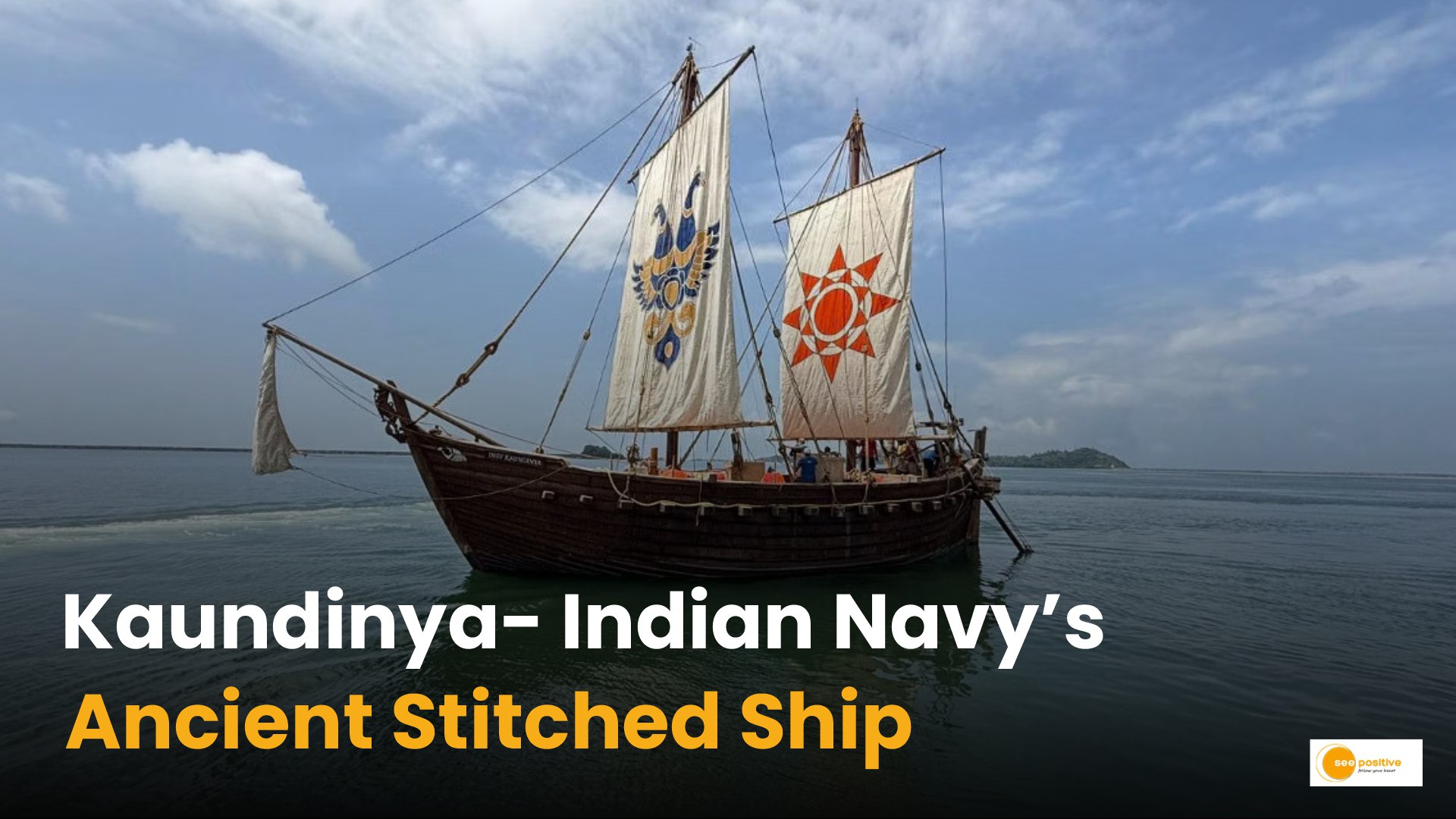
India’s rich maritime history has found a powerful modern expression in INSV Kaundinya, a remarkable example of ancient Indian shipbuilding. It is a unique sailing vessel inducted into the Indian Navy in 2025. Built using ancient shipbuilding techniques, this stitched ship is not just a naval asset. It is but a floating symbol of India’s centuries-old seafaring traditions and cultural outreach across the Indian Ocean. Kaundinya will cover several hundred nautical miles along the historic Gujarat–Oman maritime corridor
What Is INSV Kaundinya?
INSV Kaundinya is a stitched wooden sailing ship. It is reconstructed using techniques that were practiced in India more than 1,500 years ago. It is unlike modern ships that rely on metal fasteners and welding. This vessel is made by stitching wooden planks together using coir rope, natural fibers, and resin.
The ship drwas its inspiration by 5th-century CE maritime vessels depicted in the famous Ajanta cave paintings. These paintings offer rare insight into ancient Indian naval engineering.
India’s rich maritime history has found a powerful modern expression in INSV Kaundinya. It is a unique sailing vessel inducted into the Indian Navy in 2025. Built using ancient shipbuilding techniques, this stitched ship is not just a naval asset. It is but a floating symbol of India’s centuries-old seafaring traditions and cultural outreach across the Indian Ocean.
Technical Specifications & Historic Voyage Plans
INSV Kaundinya is a remarkable example of ancient Indian shipbuilding
INSV Kaundinya is a traditional stitched sailing vessel. It measures 19.6 metres (about 64 feet) in length with a beam of 6.5 metres (21 feet) and a draught of 3.33 metres (10.9 feet). This reflects classic ancient ship proportions with square sails and steering oars rather than engines or modern propulsion. The ship operates with twin sail and oar propulsion. It carries a trained crew of about 15–16 personnel for long ocean passages. After its launch in February 2025 and induction into the Indian Navy in May 2025, INSV Kaundinya departed Karwar Naval Base in December 2025. It has sailed northward to Porbandar (Gujarat) as a staging point for its maiden transoceanic voyage. This is following ancient trade routes across the Arabian Sea to Oman. It will cover several hundred nautical miles along the historic Gujarat–Oman maritime corridor—a key seafaring route used by Indian mariners in antiquity.
Who Was Kaundinya?
Kaundinya is a remarkable example of ancient Indian shipbuilding
The ship is named after Kaundinya, a legendary ancient Indian mariner. This mariner is associated with early maritime voyages from India to Southeast Asia. Historical and cultural traditions link Kaundinya with the spread of Indian trade, culture, and religious ideas across regions such as present-day Cambodia, Indonesia, and Vietnam.
Naming the ship after Kaundinya reflects India’s long history of peaceful maritime diplomacy and cultural exchange.
A Floating Heritage of India
INSV Kaundinya is a remarkable example of ancient Indian shipbuilding
In an age dominated by steel warships and digital navigation, INSV Kaundinya stands apart as a reminder that India mastered the seas long before modern technology existed. It is a tribute to ancient wisdom, skilled craftsmanship, and the enduring spirit of exploration.
As it sails across historic waters, INSV Kaundinya does not merely travel through the ocean—it sails through time, carrying India’s maritime legacy into the future.
Read more: https://seepositive.in/positive-stories/discover-15-lesser-known-facts-about-the-indian-air-force/

